Alternatives
Black Duck alternatives
Black Duck finds open source wherever it hides: in manifests, copied snippets and compiled binaries, with static analysis and fuzzing around it. If you are rethinking it, here is what the other options are built for and when each fits better.
Updated
We build CRACI, so weigh that in; we describe every option from its own documentation and say when another tool fits better.
Why teams look at alternatives to Black Duck
Black Duck is a thorough scanner with a broad portfolio around it. Black Duck SCA combines package manager scanning with signature scanning, snippet detection and binary analysis, so it finds open source that nobody declared. Its KnowledgeBase tracks more than 2,750 licenses. Binary Analysis inspects executables, containers and firmware without source code, Coverity adds static analysis in 22 languages, Defensics does fuzz testing, and Software Risk Manager consolidates findings. It integrates with Jenkins, GitLab, Azure DevOps, CircleCI, TeamCity and many other CI systems.
Teams look at other options mostly for reasons of scope and fit:
- You need evidence from the build itself. Every Black Duck technique inspects something: a manifest, a source tree, a binary. None of them sees the build while it runs, including toolchains, install scripts and cached packages.
- You need less than the full portfolio. If your need is SCA, licenses or SBOM management alone, a narrower tool may fit.
- You want published pricing. Black Duck is sold by quote, as a standard package or à la carte, with no published prices as of September 2026.
- Your work centers on devices. Device-focused platforms build their workflows around firmware, supplier SBOMs and device regulations.
- You prefer open source you host yourself.
What to look for
- Whether you need snippet or binary scanning, or mostly declared dependencies.
- Where the SBOM comes from: manifests, binaries, supplier files, or the build itself.
- License compliance depth: full-text detection, policies, attribution notices.
- Whether you need SAST from the same vendor.
- Supplier SBOM import, if much of your product comes from others.
- Which CI systems you use, and the pricing model you can budget for.
The options
CRACI (our product)
What it is. A GitHub Actions-compatible CI runner. Jobs run on it after a one-line
runs-on change, and a package-aware proxy records every external dependency they fetch, including
packages restored from CI caches. Each SBOM (CycloneDX or SPDX) states its completeness per job and per cache.
Egress policies limit what builds can reach and fail closed.
CRACI also runs Yocto and BitBake builds on runners up to 32 vCPU and 96 GB.
CRACI's inventory view shows exactly which software versions are deployed to which products, globally.
Best for. Manufacturers on GitHub Actions that need evidence of what each release was built from.
Consider if. You want to add build evidence, not replace deep scanning. CRACI does no snippet, binary or static analysis, and it supports GitHub Actions only today, with GitLab CI and Jenkins on the roadmap. Many teams run it next to Black Duck. CRACI vs Black Duck
Snyk
What it is. A developer security platform in the IDE, CLI, source control and CI. Snyk Open Source prioritizes dependency findings with reachability, exploit maturity, EPSS and CVSS, opens upgrade pull requests and supports license policies. Snyk Code, Snyk Container and Snyk IaC cover code, images and infrastructure as code.
Best for. Teams that want security in the developer workflow with a free tier to start.
Consider if. Your code is mostly declared dependencies rather than vendored or copied code. SBOM
export with snyk sbom needs an Enterprise plan. Team starts at $25 per month
(as of September 2026). CRACI vs Snyk
Sonatype
What it is. Open-source governance: Sonatype Lifecycle for SCA and policy, Repository Firewall to block components at the repository, and SBOM Manager to import and monitor SBOMs with VEX. Lifecycle's Advanced Binary Fingerprinting examines the finished application and can identify renamed or modified components.
Best for. Policy at scale and a gate that stops bad packages before they are downloaded.
Consider if. You value repository gatekeeping over snippet scanning. New customers buy Sonatype Guide (as of September 2026). CRACI vs Sonatype
Mend.io
What it is. Mend AppSec combines Mend SCA, with call graph reachability, license policies and malicious package detection, and Mend SAST for 30+ languages. It produces SPDX and CycloneDX SBOMs, ingests third-party SBOMs and applies VEX. Mend Renovate keeps dependencies current.
Best for. Teams that want SCA and SAST from one vendor, with dependency updates built in.
Consider if. You need SAST but not snippet or binary scanning. Mend AppSec is up to $1,000 per contributing developer per year (as of September 2026). CRACI vs Mend.io
Checkmarx One
What it is. A broad AppSec platform: SAST, SCA, secrets, IaC, API security, DAST, containers and malicious package protection, with an ASPM layer on top. Its SCA uses exploitable path analysis on direct and transitive dependencies, and policies on severity, reachability, malicious code and licenses can break builds. It exports CycloneDX or SPDX SBOMs and can ingest SBOMs.
Best for. Organizations that want SAST, SCA and DAST from one vendor.
Consider if. Coverity and Black Duck SCA are the parts you use, and you do not rely on snippet or binary analysis. Pricing is by quote, with no published prices (as of September 2026). CRACI vs Checkmarx One
Veracode
What it is. An application security platform with SAST, DAST, container security, penetration testing as a service, Veracode Fix for AI remediation, and Risk Manager for application security posture. Veracode SCA prioritizes by exploit paths and dependency relationships, generates CycloneDX and SPDX SBOMs, opens automatic pull requests, and applies license risk rules in policy. It also detects and blocks malicious packages.
Best for. Teams that want SAST, DAST and SCA from one vendor, with pen testing on top.
Consider if. You want a like-for-like AppSec portfolio swap without snippet scanning.
Endor Labs
What it is. An AppSec platform built around function-level reachability through static program analysis of direct and transitive dependencies. Endor Labs says this cuts SCA findings by 92%. It adds upgrade impact analysis, Endor Patches that backport fixes, AI SAST, secrets and container scanning, a Package Firewall, and an SBOM Hub that generates and imports CycloneDX and SPDX SBOMs with reachability-based VEX.
Best for. Teams whose main problem is the volume of dependency alerts.
Consider if. Prioritization matters more to you than snippet or binary scanning. There is a free Developer tier; Core and Pro are sold per contributing developer (as of September 2026). CRACI vs Endor Labs
FOSSA
What it is. A license compliance and SBOM management platform. It detects licenses from full text, applies policies and generates attribution notices. It generates SPDX and CycloneDX SBOMs, imports supplier SBOMs, checks them against NTIA and FDA minimum elements, and shares them through an SBOM Portal on Enterprise. Snippet and binary scanning are add-ons.
Best for. Legal and engineering teams whose first concern is licenses and supplier SBOMs.
Consider if. You want published pricing: a Free plan, and Business at $20 per project per month, billed annually (as of September 2026). CRACI vs FOSSA
Finite State
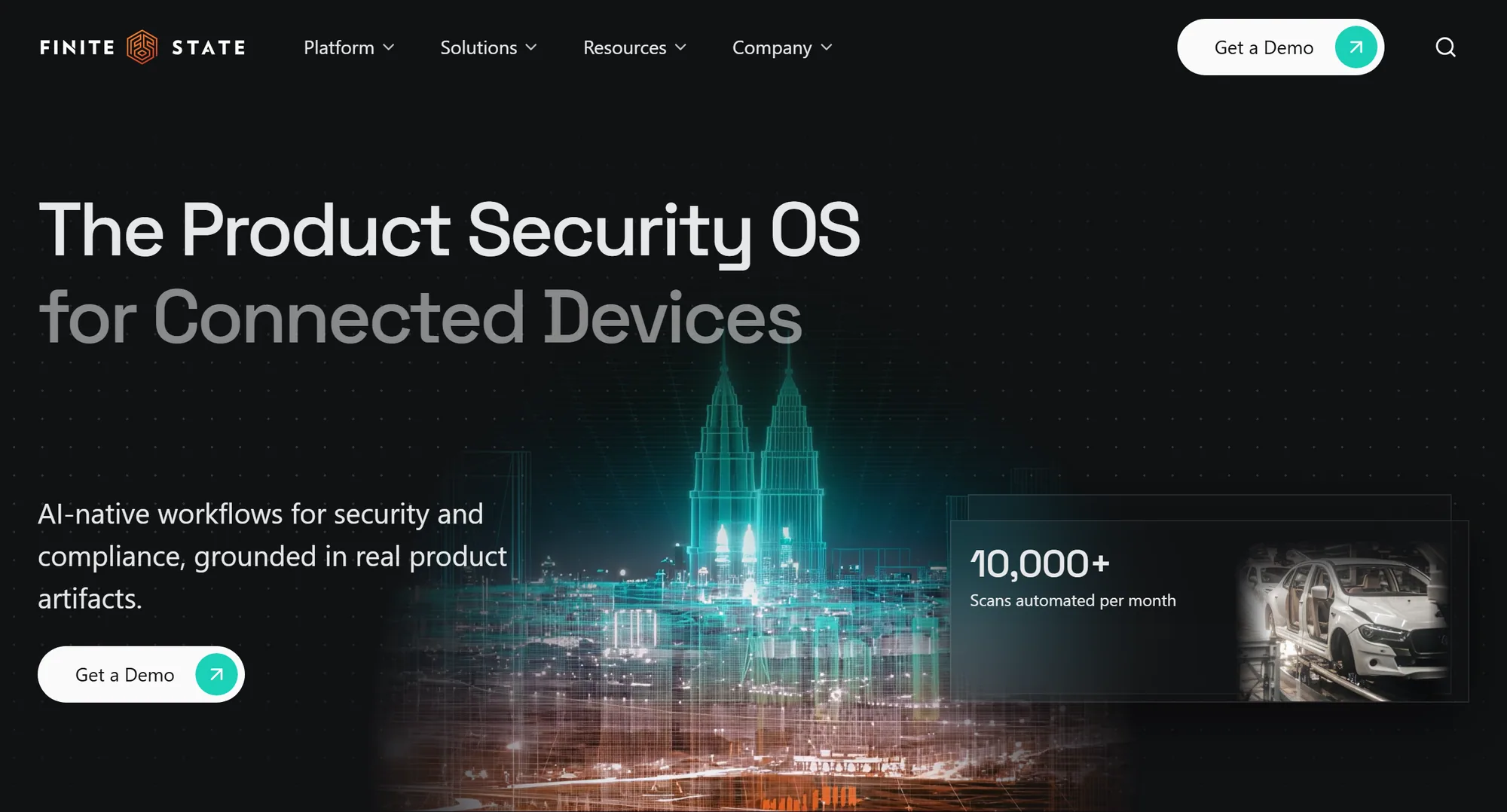
What it is. A product security platform for connected devices. It analyzes firmware, binaries, source code and supplier SBOMs, with support for 50+ binary instruction set architectures, prioritizes findings by reachability and records VEX decisions. Its compliance workflow covers CRA control mapping and audit-ready reports.
Best for. Device makers whose products run code from many suppliers.
Consider if. Binary Analysis is the Black Duck product you rely on most. ONEKEY is another firmware option, focused on binary analysis and guided checks against standards (CRACI vs ONEKEY). CRACI vs Finite State
OWASP Dependency-Track (open source)
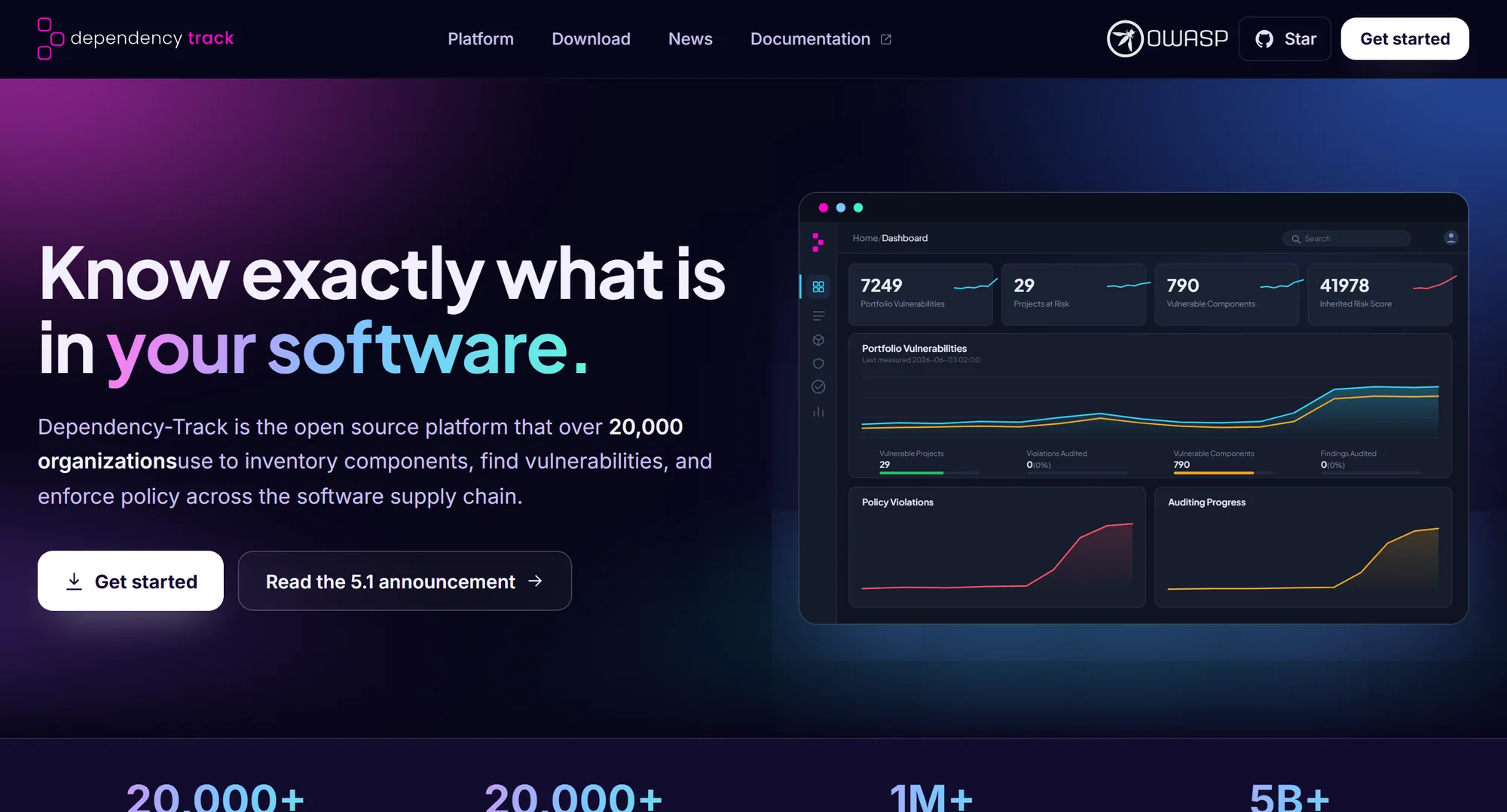
What it is. A free, self-hosted platform under Apache 2.0 that ingests CycloneDX SBOMs, tracks components across your whole portfolio, pulls vulnerability data from sources including the NVD and GitHub Advisories, and applies security, license and operational policies with CycloneDX VEX support.
Best for. Teams that want transparent, self-hosted analysis built on a standard format.
Consider if. You will pair it with an SBOM generator and run it yourself. It does not generate SBOMs. CRACI for Dependency-Track users
Side by side
| Capability | CRACI | Black Duck | Snyk | Sonatype | Mend.io | Checkmarx One | Veracode | Endor Labs | FOSSA | Finite State | Dependency-Track |
|---|---|---|---|---|---|---|---|---|---|---|---|
| Runs your CI jobs | Jobs run on CRACI runners | ||||||||||
| Dependencies recorded from the build | Uploaded source archive | CLI queries build tools | |||||||||
| Egress policy for build jobs | |||||||||||
| Binary or snippet scanning | Not stated | Binary fingerprinting | Not stated | Not stated | Not stated | Not stated | Add-ons | Binaries, firmware | |||
| Generates SBOMs | Per build | Enterprise plans | Analyzes uploads | ||||||||
| Imports supplier SBOMs | Vendor SBOMs can be added | Not stated | Not stated | SBOM Manager | Not stated | SBOM Hub | |||||
| License compliance | License policy can block a build | Not stated | Not stated | ||||||||
| SAST for your own code | Coverity | Not stated | AI SAST | Not stated | Not stated | Not stated | |||||
| Reachability prioritization | Not stated | Not stated | |||||||||
| CI beyond GitHub Actions | GitLab CI and Jenkins | Not stated | CLI in your CI | REST API | |||||||
| Pricing | Pay per build minute, no monthly fee | Quote only | Free tier; Team from $25/mo | Sonatype Guide; Firewall Pro from $4,800/yr | Up to $1,000 per contributing developer/yr | Quote only | Not stated | Free tier; paid via sales | Free plan; Business $20 per project/mo | Not stated | Free, Apache 2.0 |
- Included
- Partly
- Not included
- On the roadmap
"Not stated" means the vendor pages we cite do not say either way; Veracode is described from its SCA product page and documentation. Prices are as of September 2026. For CRACI's current terms, see pricing.
When to stay with Black Duck
- Your codebase has a long history of copied or vendored open source, where snippet scanning pays off.
- You check third-party binaries or finished firmware images and want that next to SCA in one portfolio.
- You want SCA, SAST, fuzzing and posture management from one vendor.
- Your pipelines run on Jenkins, GitLab or Azure DevOps. If you also build on GitHub Actions and need build evidence, CRACI can run next to Black Duck.
Black Duck alternatives FAQ
Short answers to the questions teams ask when they compare
Is Black Duck a vulnerability scanner?
Yes, and more. Black Duck SCA finds the open source in your code, including undeclared components through signature, snippet and binary analysis, and flags their known vulnerabilities and license risks. The wider portfolio adds Coverity for static analysis, Binary Analysis for executables and firmware, and Defensics for fuzz testing.
Is Black Duck owned by Synopsys?
Not anymore. Black Duck began as the Software Integrity Group within Synopsys. On October 1, 2024, it became an independent company, Black Duck Software, backed by Clearlake Capital Group and Francisco Partners.
What are the differences between Black Duck and Snyk?
Black Duck goes deeper into what is in your code: signature, snippet and binary scanning find open source that nobody declared, and it is sold by quote. Snyk is built for developers, with feedback in the IDE, CLI and pull requests, reachability and exploit data for prioritization, and published per-developer pricing with a free tier. Snyk's SBOM export needs an Enterprise plan.
What is the best alternative to Black Duck?
It depends on which part you replace. Checkmarx One and Veracode are the closest AppSec portfolio swaps. Snyk suits developer-first teams, Endor Labs focuses on reachability, Sonatype adds a gate at the package repository, FOSSA centers on licenses, Finite State on device firmware, and Dependency-Track is free. CRACI fits when you need a record of what each GitHub Actions build fetched.
Does CRACI replace Black Duck?
Not for scanning. CRACI does no snippet, binary or static analysis. It runs your GitHub Actions builds, records every dependency they fetch in a CycloneDX or SPDX SBOM with a completeness state per job and enforces an egress policy. It supports GitHub Actions only today, with GitLab CI and Jenkins on the roadmap.
Run one real build and compare
Point one GitHub Actions workflow at CRACI and compare its SBOM with your Black Duck bill of materials.
Book a demo