Alternatives
Bitbucket Pipelines alternatives
Bitbucket Pipelines keeps CI next to your code in Bitbucket Cloud. Teams look at alternatives when build minutes, platform choice or build evidence start to matter more than convenience.
Updated
We build CRACI, so weigh that in; we describe every option from its own documentation and say when another tool fits better.
Why teams look beyond Bitbucket Pipelines
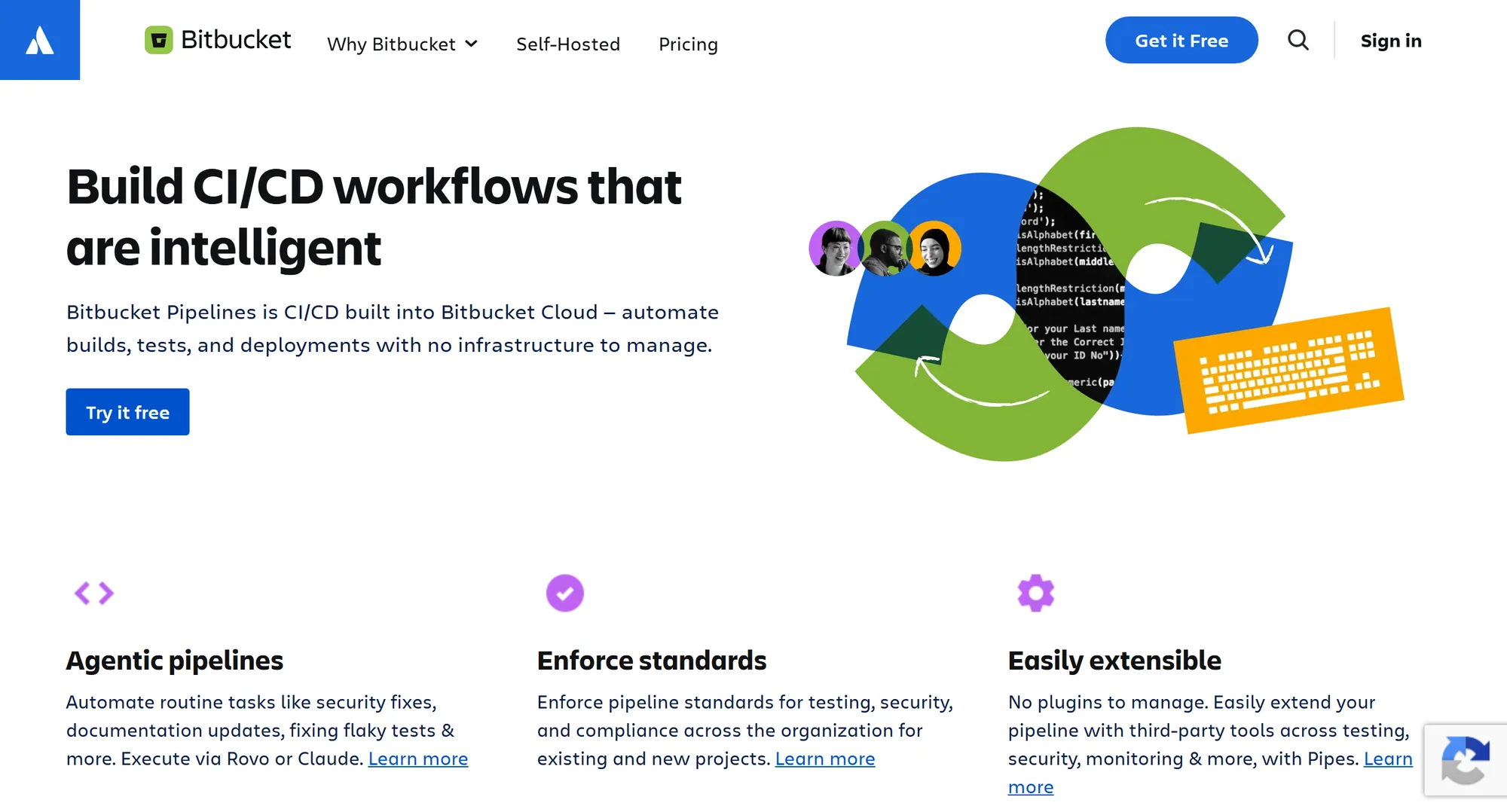
Bitbucket Pipelines is CI/CD built into Bitbucket Cloud. As of September 2026, Bitbucket is free for up to 5 users with 50 build minutes, Standard is $3.65 and Premium $7.25 per user per month, and 1,000 extra minutes cost $10. Self-hosted runners run on Linux, Windows and macOS, and their build minutes are not charged.
Teams look elsewhere when their situation changes:
- Minutes. Hosted build minutes are metered, so busy pipelines buy more or move to self-hosted runners you operate.
- Platform. Pipelines works with code in Bitbucket; moving the code elsewhere means moving CI too.
- Build evidence. We could not find build SBOMs or provenance in Bitbucket Pipelines' public pages.
- Consolidation. The rest of the company already works on GitHub or GitLab.
What to look for
- Where jobs run: hosted, on your own machines, or both.
- Which source control it works with, and whether your code has to move.
- What you still operate: servers, agents, upgrades and plugins.
- Operating systems you need, including Windows and macOS.
- Build evidence: SBOMs, provenance, and a record of what each job fetched.
- Egress control, and whether it is a policy on the job or network plumbing you maintain.
The options
1. CRACI with GitHub Actions (our product)
CRACI is a secure runner for GitHub Actions: you move pipelines to GitHub Actions workflows and run them on CRACI. While each job runs, a package-aware proxy records what it fetched, including packages restored from CI caches, and produces a CycloneDX or SPDX SBOM with a completeness state per job and per cache. An egress policy is validated before the job starts and fails closed, policy gates can block a build on findings, and the API returns SBOMs, network traces and provenance. CRACI's inventory view shows exactly which software versions are deployed to which products, globally. There is no controller or agent to operate.
Best for: teams moving to GitHub Actions that ship software and need to show what went into each release.
Consider if: your code is on GitHub or can move there. CRACI runs Linux jobs today; Windows, macOS, GitLab CI, Jenkins and customer-hosted runners are on the roadmap.
CRACI vs GitHub-hosted runners
2. GitHub Actions
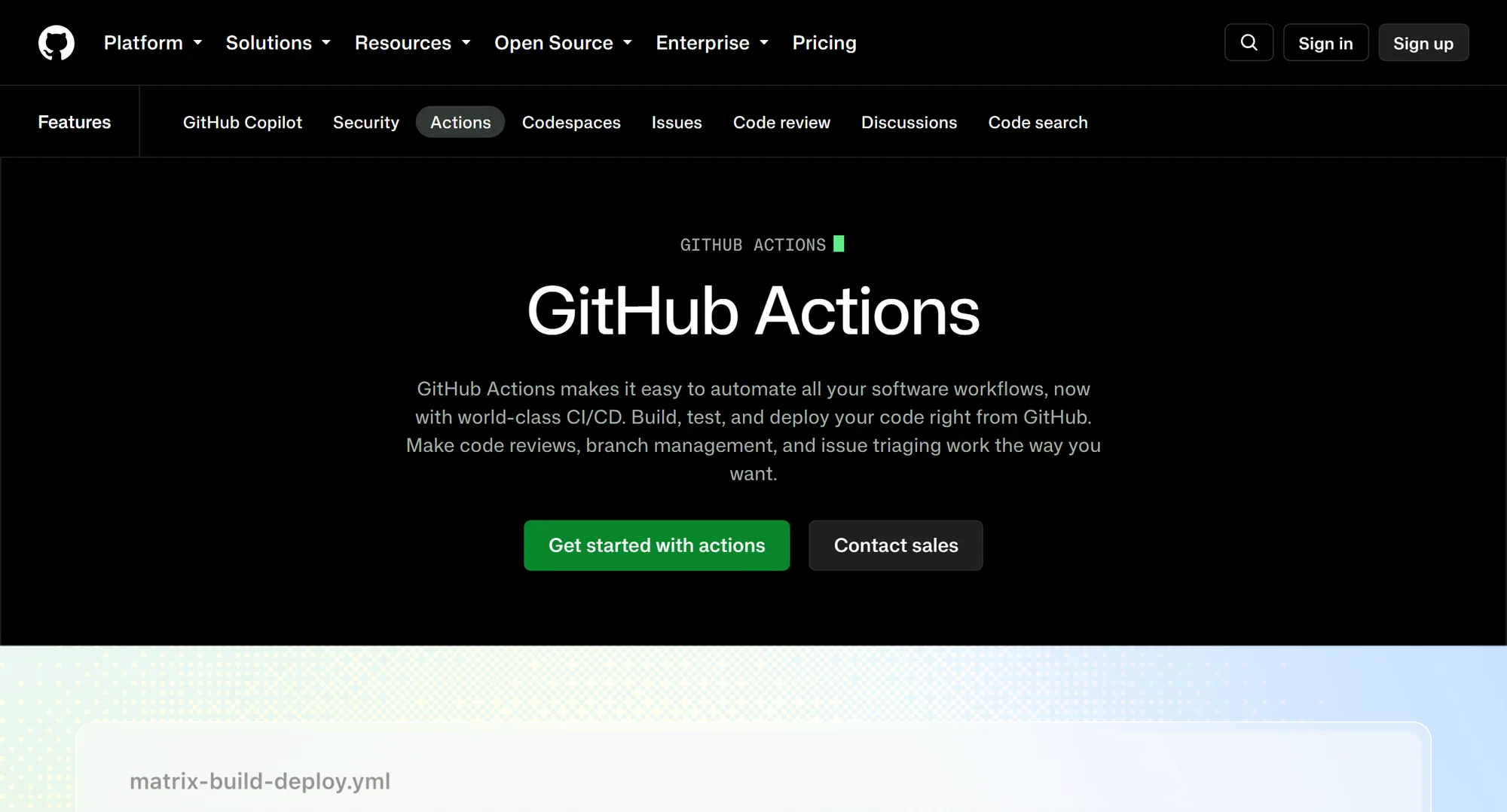
CI/CD built into GitHub, with hosted Linux, Windows and macOS runners and self-hosted runners for your own machines. Plans include 2,000 to 50,000 minutes a month, and a standard 2-core Linux runner is $0.006 per minute as of September 2026. Around it sit the dependency graph, Dependabot and artifact attestations.
Best for: code that already lives on GitHub.
Consider if: you want hosted runners on every operating system. The SBOM it exports describes the repository, not the build.
3. GitLab CI

Part of a complete DevSecOps platform: source control, merge requests, planning and CI/CD in one product, hosted or self-managed. Basic SAST, secret detection and container scanning run in all tiers; Ultimate adds dependency scanning and the vulnerability report. As of September 2026, Free includes 400 compute minutes and Premium is $29 per user per month billed annually.
Best for: one vendor for the whole lifecycle, including self-managed installs.
Consider if: you would move source control too.
4. CircleCI
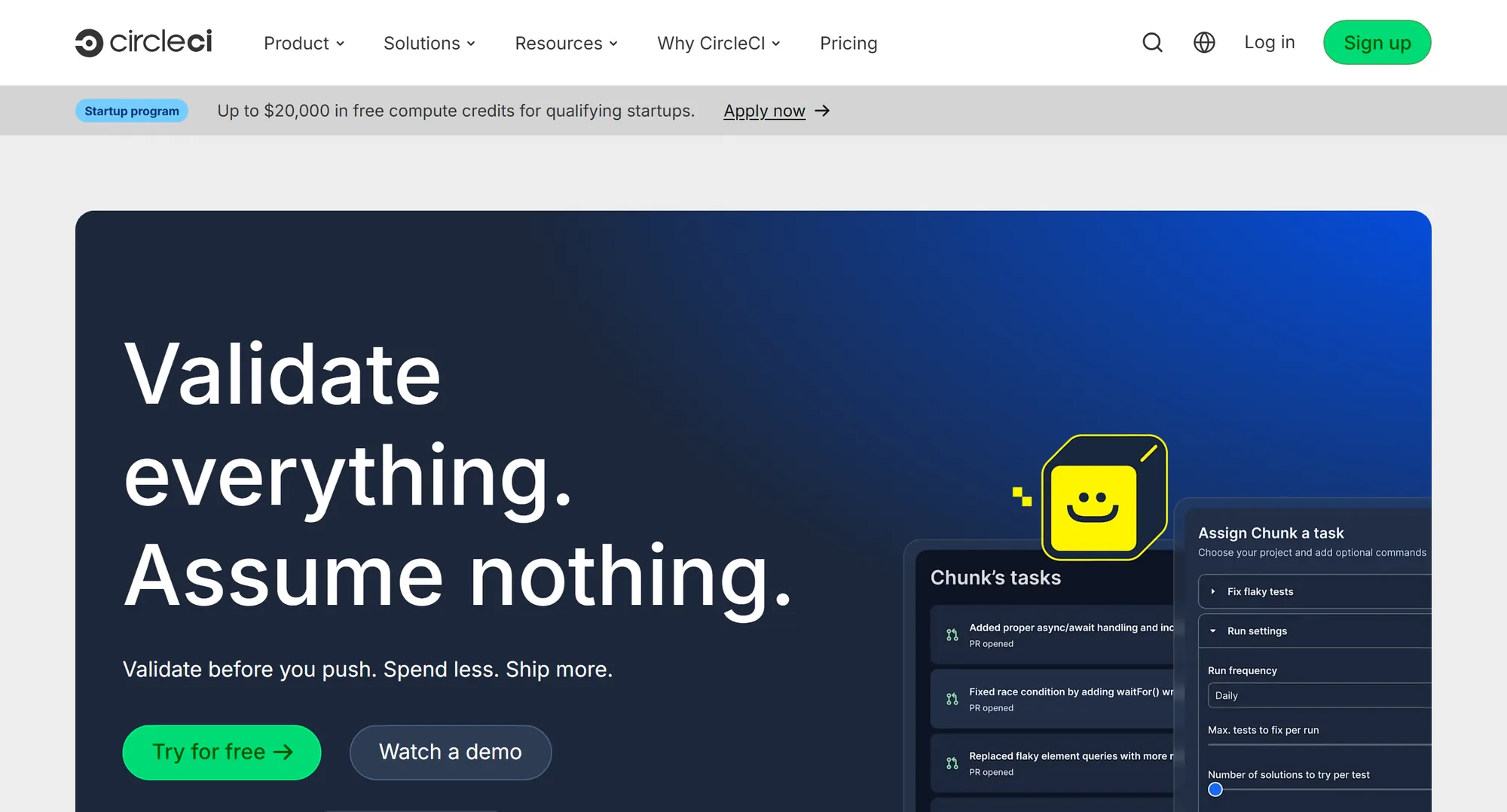
A mature hosted CI/CD platform that connects to GitHub, GitLab and Bitbucket. It runs jobs on Docker, Linux, Arm, Windows, macOS and GPU resource classes, with self-hosted runners for your own machines. Docker layer caching is on all plans, and test splitting spreads suites across parallel executors. As of September 2026, the Free plan includes 30,000 credits a month.
Best for: mixed platforms and large test suites, without moving source control.
Consider if: you are happy to add SBOMs and scanning through orbs.
5. Buildkite
A hybrid platform: Buildkite's SaaS control plane orchestrates, and the agents that run jobs live on your own infrastructure, so source code and secrets stay in your environment. It works with GitHub, GitLab, Bitbucket and more. Hosted agents are available too, at $0.004 per vCPU minute on Linux as of September 2026, and signed pipelines let agents refuse jobs modified after upload.
Best for: builds that must run on your own hardware, without running the whole platform.
Consider if: you are ready to design build security yourself on your agents.
6. Azure Pipelines
The CI/CD part of Azure DevOps. It builds on Linux, macOS and Windows, works with Azure Repos and GitHub, and deploys to virtual machines, containers, on-premises and cloud targets. As of September 2026, one Microsoft-hosted parallel job with 1,800 minutes a month is free, and each extra hosted job is $40 a month; one self-hosted job is free and each extra is $15.
Best for: teams already on Azure and Microsoft tooling.
7. Jenkins
The open source automation server, MIT licensed, with hundreds of plugins. You host the controller and agents, and you upgrade and secure them. It works with most source control systems through plugins.
Best for: full control on your own infrastructure, if you have the people to run it.
8. Travis CI
A hosted CI service that connects to GitHub, Bitbucket, GitLab and Assembla, with Linux on amd64 and arm64, macOS and Windows build environments, and Travis CI Server for on-premises or private cloud. It can generate SBOMs from the source code that triggers a build, with CycloneDX plugins and Syft. As of September 2026, the Usage plan starts at $15 per month with 35,000 Linux build credits, and Unlimited starts at $78 per month.
Best for: simple, config-driven builds across several source control hosts.
9. TeamCity
JetBrains' CI/CD platform, as TeamCity Cloud or TeamCity On-Premises. As of September 2026, On-Premises Professional is free forever with 3 build agents and 100 build configurations, Enterprise is about $2,783 (€2,399) per year with unlimited build configurations, and Cloud is about $17 (€15) per committer per month with 24,000 build credits.
Best for: teams that want a self-hosted CI server with a free tier and JetBrains tooling.
Side by side
| Capability | CRACI | GitHub Actions | GitLab CI | CircleCI | Buildkite | Azure Pipelines | Jenkins | Travis CI | TeamCity | Bitbucket Pipelines |
|---|---|---|---|---|---|---|---|---|---|---|
| What it is | A secure runner for GitHub Actions | CI/CD built into GitHub | CI/CD in the GitLab platform | Hosted CI/CD | Hybrid CI with agents you host | CI/CD in Azure DevOps | Open source automation server you host | Hosted CI, or Server on-premises | JetBrains CI, cloud or on-premises | CI/CD in Bitbucket Cloud |
| Source control | GitHub | GitHub | GitLab | GitHub, GitLab, Bitbucket | GitHub, GitLab, Bitbucket and more | Azure Repos, GitHub and more | Most, through plugins | GitHub, Bitbucket, GitLab, Assembla | Not stated | Bitbucket |
| Dependencies recorded from the build | Observed fetches, caches included | Build data for Maven, Gradle, Python | Reads lockfiles | Not stated | Plugins you add | SBOM from source code | Not stated | Not stated | ||
| SBOM export | CycloneDX, SPDX per job | SPDX of the repository graph | CycloneDX reports | Via orbs you add | Tools on your agents | Not stated | Plugins you add | CycloneDX plugins and Syft | Not stated | Not stated |
| Build provenance | Provenance data via the API; not signed | SLSA Build L2 or L3 | SLSA 1.0 statement | Not stated | SLSA L1, Enterprise | Not stated | Plugins you add | Not stated | Not stated | Not stated |
| Build egress policy | Per job, fails closed | Azure networking, larger runners | Yours, on own runners | IP ranges for allowlisting | Yours, on own agents | Yours, on self-hosted agents | Yours, on your agents | Not stated | Yours, on your agents | Yours, on self-hosted runners |
| Windows and macOS | Linux only today | Hosted in beta | Any agent you run | Not stated | Self-hosted runners | |||||
| Runs on your own machines | Customer-hosted runners, Enterprise | Core model | Self-hosted agents | The only option | Travis CI Server | On-Premises | Runners, no minute charge | |||
| Starting price | $0.004 per 2 vCPU minute, no monthly fee | 2,000 to 50,000 minutes by plan | Free, 400 minutes; Premium $29 per user | Free, 30,000 credits; from $15 per month | Free plan; Pro $30 per active user | 1 free hosted job, 1,800 minutes; $40 per extra job | Free (MIT); you pay for the machines | $15 per month, 35,000 Linux credits | On-Premises Professional free; Cloud about $17 (€15) per committer | Free for 5 users, 50 minutes; Standard $3.65 per user |
- Included
- Partly
- Not included
- On the roadmap
"Not stated" means we could not confirm it in the vendor's public pages.
When to stay on Bitbucket Pipelines
- Your code, issues and planning live in Atlassian tools.
- Self-hosted runners cover your heavy builds, without minute charges.
- Your pipelines are simple and the current setup works.
- You can mix: the choice is per pipeline, so some builds can move while the rest stays.
Read more about CI/CD integration, build-time SBOM generation and pricing.
Bitbucket Pipelines alternatives FAQ
Short answers to the questions teams ask when they compare
Is Bitbucket Pipelines free?
For small teams. As of September 2026, Bitbucket is free for up to 5 users with 50 build minutes. Standard is $3.65 and Premium $7.25 per user per month, and 1,000 extra minutes cost $10.
Can Bitbucket Pipelines run on my own machines?
Yes. Self-hosted runners run on Linux, Windows and macOS, and their build minutes are not charged. You operate and secure those machines yourself.
Which alternatives work with code in Bitbucket?
CircleCI, Buildkite and Travis CI connect to Bitbucket, and Jenkins works with it through plugins, so you can change CI without moving code. GitHub Actions and GitLab CI mean moving the code too.
Does Bitbucket Pipelines generate SBOMs?
We could not find build SBOMs or provenance in Bitbucket Pipelines' public pages. Among the alternatives, GitLab CI produces CycloneDX reports, Travis CI generates SBOMs from source code, and CRACI records a CycloneDX or SPDX SBOM of what each job fetched.
What is CRACI, and does it work with Bitbucket Pipelines?
CRACI is a secure runner for GitHub Actions. Each job gets an SBOM of what it fetched and an egress policy that fails closed. It does not work with Bitbucket Pipelines: CRACI supports GitHub Actions today, with GitLab CI and Jenkins on the roadmap.
Move one pipeline and compare
Run one job on GitHub Actions with CRACI and set its SBOM and network trace next to what your Bitbucket Pipelines build tells you today.
Book a demo