Alternatives
Cybeats alternatives
Cybeats SBOM Studio is a system of record for SBOMs from your products and suppliers. If you need SBOMs generated rather than imported, firmware analysis, or a different scope or price, these are the options worth comparing.
Updated
We build CRACI, so weigh that in; we describe every option from its own documentation and say when another tool fits better.
Why teams look beyond Cybeats
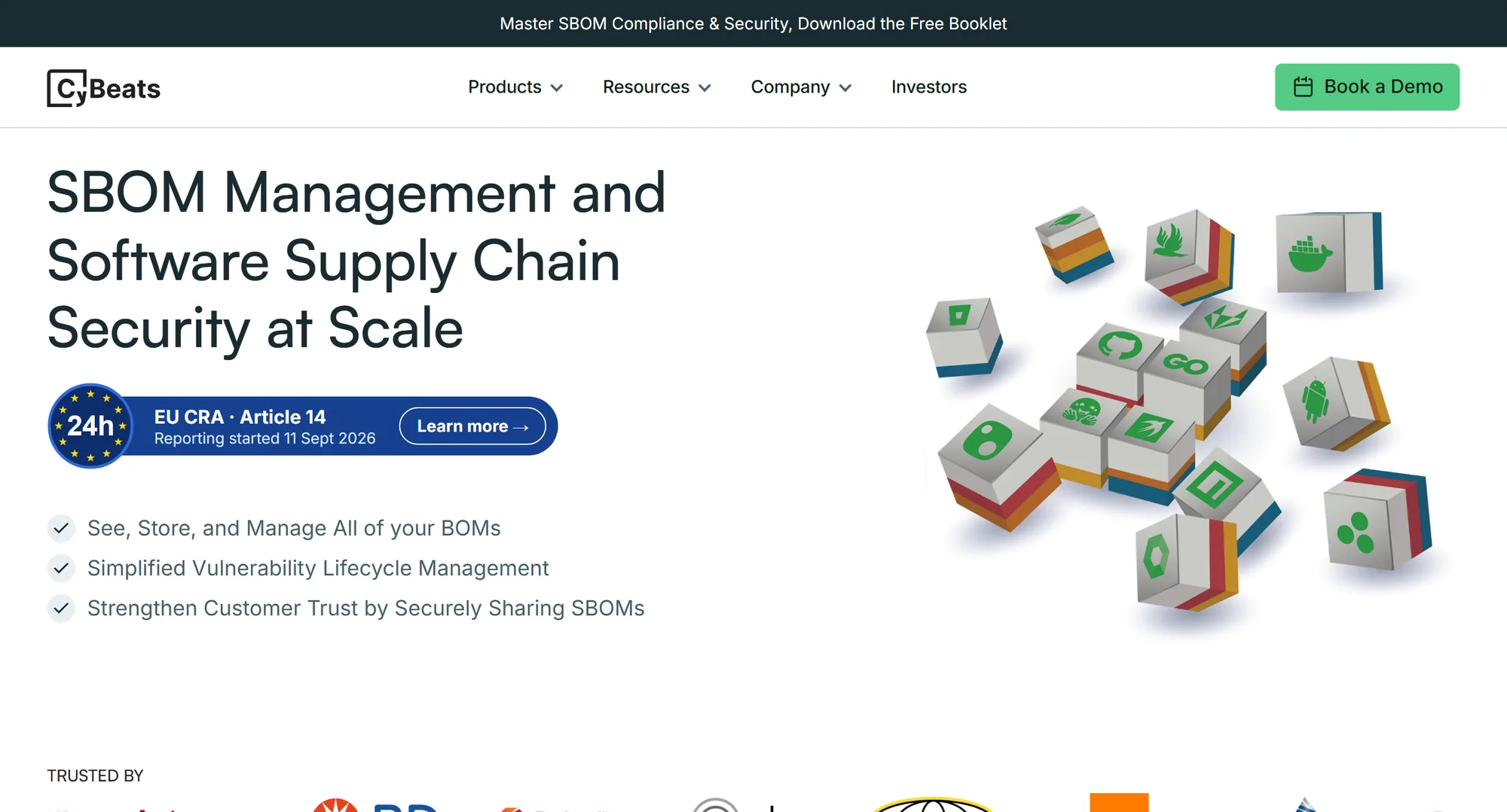
SBOM Studio is "a governed platform that ingests, manages, monitors, and shares software bills of materials across products and suppliers." It reads and writes SPDX and CycloneDX, scores SBOM quality at import, matches components continuously against vulnerability intelligence, checks licenses, and shares SBOMs and VEX with customers. SBOM Consumer analyzes the vendor SBOMs you receive, and RAVEN, an AI add-on, reasons about reachability and drafts VEX statements. Its customers are mostly in medical devices, industrial automation and telecom.
Teams still compare alternatives, usually for one of these reasons:
- Where the SBOM comes from. SBOM Studio manages SBOMs that another tool generated; for generation, Cybeats points to vendors in its Marketplace. A system of record is only as complete as what goes into it.
- Firmware you did not build. Teams that receive binaries from suppliers may want analysis of the image itself, not only the SBOM that came with it.
- One product instead of several. A generator, a system of record and a separate CI add up to three things to buy, integrate and keep in sync.
- Pricing and hosting. Cybeats publishes no prices, and some teams want a free, self-hosted tool.
What to look for
- How SBOMs are produced, and whether the tool tells you when one is incomplete.
- Supplier SBOM intake, VEX, and sharing with customers or authorities.
- Firmware and binary analysis if you ship code you did not build from source.
- Evidence for the Cyber Resilience Act: which releases contain an affected component, and how fast you know.
- CI coverage, hosting options and how pricing scales.
The options
1. CRACI (our product)
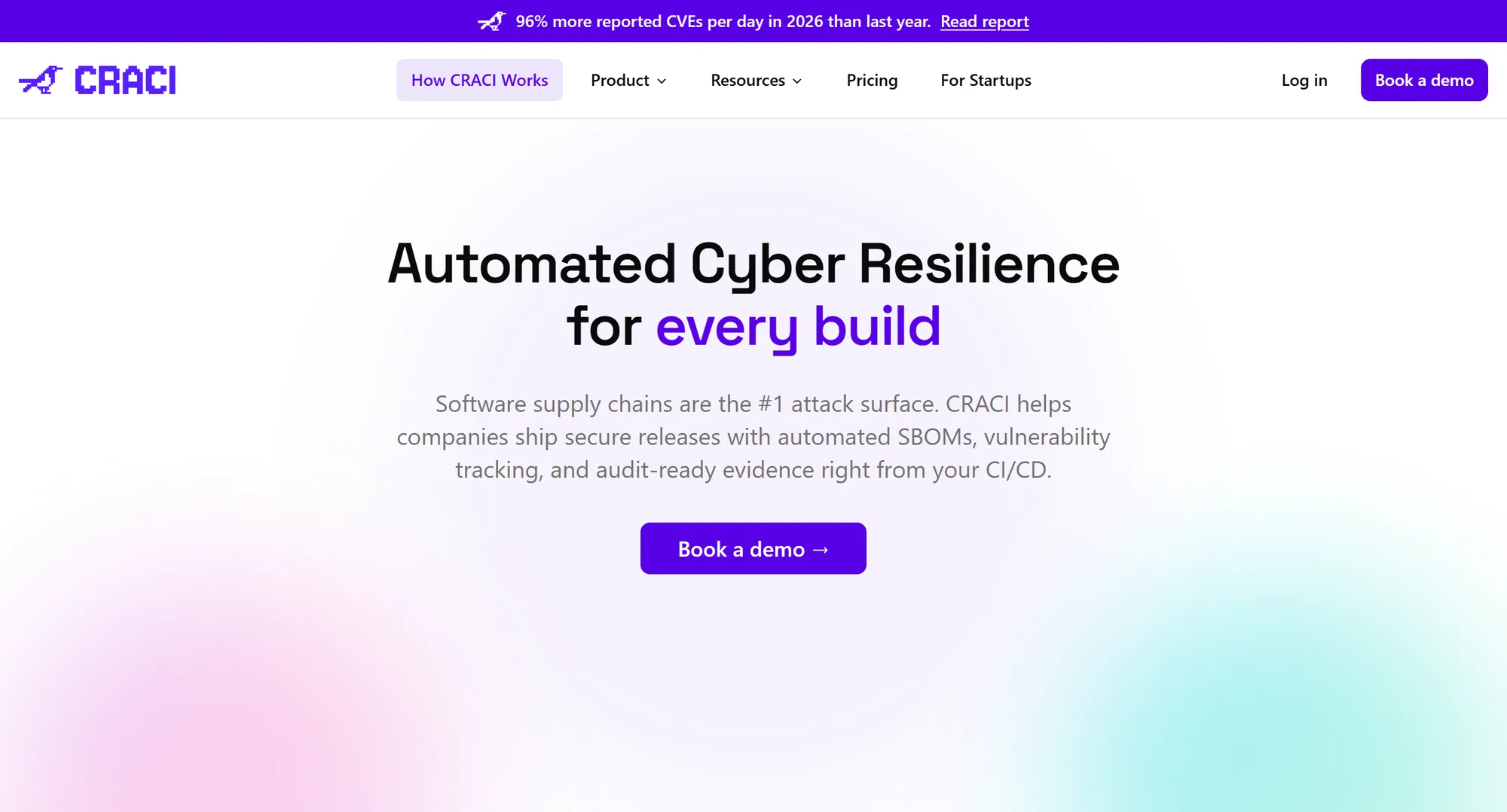
CRACI is a GitHub Actions runner that produces the SBOM while the build runs. A package-aware proxy records traffic to package sources, including packages restored from CI caches and all transitive dependencies the build used, and each SBOM states its completeness per job and per cache. CRACI re-evaluates monitored SBOMs continuously, aggregates findings across builds and repositories, and lets security teams triage them with VEX and route each one to the team that owns the fix. You can add vendor SBOMs, so bought-in components are monitored next to your own builds. CRACI's inventory view shows exactly which software versions are deployed to which products, globally.
Because CRACI runs the job, it also enforces an egress policy that fails closed. That includes Yocto builds on runners of up to 32 vCPUs and 96 GB of RAM: in a
side-by-side build of core-image-sato, CRACI's SBOM had every
component in Yocto's own SBOM plus 88 it missed, such as host packages and GitHub Actions.
Best for: teams on GitHub Actions that want the CI, the SBOM and the vulnerability tracking for their own products in one place. Consider if: you can live without firmware analysis, SBOM quality scoring, reachability and a sharing portal, none of which CRACI has today. It supports GitHub Actions only, with GitLab CI and Jenkins on the roadmap. CRACI vs Cybeats
2. Manifest
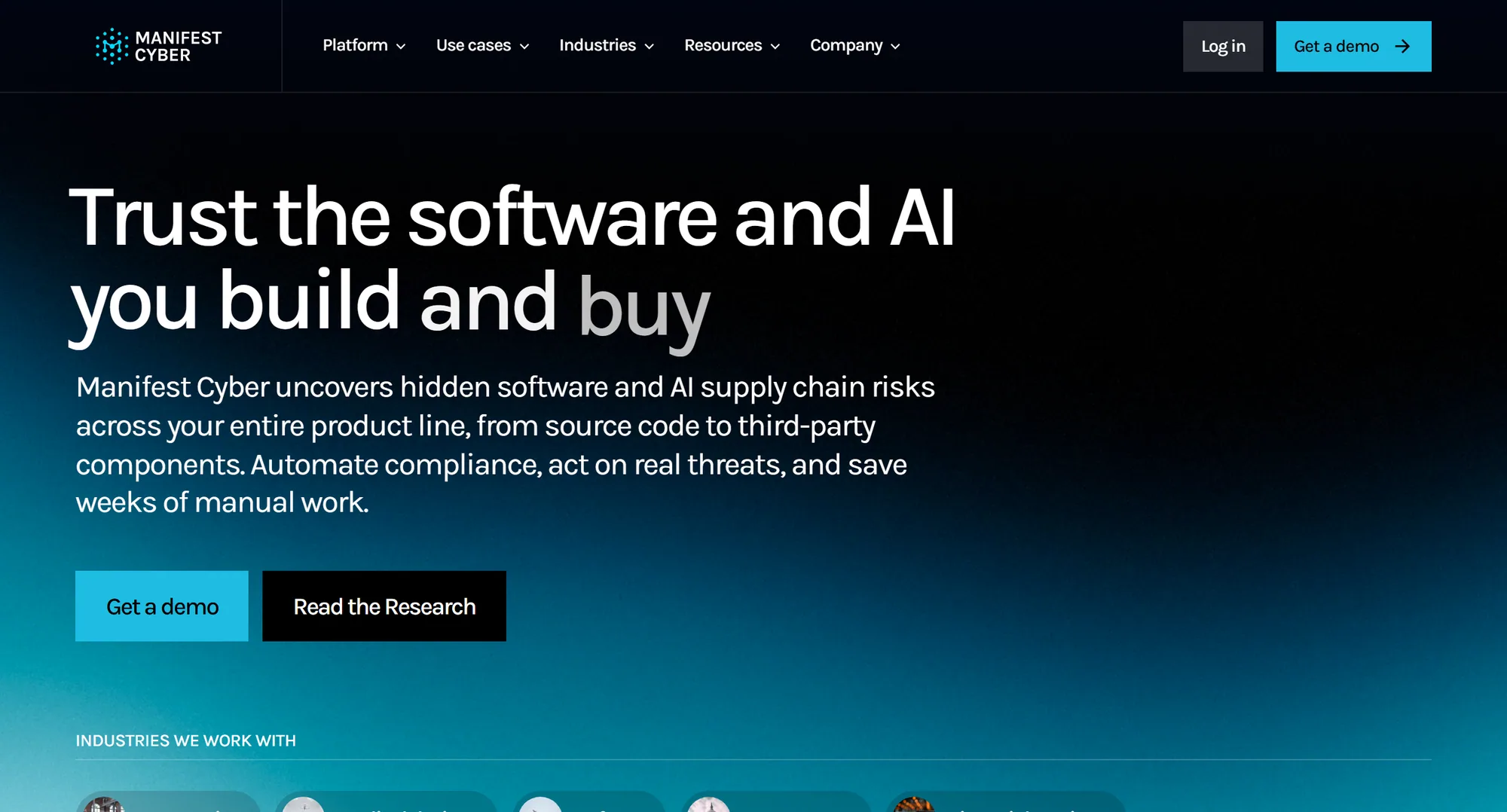
Manifest creates, imports, enriches and shares SBOMs for your products, your vendors' software and your AI models. Vendors upload through a portal, and Manifest can generate an SBOM from a compiled binary when a vendor cannot provide one. It supports SPDX, CycloneDX and VEX, and turns findings into tickets and risk reports.
Best for: organizations whose main exposure is software they buy. Consider if: license compliance is central; the Manifest sources we used focus on security and supplier risk. CRACI vs Manifest
3. FOSSA
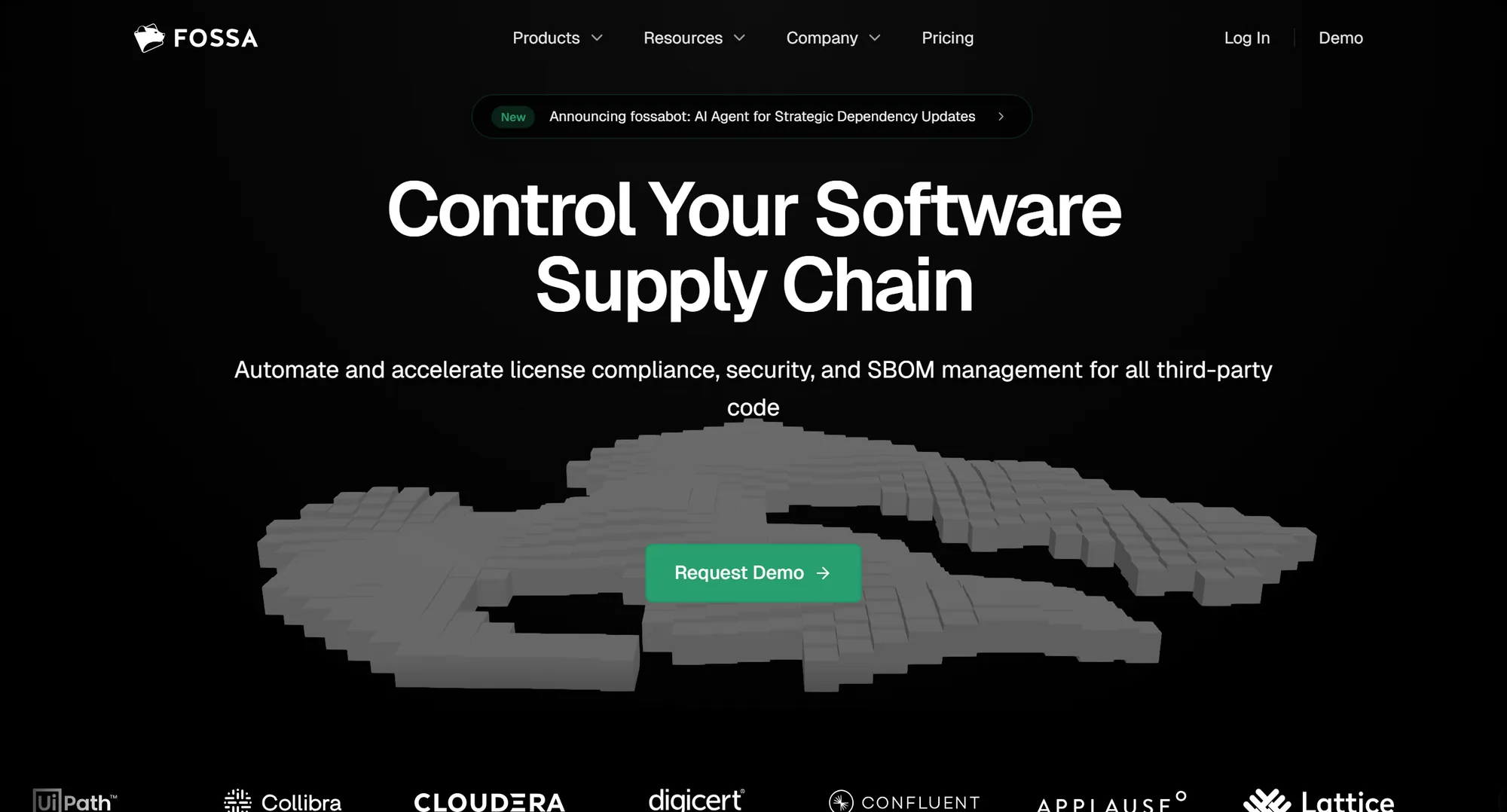
FOSSA started in license compliance and adds SBOM management: SPDX and CycloneDX SBOMs, supplier SBOM import with NTIA and FDA minimum-element policies, and an SBOM Portal for sharing on Enterprise. The FOSSA CLI integrates with more than 20 build systems, and snippet and binary scanning are add-ons.
Best for: teams where license compliance and attribution notices come first. Consider if: per-project pricing fits; there is a free plan, and Business is $20 per project per month (as of September 2026). CRACI vs FOSSA
4. Anchore Enterprise
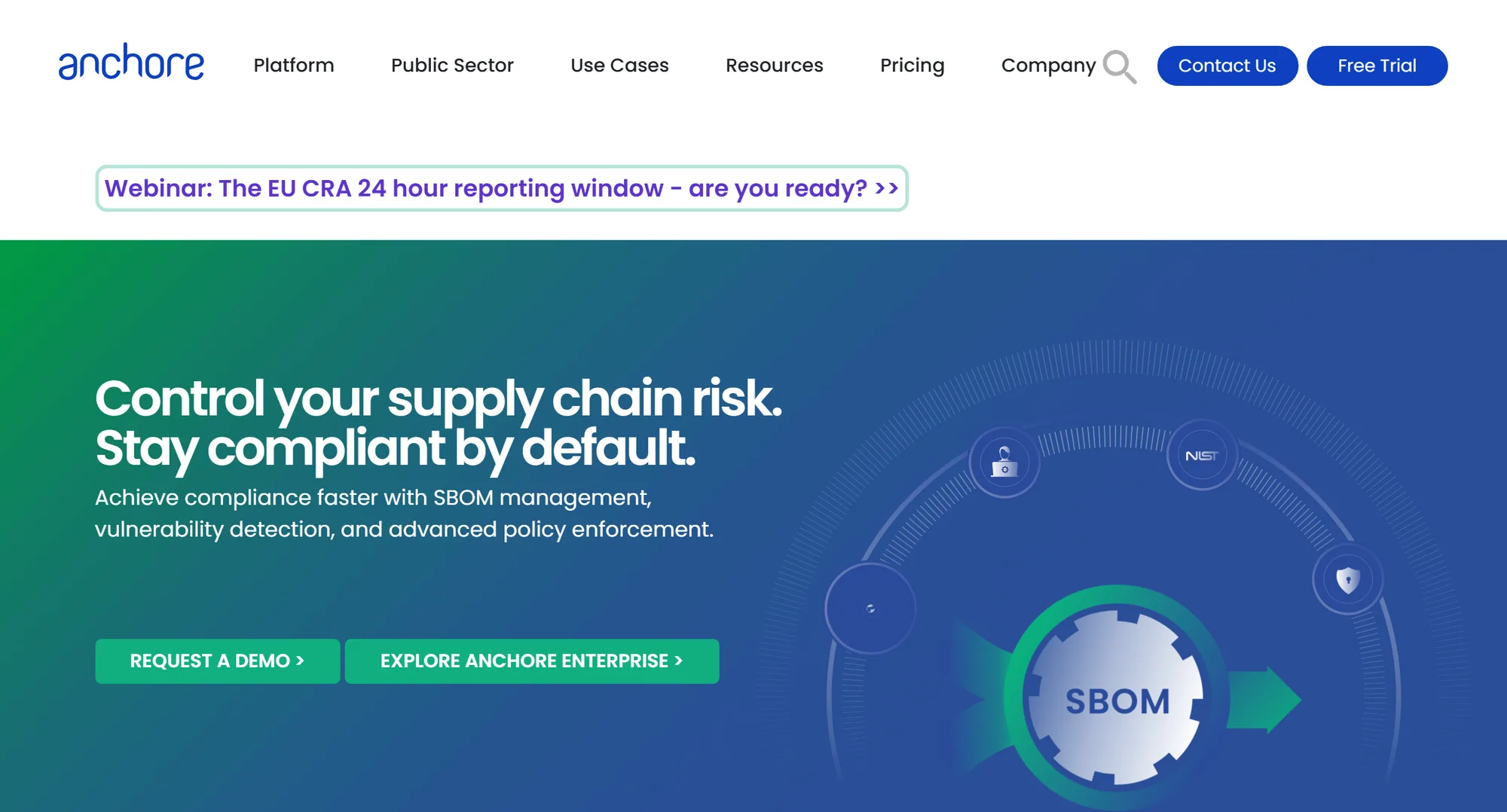
Anchore Enterprise builds on the open-source Syft and Grype. It creates SBOMs for containers, source and filesystems, imports SBOMs made elsewhere, rescans stored SBOMs continuously, and enforces policy packs such as FedRAMP and NIST. It can be self-hosted, including air-gapped.
Best for: container-heavy and government environments. Consider if: your products are containers rather than devices. Pricing is by quote. CRACI vs Anchore
5. Sonatype SBOM Manager
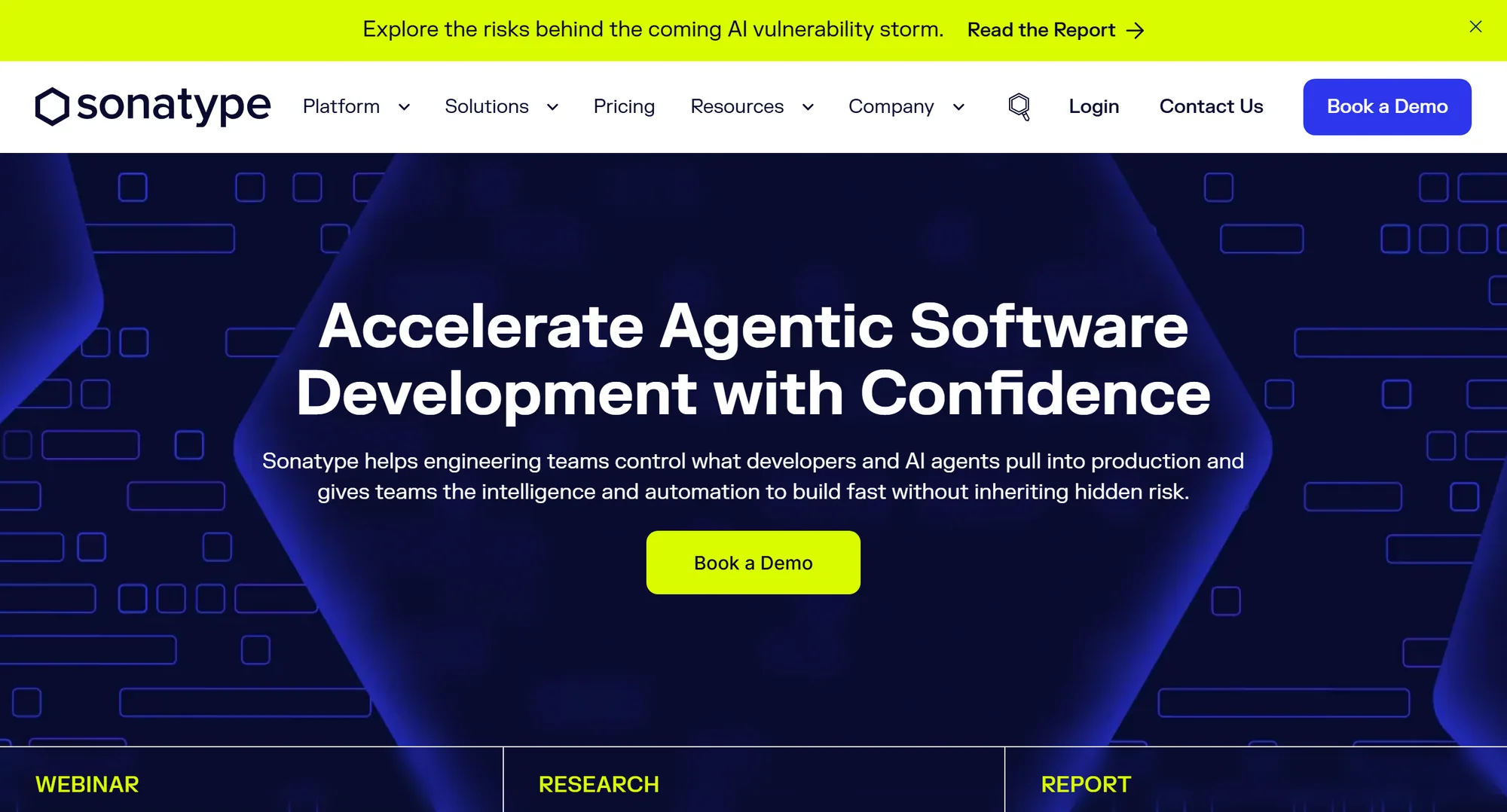
Sonatype SBOM Manager imports and monitors SBOMs with a VEX workflow. Around it, Sonatype Lifecycle adds SCA with Advanced Binary Fingerprinting, and Repository Firewall stops components that fail your policies before they enter your repositories.
Best for: organizations that want SBOM management next to policy at the package repository. Consider if: you run Nexus or another repository manager. New customers buy Sonatype Guide; Firewall Pro starts at $4,800 per year (as of September 2026). CRACI vs Sonatype
6. Finite State
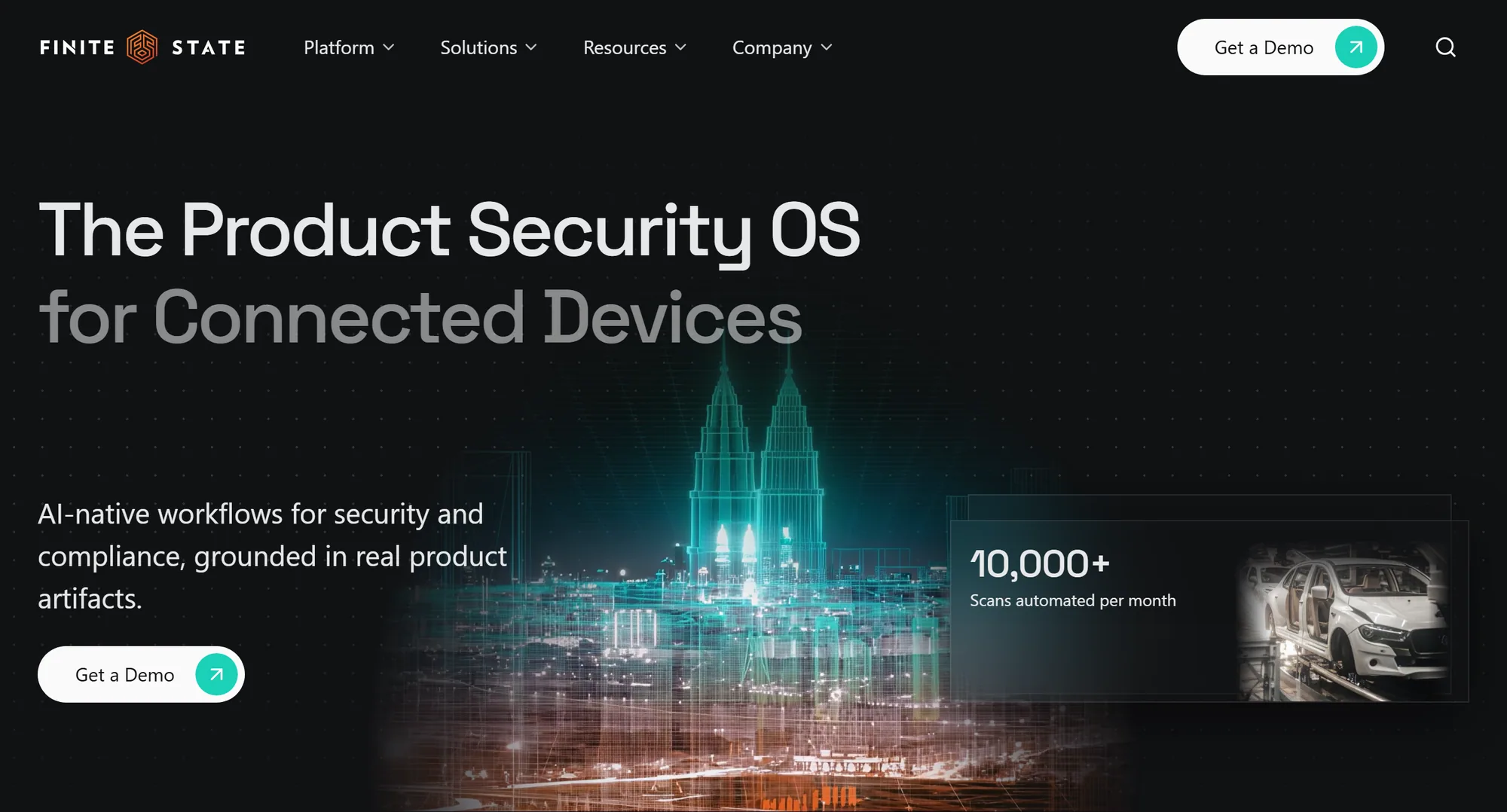
Finite State analyzes firmware, binaries, source code and supplier SBOMs, with support for more than 50 binary instruction set architectures, and brings them into one product record. It ranks findings by reachability and exploit intelligence, records VEX decisions, and its compliance workflow covers CRA control mapping and audit-ready reports with SBOM and VEX artifacts.
Best for: connected-device makers who need analysis of firmware from many suppliers. Consider if: you also need control over what your own build can reach; Finite State starts from artifacts. CRACI vs Finite State
7. ONEKEY
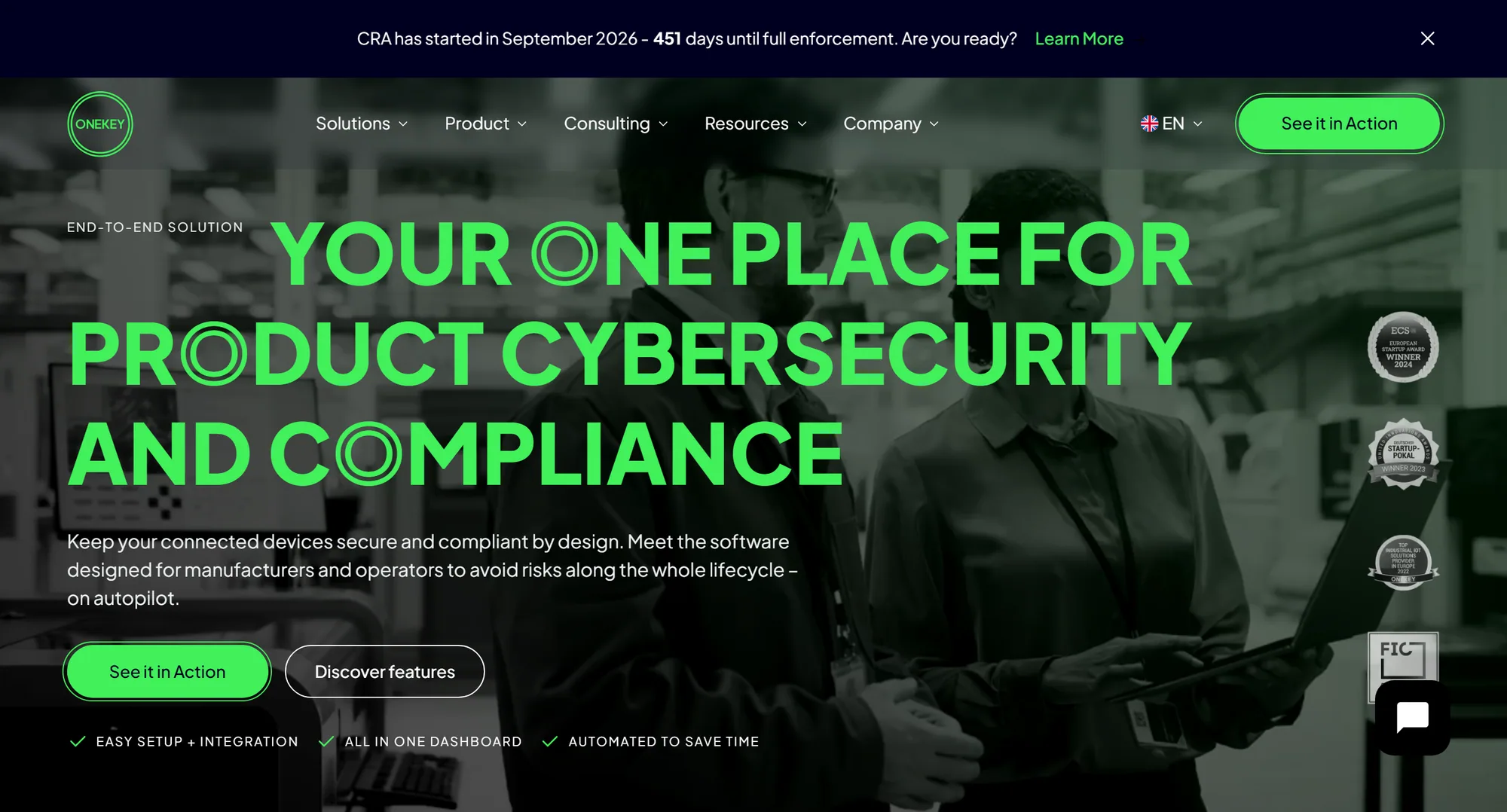
ONEKEY analyzes compiled firmware with "no source code or network access needed." It generates an SBOM from the binary, imports supplier SBOMs, looks for likely zero-days such as hardcoded credentials, and re-analyzes firmware daily. Its Compliance Wizard walks teams through the CRA, IEC 62443-4-2, ETSI EN 303 645 and the Radio Equipment Directive.
Best for: device makers checking firmware images they did not build. Consider if: you need a record of what the build fetched; ONEKEY works on the image after the build. CRACI vs ONEKEY
8. Black Duck
Black Duck SCA combines package manager scanning with signature scanning, snippet detection and binary analysis, so it finds open source that nobody declared. Black Duck Binary Analysis examines executables, containers and firmware without source, and Coverity adds SAST across 22 languages.
Best for: codebases with copied or vendored open source, and teams checking third-party binaries or firmware. Consider if: quote-based pricing works for you; there were no published prices as of September 2026. CRACI vs Black Duck
9. Dependency-Track (open source)
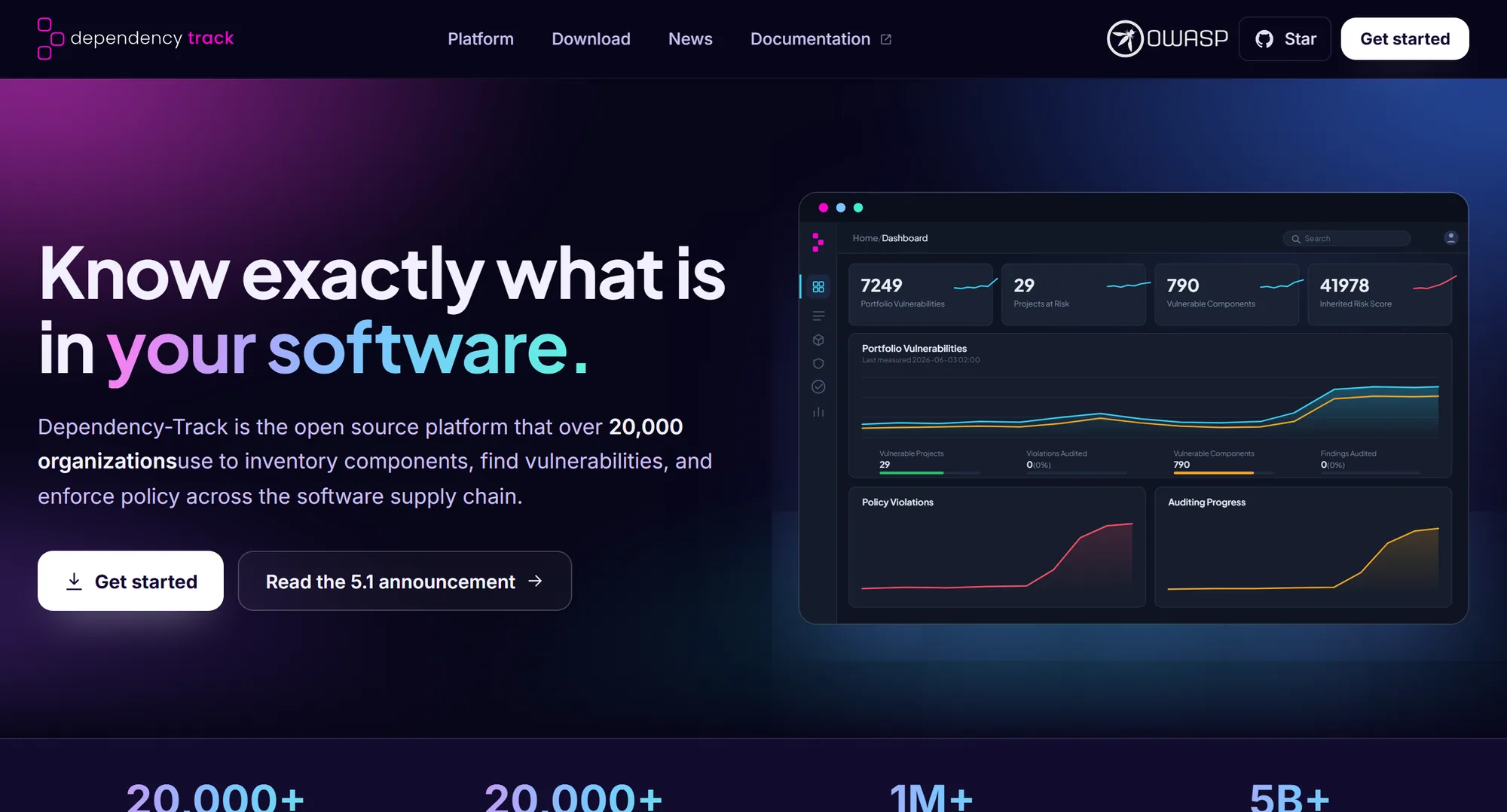
OWASP Dependency-Track is a free, Apache 2.0 platform that tracks components across your portfolio, pulls vulnerability data from sources including the NVD and GitHub Advisories, and applies security, license and operational policies. It consumes and produces CycloneDX VEX.
Best for: teams that want a self-hosted SBOM system of record without a license fee. Consider if: you are ready to operate it and feed it; it analyzes SBOMs you upload and does not generate them. CRACI for Dependency-Track users
Side by side
| Capability | CRACI | Cybeats | Manifest | FOSSA | Anchore | Sonatype | Finite State | ONEKEY | Dependency-Track |
|---|---|---|---|---|---|---|---|---|---|
| SBOM from observed build traffic | Queries build tools | ||||||||
| Generates SBOMs | Via Marketplace | From binaries and source | From firmware | ||||||
| Imports supplier SBOMs | Vendor SBOMs can be added | SBOM Manager | |||||||
| Firmware or binary analysis | Marketplace | Binaries | Add-ons | Not stated | Binary fingerprinting | ||||
| Continuous monitoring | Daily re-analysis | ||||||||
| VEX | Not stated | ||||||||
| Reachability analysis | RAVEN add-on | Not stated | Not stated | Not stated | Lifecycle | Not stated | |||
| Egress policy at the runner | |||||||||
| CI beyond GitHub Actions | GitLab CI and Jenkins | Not stated | Uploads from CI | ||||||
| Pricing (September 2026) | Pay per build minute, no monthly fee | Not stated | Not stated | Free; Business $20/project/mo | Quote | Sonatype Guide; Firewall Pro from $4,800/yr | Not stated | Not stated | Free, open source |
- Included
- Partly
- Not included
- On the roadmap
"Cybeats" means SBOM Studio with its RAVEN add-on, "Anchore" means Anchore Enterprise, and "Sonatype" means SBOM Manager with Lifecycle. Black Duck is described above and left out of the table. "Not stated" means the capability is not described in the vendor's documentation, not that it is missing.
For the Cyber Resilience Act
Cybeats, Finite State and ONEKEY all address the CRA directly. Its reporting obligations have applied since September 11, 2026, and its main provisions apply from December 11, 2027. A 24-hour early warning depends on knowing quickly which releases contain an affected component, and on trusting the inventory that tells you. CRACI's API returns SBOMs, network traces and provenance, and SBOMs export as CycloneDX or SPDX.
No tool on this page makes a manufacturer compliant on its own. See what the CRA requires and CRA compliance tools compared.
When to stay with Cybeats
- You run an SBOM program across many products, suppliers and customers, and need one governed record of all of it.
- You score SBOM quality at import, for example against BSI TR-03183.
- You share SBOMs and VEX with customers, including over the Transparency Exchange API.
- You want AI-assisted reachability and VEX drafting from RAVEN.
For more on recording SBOMs at the source, see build-time SBOM generation, SBOM tools compared and pricing.
Cybeats alternatives FAQ
Short answers to the questions teams ask when they compare
What is the best alternative to Cybeats?
It depends on what you use SBOM Studio for. For supplier and third-party software risk, look at Manifest. For license compliance with SBOM management, look at FOSSA. For firmware you did not build, look at Finite State or ONEKEY. For container fleets and government policy packs, look at Anchore Enterprise. For a free, self-hosted SBOM platform, look at OWASP Dependency-Track. If you want the SBOM produced from your own builds and monitored in the same product, CRACI records it while each GitHub Actions job runs.
Does Cybeats generate SBOMs?
Not in SBOM Studio itself. SBOM Studio ingests, manages, monitors and shares SBOMs, and Cybeats points to its Marketplace of third-party vendors for SBOM generation and binary composition analysis. Cybeats describes generation as routine and puts its value in governance and monitoring.
Is there a free alternative to Cybeats SBOM Studio?
Yes. OWASP Dependency-Track is a free, Apache 2.0 platform that tracks components across your portfolio, applies security and license policy, and handles CycloneDX VEX. You host and operate it yourself, and it analyzes SBOMs you upload rather than generating them.
What is Cybeats RAVEN?
RAVEN is an AI layer that Cybeats sells on top of SBOM Studio. It works through your existing coding agents to reason about reachability, draft VEX statements for analysts to review, and keep an audit trail, with source code staying in your environment. CRACI does not offer reachability analysis.
Can CRACI replace Cybeats for embedded and Yocto builds?
For software you build yourself on GitHub Actions, including Yocto builds, yes: CRACI produces the SBOM from each build, monitors it and lets you add vendor SBOMs. In a side-by-side core-image-sato build, CRACI's SBOM had every component in Yocto's own SBOM plus 88 it missed. CRACI does not analyze binaries or firmware you receive from suppliers, share SBOMs over a portal, or score SBOM quality at import.
Start the SBOM at the build
Run one GitHub Actions workflow on CRACI and compare its SBOM with the ones you store today.
Book a demo