Alternatives
Cybellum alternatives
Cybellum analyzes firmware binaries and gives product security teams one platform for SBOMs, vulnerabilities, compliance and incident response. If your PSIRT wants a different approach to the inventory, a narrower tool, an open-source base, or a record from the software you build yourself, these are the options worth comparing.
Updated
We build CRACI, so weigh that in; we describe every option from its own documentation and say when another tool fits better.
Why teams look beyond Cybellum
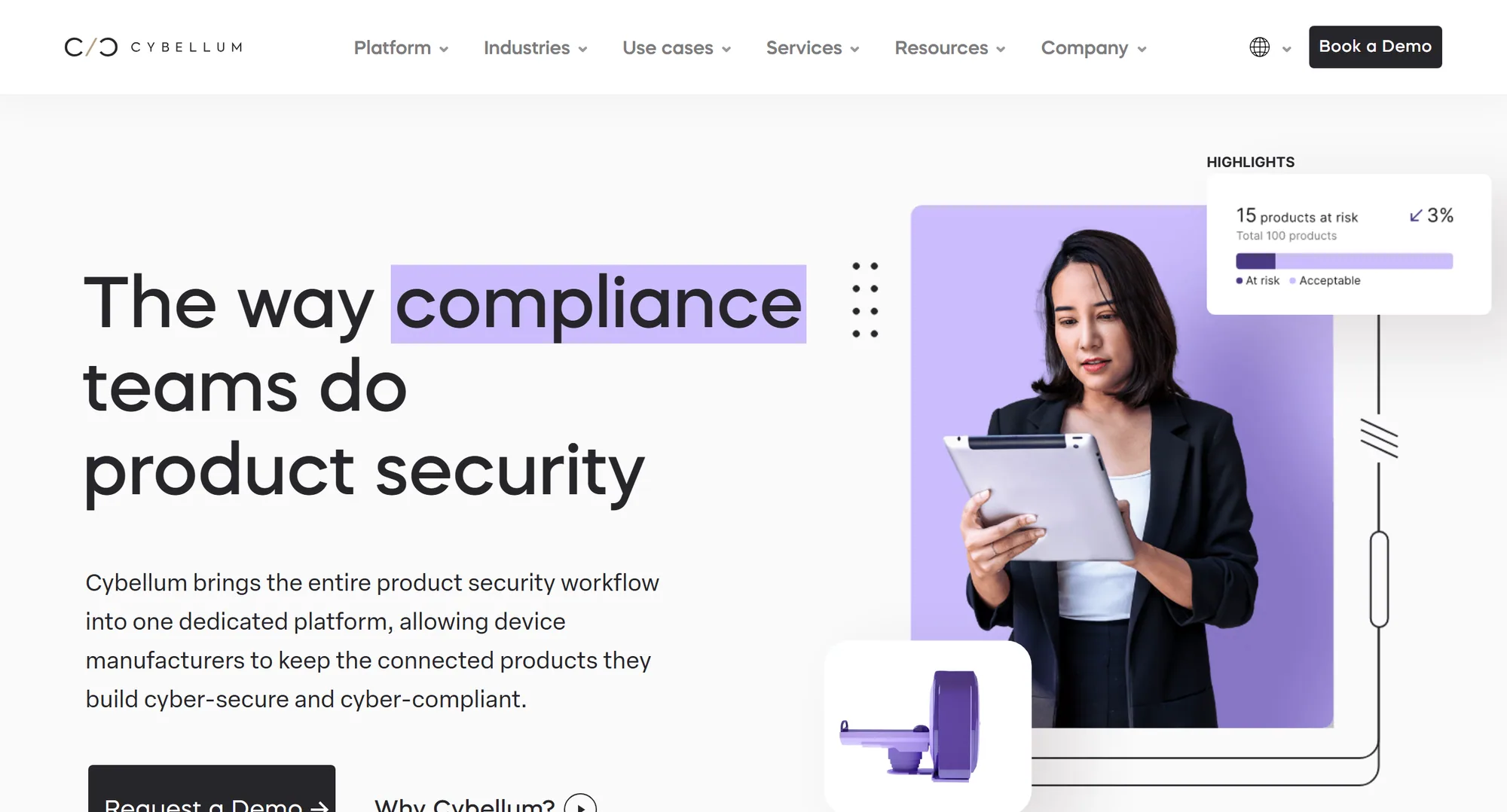
Cybellum is a product security platform for device manufacturers in automotive, medical and industrial markets. Its Cyber Digital Twins "can be extracted from the binary files of any product or component," and the platform merges them with source code and SBOMs "in SPDX, CycloneDX or CPEs CSV formats." It monitors post-production versions and branches, triages with an AI assistant, shows "which products or components are affected by a new vulnerability or regulation," gives a PSIRT "a workbench for creating and managing investigations," and shares status "via VEX/CSAF reports." Regulatory templates cover FDA PMA, ISO 21434 and the EU CRA. LG Electronics bought a majority stake in 2021.
Teams still compare alternatives, usually for one of these reasons:
- Most of the software is their own. Analyzing a binary works backward from the output. A team that builds its own software and images can record what went into them instead.
- A narrower job. Some teams need only firmware analysis, only an SBOM system of record, or only advisory intake and case handling, rather than a full product security platform.
- Industry fit. Cybellum's templates lean toward automotive and medical regulation; some teams want a tool built around one industry, or one that is not.
- Pricing and hosting. Cybellum publishes no prices, and some teams want an open-source base they run themselves.
What a PSIRT should look for
- An inventory of what ships: whether it comes from the binary, from SBOMs you are given, or from the build.
- Affected products and versions: how fast the tool answers "where do we ship this component?"
- Monitoring after release, and which vulnerability feeds it watches.
- Triage: exploitability signals, VEX, and routing each finding to the team that owns the fix.
- Advisories and reporting: what you can publish to customers, and the evidence the Cyber Resilience Act asks for.
- CI coverage, hosting options and how pricing scales.
For the process itself, see what a PSIRT does and PSIRT tools compared.
The options
1. CRACI (our product)
CRACI is a GitHub Actions runner that produces the SBOM while the build runs. It is for teams that build their own
software and firmware. A package-aware proxy records what each job fetches from package and source hosts, including
packages restored from CI caches, and each SBOM states its completeness per job and per cache. Yocto builds run on
runners of up to 32 vCPUs and 96 GB of RAM: in a
side-by-side build of core-image-sato, CRACI's SBOM had every
component in Yocto's own SBOM plus 88 it missed, such as host packages and GitHub Actions, and a package URL for
each of the 653 Rust crate versions Yocto lists without one.
For a PSIRT, CRACI keeps every past build with its SBOM, so you can see which builds contained a vulnerable dependency and for how long, and its inventory view shows which software versions are deployed to which products. It re-evaluates monitored SBOMs continuously, supports VEX, and lets security teams triage findings and route each one to the team that owns the fix. You can add vendor SBOMs, so bought-in components are monitored next to your own builds. Because CRACI runs the job, it also enforces an egress policy that fails closed.
Best for: manufacturers that build their own software and images on GitHub Actions and want the build, the SBOM and the vulnerability tracking in one place. Consider if: you can live without binary analysis, zero-day findings, reachability and guided checks against standards, none of which CRACI has; it cannot see inside firmware you did not build. It supports GitHub Actions only, with GitLab CI and Jenkins on the roadmap. CRACI vs Cybellum
2. ONEKEY
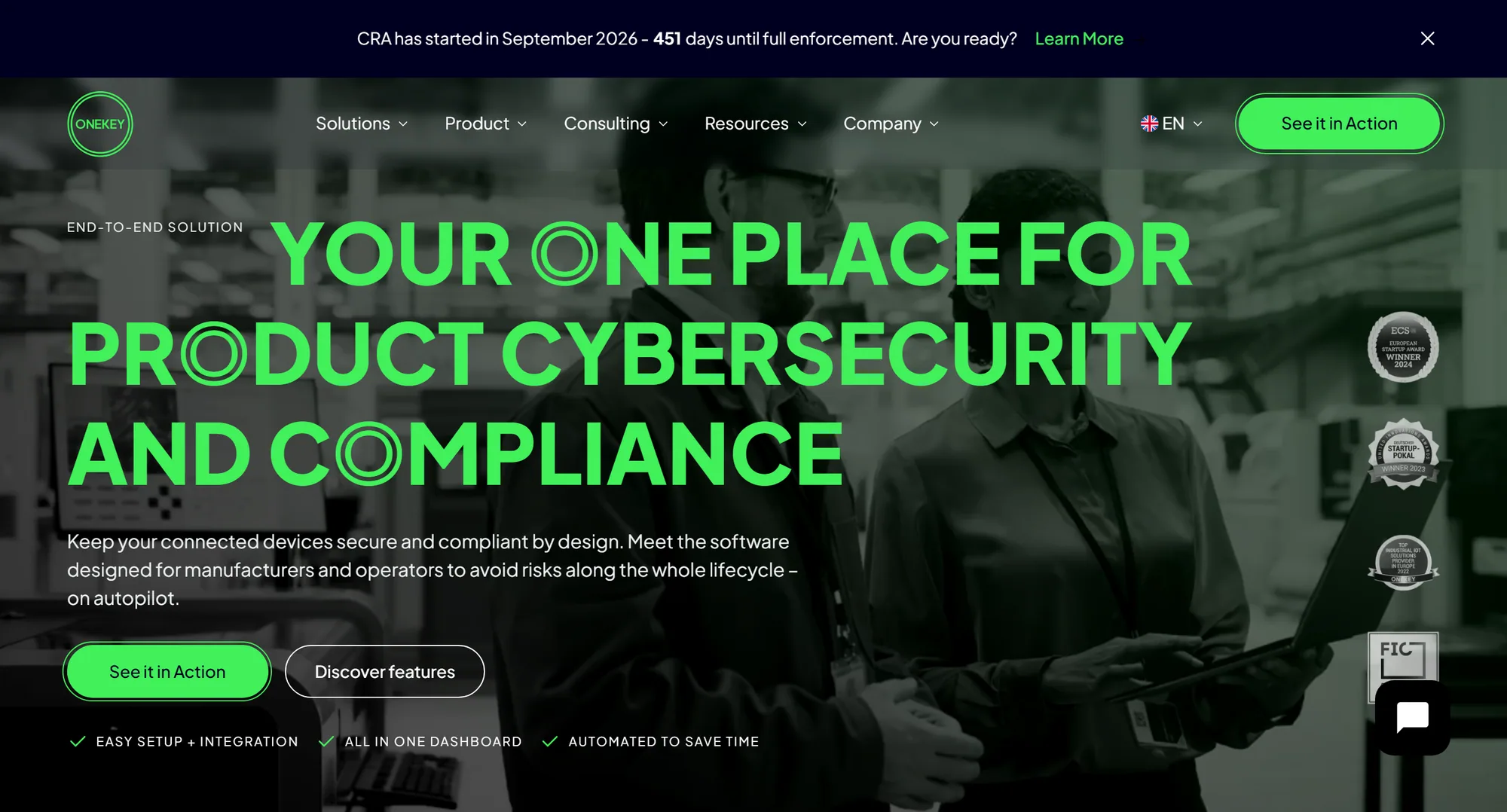
ONEKEY analyzes compiled firmware with "no source code or network access needed." It generates an SBOM from the binary, imports supplier SBOMs, exports CycloneDX and SPDX, looks for likely zero-days such as hardcoded credentials, and re-analyzes firmware daily. Its Compliance Wizard walks teams through the CRA, IEC 62443-4-2, ETSI EN 303 645 and the Radio Equipment Directive.
Best for: device makers checking firmware images they did not build, with guided checks against standards. Consider if: you want the image analysis without automotive and medical regulatory templates. CRACI vs ONEKEY
3. Finite State

Finite State analyzes firmware, binaries, source code and supplier SBOMs, with "support for 50+ binary instruction set architectures," and brings them into one product record. It ranks findings by reachability, exploit intelligence and product context, records VEX decisions, and its compliance workflow covers CRA control mapping and audit-ready reports with SBOM and VEX artifacts. It embeds checks in GitHub Actions, GitLab CI and Jenkins.
Best for: connected-device makers who need analysis of firmware from many suppliers, with less noise from unreachable findings. Consider if: reachability is the signal your PSIRT triages by. CRACI vs Finite State
4. NetRise
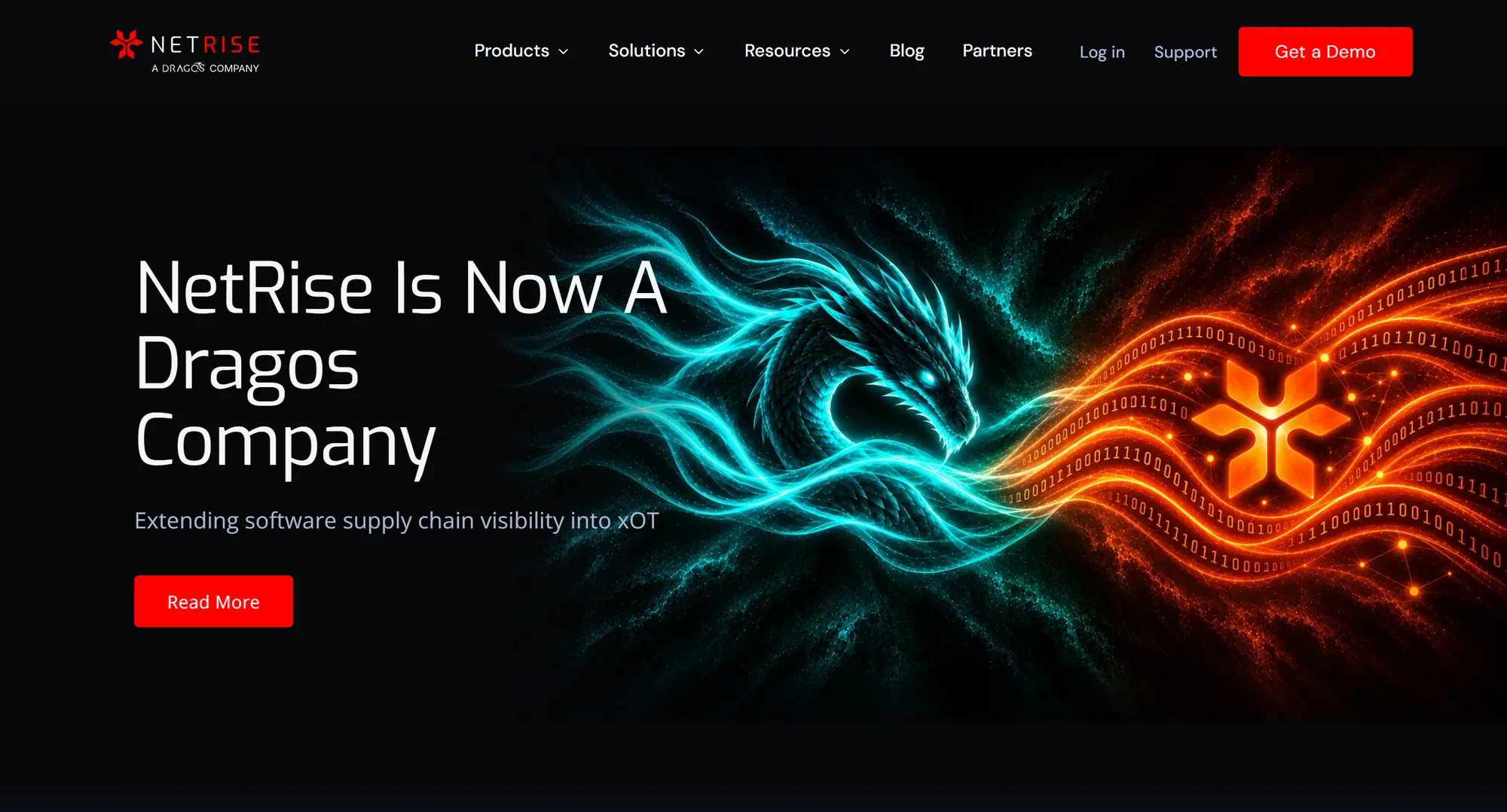
NetRise Turbine analyzes compiled code "to create accurate SBOMs and uncover risk within the software that actually executes" on devices, and prioritizes vulnerabilities by reachability and exploitability. NetRise Provenance looks at the origin, maintainers and repository health of open-source components. Dragos acquired NetRise on September 21, 2026, and positions it for operational technology fleets.
Best for: product security, third-party risk and incident response teams, especially in industrial and critical infrastructure, who need to know what runs on devices. Consider if: quote-based buying works for you; NetRise publishes no prices, and it has been part of Dragos since September 2026.
5. Cybeats
Cybeats SBOM Studio is a system of record that ingests, manages, monitors and shares SBOMs across products and suppliers. It scores SBOM quality at import and shares SBOMs and VEX with customers. For SBOM generation and binary composition analysis, Cybeats points to vendors in its Marketplace, and its RAVEN add-on reasons about reachability and drafts VEX.
Best for: medical, industrial and telecom manufacturers running an SBOM program across many products and suppliers. Consider if: you already have a way to generate SBOMs; SBOM Studio manages SBOMs that another tool generated. CRACI vs Cybeats
6. Medcrypt
Medcrypt focuses on medical device manufacturers. Its Helm product handles SBOM and vulnerability management: you "upload or manually create SBOMs (CycloneDX or SPDX)" or connect Helm to your pipeline through its API, GitHub Action or Azure DevOps integration. Helm uses EPSS, CISA KEV, ExploitDB and Metasploit to rank vulnerabilities, rescores them as fix data arrives, and exports SBOMs, VDRs and VEX. Medcrypt also offers services such as threat modeling review and help with FDA submissions.
Best for: medical device makers preparing FDA premarket submissions and running postmarket vulnerability management. Consider if: your products are outside medical devices, or you need binary analysis, which Medcrypt does not describe.
7. DefectDojo
DefectDojo is an open-source vulnerability management platform that ingests findings from "500+ integrations," deduplicates them and tracks remediation. Its PSIRT Advisory Engine, part of DefectDojo Pro, takes in advisories from CISA, NVD, EUVD and more than a dozen other feeds, matches them against your SBOM data, scores them with CVSS, EPSS and KEV, groups matches into cases with owners, and generates branded PDF advisories. Pro runs in the cloud or self-hosted.
Best for: PSIRTs that want advisory intake, case handling and SLA tracking on an open-source vulnerability management base. Consider if: you already have SBOMs to match against; DefectDojo does not generate them or analyze binaries. The Community Edition is free; Pro is $100 per month plus 15 cents per finding (as of October 2026).
8. Exein
Exein works on the device and on the firmware. Exein Runtime uses eBPF to monitor and block malicious behavior on
embedded Linux, and the open-source meta-exein Yocto layer puts its Pulsar agent into your image.
Exein Analyzer inspects firmware before release, or your SBOM when the binary is not available, ranks findings with
reachability scoring and LLM-powered filtering, and maps them to CRA requirements.
Best for: embedded Linux makers that want protection in the field as well as firmware analysis. Consider if: you are comfortable shipping an agent on the device. CRACI vs Exein
9. Timesys Vigiles
Vigiles, now sold by Lynx Software Technologies, turns the metadata of a Yocto or Buildroot build into an SBOM and matches it against a curated CVE database. Teams record whether each CVE is affected, fixed, deferred or not exploitable, Vigiles keeps those decisions per release, and it exports SBOMs along with VEX and vulnerability reports.
Best for: embedded Linux teams that want less CVE noise on Yocto and Buildroot images. Consider if: your products are not built on embedded Linux. CRACI vs Timesys Vigiles
Side by side
| Capability | CRACI | Cybellum | ONEKEY | Finite State | NetRise | Cybeats | Medcrypt Helm | DefectDojo | Exein |
|---|---|---|---|---|---|---|---|---|---|
| SBOM produced during your build | Observed build traffic | Manages SBOMs other tools make | Generation tool on request | Not stated | |||||
| Binary or firmware analysis | Cyber Digital Twins | 50+ instruction sets | Through Marketplace vendors | Not stated | Imports scanner findings | Exein Analyzer | |||
| Imports supplier SBOMs | Vendor SBOMs can be added | SPDX, CycloneDX or CPE CSV | SPDX and CycloneDX | CycloneDX or SPDX | CycloneDX and SPDX, in Pro | When no binary is available | |||
| Continuous vulnerability monitoring | Monitored SBOMs re-evaluated | Post-production versions and branches | Daily re-analysis | Post-market monitoring | Rescores as fix data arrives | 20+ advisory feeds, in Pro | Not stated | ||
| VEX | VEX reports | Not stated | VEX decisions | Not stated | Shares VEX | Exports VEX | CycloneDX VEX export, in Pro | Not stated | |
| Reachability or exploitability ranking | EPSS in its vulnerability data | Not stated | RAVEN add-on | EPSS, KEV and exploit data | EPSS and KEV | ||||
| Egress policy at the runner | |||||||||
| CI beyond GitHub Actions | GitLab CI and Jenkins | GitLab, Jenkins, Bamboo | Not stated | Not stated | Azure DevOps | Not stated | Not stated | ||
| Pricing (October 2026) | Pay per build minute, no monthly fee | Not stated | Not stated | Not stated | Not stated | Not stated | Not stated | Community free; Pro $100/mo plus $0.15 per finding | Not stated |
- Included
- Partly
- Not included
- On the roadmap
"Medcrypt Helm" means Medcrypt's SBOM and vulnerability management product, "NetRise" means NetRise Turbine, and "Cybeats" means SBOM Studio. Timesys Vigiles is described above and left out of the table. "Not stated" means the capability is not described in the vendor's documentation, not that it is missing.
For the Cyber Resilience Act
Cybellum, ONEKEY, Finite State, DefectDojo and Exein all describe support for the CRA. Its reporting obligations have applied since September 11, 2026, and its main provisions apply from December 11, 2027. A 24-hour early warning depends on knowing quickly which releases contain an affected component. For software you build, CRACI keeps the build history with each build's SBOM, so you can see which builds contained a vulnerable dependency. Its API returns SBOMs, network traces and provenance, SBOMs export as CycloneDX or SPDX, and CRACI submits the CRA notifications on your behalf.
No tool on this page makes a manufacturer compliant on its own. See what the CRA requires and CRA compliance tools compared.
When to stay with Cybellum
- Much of your firmware comes from suppliers as binaries, and you need to see inside it.
- You want binaries, source code and supplier SBOMs merged into one validated SBOM per product and version.
- Your PSIRT runs its investigations in one workbench and shares status as VEX or CSAF reports.
- You rely on templates for FDA PMA, ISO 21434 or the EU CRA, or need to run in your own datacenter.
For more, see CRACI for PSIRT teams, embedded security tools compared and Finite State alternatives.
Cybellum alternatives FAQ
Short answers to the questions teams ask when they compare
What is the best alternative to Cybellum?
It depends on what your PSIRT needs most. For analysis of firmware binaries, look at ONEKEY, Finite State or NetRise. For a system of record for SBOMs across products and suppliers, look at Cybeats. For medical devices and FDA submissions, look at Medcrypt. For advisory intake and case handling on an open-source vulnerability management base, look at DefectDojo with its PSIRT Advisory Engine. For protection on the device as well, look at Exein. If you build your own software in GitHub Actions, CRACI records the SBOM from each build and monitors it for vulnerabilities.
Can CRACI analyze firmware binaries like Cybellum?
No. CRACI does not analyze binaries or firmware images, and it does not look for zero days. It records what your own builds fetch while they run on CRACI's GitHub Actions runners, including Yocto builds, and produces the SBOM from that record. For firmware you receive as a binary, you can add the vendor's SBOM to CRACI so its components are monitored, but without an SBOM you need a binary analysis tool.
Which of these tools tells a PSIRT which products a new CVE affects?
Most of them, from different inputs. Cybellum, ONEKEY, Finite State and NetRise work from analysis of the binaries you ship. Cybeats, Medcrypt Helm and DefectDojo match the SBOMs you give them. CRACI works from a record of what each build fetched: build history shows which builds contained a vulnerable dependency, direct or transitive, and its inventory view shows which software versions are deployed to which products.
Is there a free alternative to Cybellum?
DefectDojo's Community Edition is free and open source, and it aggregates and deduplicates findings from other scanners. Its PSIRT Advisory Engine, which matches advisories against your SBOM data and groups them into cases, is part of DefectDojo Pro. Neither edition analyzes firmware binaries.
Is a build-time SBOM better than one from binary analysis?
For software you build, a build-time SBOM records what went in instead of inferring it from the output, which is hard for compiled code such as Rust and C. Binary analysis is still the only option for firmware you did not build. In a side-by-side core-image-sato build, CRACI's SBOM had every component in Yocto's own SBOM plus 88 it missed, and a package URL for each of the 653 Rust crate versions Yocto lists without one.
See your products' exposure from the build
Book a demo and we will run one of your GitHub Actions builds on CRACI and show which builds a known CVE reached.
Book a demo