Comparison
20 best CI/CD security tools in 2026
CI/CD security tools protect the pipeline that builds your software: its workflow files, its runners, the secrets it holds and the packages it pulls in. Here are 14 commercial tools and six free ones, grouped by the layer they protect, with what each costs and where CRACI fits.
Updated
Who this is for
This page is for platform and security engineers picking tools to secure a CI/CD pipeline, most often on GitHub Actions. We build CRACI, which competes in one part of this category, so weigh that in. Every claim about another product comes from that vendor's own documentation, and most products have a longer CRACI vs X page. For what CI/CD security is and the risks behind it, start with CI/CD security explained; this page is about the tools.
Why the pipeline needs its own tools
A pipeline holds credentials, runs third-party code and produces what your customers install. Two incidents show how attackers use that:
- tj-actions/changed-files, March 2025. The popular GitHub Action was compromised (CVE-2025-30066). Every version of it was affected, and secrets from the workflows that ran it, such as access keys and tokens, were exposed in their logs.
-
Trivy, March 2026. Using compromised credentials, an attacker force-pushed 76 of the 77 version
tags of
aquasecurity/trivy-actionand all seven tags ofsetup-trivyto malicious commits, and published a malicious Trivy release (CVE-2026-33634). The injected step read the runner's process memory and credential files, encrypted what it found and sent it to an attacker's server. If that failed and a GitHub personal access token was set, it uploaded the data to a new public repository on the victim's own GitHub account. Aqua's advisory tells users to rotate every secret the affected pipelines could reach and to pin actions to full commit SHAs.
Both attacks came in through a third-party action, and neither touched the victims' own code. A code scanner would not have caught them. Pinning, egress control and a record of what each job ran would each have helped, which is why CI/CD security is several layers rather than one product.
The five layers of CI/CD security
Most tools work at one or two of these layers. The layer decides what a tool can see and what it can stop, so it tells you more than a feature list.
| Capability | What it protects against | Tools on this page |
|---|---|---|
| Workflow posture | Risky workflow files and settings: script injection, broad token permissions, unpinned actions, dangerous triggers | zizmor, poutine, actionlint, OpenSSF Scorecard, Legitify, GitHub code scanning, Legit, Cycode, OX, Apiiro, Xygeni, Wiz, Endor Labs |
| Runner hardening and egress control | A compromised step or package sending secrets to an attacker's host while the job runs | CRACI, StepSecurity Harden-Runner, Cycode Cimon |
| Secrets scanning | Credentials committed to code or leaked into logs | GitHub Secret Protection, GitGuardian, Gitleaks, and most ASPM platforms |
| Dependency scanning in CI | Known vulnerable or malicious open-source packages | Snyk, Aikido, Socket, Endor Labs, GitHub Dependabot |
| Build evidence | Not knowing what went into a release after the fact | CRACI (SBOM per build); Cycode Cimon and OX PBOM (build records) |
-
Workflow posture tools read your workflow files and CI settings before anything runs. They catch
script injection, broad
GITHUB_TOKENpermissions, actions pinned to mutable tags and dangerous triggers such aspull_request_target. See GitHub Actions security and the CI/CD pipeline security checklist. - Runner hardening and egress control works while the job runs. It limits which hosts a job can reach, so a compromised step cannot send secrets out. See egress policy for GitHub Actions.
- Secrets scanning finds credentials in code and history, ideally before they are pushed.
- Dependency scanning checks the packages a project declares for known vulnerabilities and, in some tools, malware.
- Build evidence records what each build actually fetched and produced, so you can answer "were we affected?" after the next incident.
How to choose
- Start with the free layer. zizmor or poutine on every pull request costs nothing and catches common workflow mistakes such as script injection and overly broad permissions.
- Keep your runners or replace them? Agents such as StepSecurity Harden-Runner and Cycode Cimon add egress control to runners you already use. CRACI replaces the runner for GitHub Actions, so the policy comes with the runner.
- Do you need audit mode first? Harden-Runner and Cimon can watch traffic before they block it. CRACI's monitor mode is on the roadmap.
- One platform or best of breed? ASPM platforms such as Legit, Cycode, OX and Apiiro cover posture, secrets and scanning across many CI systems in one place. Smaller teams often combine free linters with one scanner.
- Which CI do you run? Most tools here support several CI systems. CRACI supports GitHub Actions only today, with GitLab CI and Jenkins on the roadmap.
- What must you prove later? If customers or regulations ask what went into each release, look for a tool that records the build rather than one that only reports findings.
At a glance
The tools fall into two shapes, so there are two tables. The first compares tools that work on the pipeline itself. The second compares scanners that run in CI. "Not stated" means the vendor pages we cite do not say either way. Pricing is as each vendor published it in September 2026.
Pipeline, runner and posture tools
| Capability | CRACI | StepSecurity | Cycode | OX Security | Legit Security | Wiz | Xygeni |
|---|---|---|---|---|---|---|---|
| Runs your builds | Jobs run on CRACI runners | Agent on your runners | Cimon agent in your CI | Scanners and sensors in your CI | |||
| Blocks build network egress | Default deny or allow; fails closed | Domain allowlist in block mode | Cimon | Not stated | Not stated | ||
| Audit mode before blocking | Monitor or dry-run mode | Per-job baselines | Learns normal behavior, then enforces | Not stated | Not stated | ||
| Package SBOM recorded during the build | Per job, completeness stated | Records destinations, processes and files | Cimon runtime-observed SBOM | Collected from connected sources | SBOM from code | Reads dependency descriptors | |
| GitHub Actions workflow posture checks | Actions inventory; pins actions and sets token permissions | Unpinned actions, workflow permissions, risky webhooks | Policies across source control, CI and registries | OWASP Top 10 CI/CD, CIS for GitHub and GitLab | Pipeline misconfigurations, OWASP Top 10 CI/CD | ||
| SAST and secrets scanning | Not stated | Secrets in code, build logs and chat tools | |||||
| CI beyond GitHub Actions | GitLab CI and Jenkins | GitLab CI, Azure DevOps | Azure Pipelines, Jenkins, GitLab CI, Buildkite, Harness | GitLab, Jenkins, Azure Pipelines, CircleCI | GitLab CI, Jenkins, Azure DevOps, CircleCI | Posture benchmarks for GitHub and GitLab | GitLab, Jenkins, Azure Pipelines, CircleCI and more |
| Pricing | $0.002 per vCPU-minute ($0.004 for 2 vCPU), metered per second; no monthly fee | Free for public repositories; Enterprise $16 per contributing developer per month | Not listed; Cimon is free and open source | Per contributing developer; no list prices | Not published | By quote | Free up to 5 contributors; Team from about $3,828 (€3,300) a year |
- Included
- Not included
- On the roadmap
Scanners that run in CI
| Capability | CRACI | GitHub (GHAS) | Snyk | Aikido | Socket | Endor Labs |
|---|---|---|---|---|---|---|
| Records what the build fetched | Package-aware proxy on the runner | Manifests plus submitted data | Manifests and lockfiles | Manifests and lockfiles | Manifest and lock files | Analyzes source code |
| Blocks build network egress | Fails closed | Firewall filters installs | ||||
| GitHub Actions workflow analysis | CodeQL for Actions workflows | Not stated | Not stated | Not stated | Permissions, injection risks, Actions inventory | |
| Secrets scanning | Secret Protection, with push protection | Not stated | Not stated | |||
| SAST for your own code | CodeQL | Snyk Code | Not stated | AI SAST | ||
| Known vulnerabilities in dependencies | Matched on the recorded SBOM, monitored after release | Dependabot alerts | Reachability, EPSS and fix pull requests | Function-level reachability | Plus package behavior and malware | Function-level reachability |
| Blocks malicious packages at install | Package blocklists | Not stated | Not stated | Safe Chain for npm and PyPI | Socket Firewall | Package Firewall |
| CI beyond GitHub Actions | GitLab CI and Jenkins | Also sold for Azure DevOps | GitLab, Jenkins, Bitbucket, CircleCI | GitLab, Bitbucket, Azure DevOps | ||
| Pricing | $0.002 per vCPU-minute ($0.004 for 2 vCPU), metered per second; no monthly fee | Secret Protection $19 and Code Security $30 per active committer per month | Free tier; Team from $25 per month | Free plan; paid from $350 per month | Free plan; Team $25 and Business $50 per developer per month | Free Developer tier; paid tiers via sales |
- Included
- Partly
- Not included
- On the roadmap
Runner hardening and egress control
CRACI
CRACI is a runner for GitHub Actions. You change runs-on to craci, each job runs in its
own virtual machine, and runs still appear in GitHub. An egress policy, default deny or default allow, is validated
before the job starts and fails closed, and a blocked connection shows up in the job's network trace. A
package-aware proxy records every package the job fetched, including packages restored from CI caches, into an SBOM
that states its own completeness. Policy gates can stop a build that contains a specific CVE, and CRACI keeps
re-evaluating the SBOMs of what shipped. Best for teams on GitHub Actions that want egress control
and a record of every build without adding an agent. Watch out: no workflow posture checks, SAST
or secrets scanning, no audit mode yet, and Linux jobs on GitHub Actions only today (GitLab CI, Jenkins, Windows and
macOS are on the roadmap). Policy gates and
build-time SBOMs
StepSecurity Harden-Runner
Harden-Runner is an agent on the GitHub Actions runners you already use, including GitHub-hosted ones. It ties every outbound connection, process and file write to the workflow step that caused it, builds a baseline in audit mode, then blocks egress outside an allowlist. StepSecurity also keeps an inventory of the actions you use, opens pull requests that pin actions and set least-privilege token permissions, and lists GitLab CI and Azure DevOps. Best for keeping GitHub-hosted or self-hosted runners while adding runtime controls. Watch out: block mode on GitHub-hosted runners is Linux only, and it records destinations rather than a package-level SBOM. Private repositories need Enterprise, at $16 per contributing developer per month. CRACI vs StepSecurity
Pipeline posture and ASPM platforms
Cycode
Cycode is an ASPM platform with SAST, SCA, secrets, container and IaC scanning, CI/CD posture and more than 100 connectors. Its build piece, Cimon, is an eBPF agent inside your CI jobs that monitors processes, network egress and file access, learns a pipeline's normal behavior before enforcing it and produces a runtime-observed SBOM. Cycode says Cimon is free and open source. Best for one platform across code and many CI systems, with runtime protection on runners you keep. Watch out: platform pricing is not published. CRACI vs Cycode
Legit Security
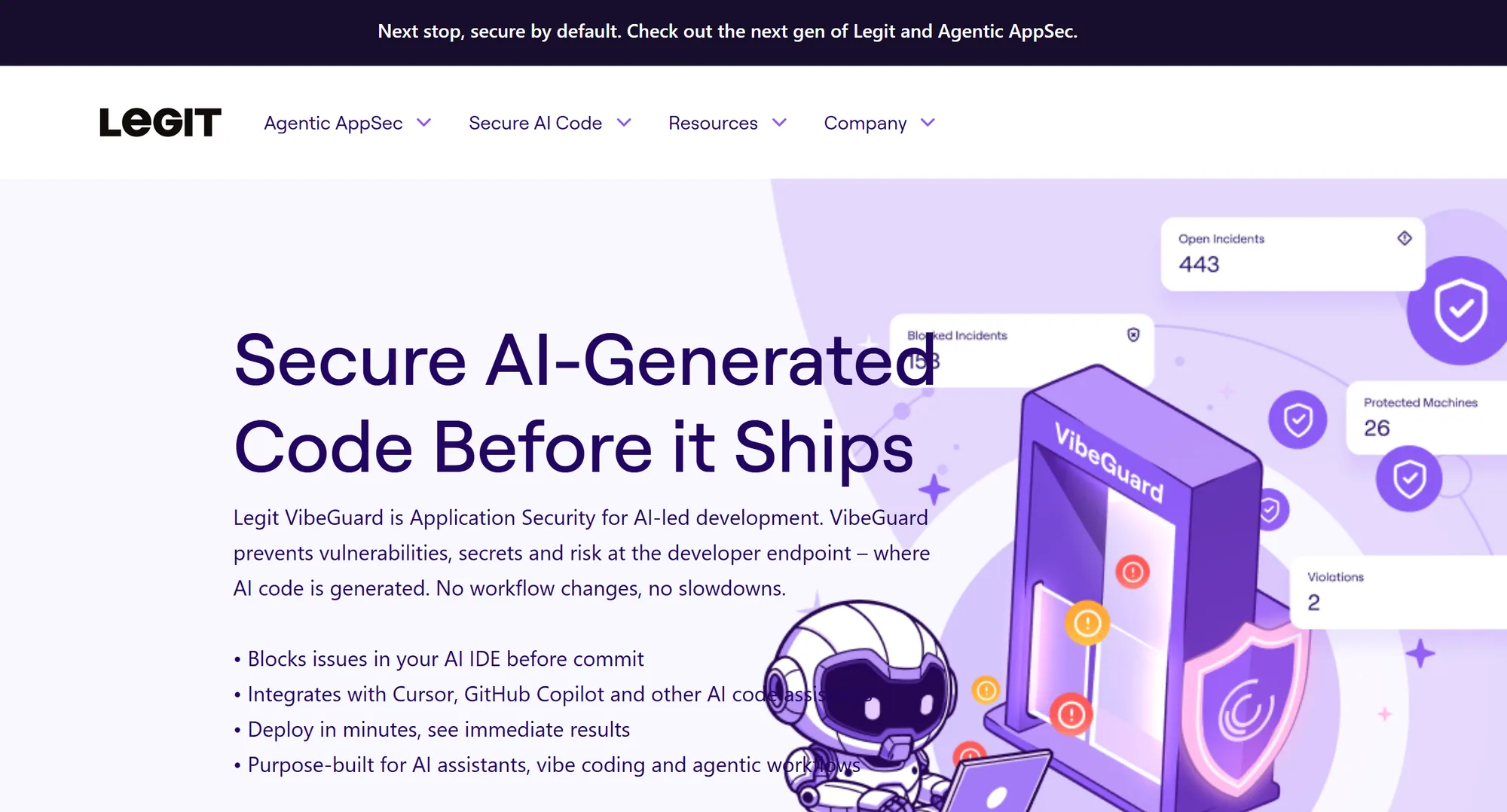
Legit Security keeps a continuously updated inventory of your SDLC systems, pipelines and the security controls on them, with hundreds of policies across source control, CI and registries. It orchestrates scanners such as Snyk and GitHub Advanced Security, adds native SAST and SCA, and finds secrets in build logs, Slack and Confluence as well as code. Best for a security team that inherited many repositories and several CI systems. Watch out: it reads configuration through APIs, so it does not see what a job connects to while it runs. Its free Legitify tool is in the open-source table below. CRACI vs Legit Security
OX Security
OX Security's CI/CD posture policies flag insecure workflow files, unpinned third-party actions, deprecated GitHub Actions commands, excessive workflow permissions, plaintext secrets and risky webhooks. The OX Security Scan action fails a workflow on a blocking issue, and its Pipeline Bill of Materials records pipeline definitions, runner identity and build arguments per build. Best for posture policies and pull request gating across GitHub Actions, GitLab, Jenkins, Azure Pipelines and CircleCI. Watch out: its policies check configuration rather than limit what a running job can reach, and there are no list prices. CRACI vs OX Security
Apiiro
Apiiro is an ASPM platform built on Deep Code Analysis and a Risk Graph that correlates findings from its own scanners and third-party tools. Its supply chain module inventories repositories and pipelines, including shadow pipelines, and flags weak branch protection and abnormal commits. It connects through APIs and needs no CI changes. Best for large AppSec programs that want architecture context across many source control systems. Watch out: it does not control what a build can reach, and its cited pages state no pricing. CRACI vs Apiiro
Xygeni
Xygeni's CI/CD security module checks pipelines for misconfigurations and the OWASP Top 10 CI/CD risks, and flags harmful commands such as reverse shells and malware downloads. Build Security adds SLSA provenance and in-toto attestations, and Anomaly Detection watches GitHub, GitLab, Jenkins and Azure for unusual activity. It also covers SAST, SCA, secrets and malware. Best for smaller teams that want one platform with published prices and a free plan for up to five contributors. Watch out: Build Security and Anomaly Detection are Enterprise options. CRACI vs Xygeni
Wiz Code
Wiz Code parses GitHub Actions workflows and models workflows, jobs and runners on the Wiz Security Graph, with
checks for pull_request_target, permission issues and third-party actions, posture benchmarks such as
the OWASP Top 10 CI/CD and CIS for GitHub and GitLab, and code-to-cloud mapping. Best for teams
already on Wiz for cloud security. Watch out: it reports findings about the pipeline rather than
enforcing anything inside the job, and pricing is by quote. CRACI vs Wiz
Endor Labs
Endor Labs is best known for function-level reachability in SCA, but its CI/CD product also inventories the tools and GitHub Actions in your pipelines, flags vulnerable actions, excessive permissions and code injection risks, and ships more than 50 repository posture policies. A Package Firewall sits in front of your registries. Best for teams that want dependency prioritization and Actions posture from one vendor. Watch out: its inventory comes from analyzing source code, and it does not run or restrict your builds. CRACI vs Endor Labs
Secrets scanning
GitHub Secret Protection covers secret scanning, push protection that blocks a secret before it lands, and validity checks, for $19 per active committer per month on a Team or Enterprise plan. Its sibling, GitHub Code Security ($30), includes CodeQL, which has analyzed GitHub Actions workflows for script injection, missing permissions and unvalidated inputs since April 2025. On public repositories, secret scanning, push protection and code scanning are free. CRACI vs GitHub Advanced Security
GitGuardian specializes in secrets. Its ggshield CLI runs as a GitHub Action and fails the workflow when it finds a leak, and GitGuardian also documents integrations for GitLab, Jenkins, Azure Pipelines, Bitbucket, CircleCI, Drone and Travis CI. The Starter plan is free for up to 25 developers; Growth and Enterprise go through sales (checked November 2026).
Gitleaks is a free, MIT-licensed scanner for secrets in Git history and files. Its GitHub Action needs a free license key for organization repositories, and its maintainer says future Gitleaks releases will be security patches only. For how secrets leak from workflows in the first place, see GitHub Actions secrets.
Dependency scanning in CI
Snyk runs SCA, Snyk Code (SAST), containers and IaC from the IDE, CLI and CI, prioritizes dependency findings with reachability and EPSS, and opens upgrade pull requests. Free tier; Team from $25 per month. CRACI vs Snyk
Aikido scans every build for vulnerabilities, secrets and malicious dependencies, and can block a pull request with a critical finding in GitHub, GitLab, Bitbucket, CircleCI and Jenkins. Its free Safe Chain tool blocks known malware in npm and PyPI installs. Free plan; paid from $350 per month. CRACI vs Aikido
Socket analyzes how packages behave, including install scripts, network access and obfuscated code, flags risky additions in pull requests, and blocks malicious packages at install with Socket Firewall. Free plan; Team $25 and Business $50 per developer per month. CRACI vs Socket
All three read the manifests and lockfiles a project declares. What a build fetches outside them, such as an install script's download or a base image, is the gap a record of the build closes. For the full SCA field, see SCA tools compared.
Free and open-source CI/CD security tools
These six tools are free and open source. They find problems; acting on them, and keeping them from coming back, is up to you.
| Capability | What it checks | Where it runs | License |
|---|---|---|---|
| zizmor | Template injection, excessive permissions, credential persistence, impostor commits and more | GitHub Actions workflows, Dependabot and pre-commit configs; SARIF for code scanning | MIT |
| poutine | Misconfigurations and vulnerabilities in build pipelines, such as running untrusted code from pull requests | GitHub Actions, GitLab, Azure DevOps, Tekton; SARIF output | Apache-2.0, from BoostSecurity |
| OpenSSF Scorecard | Scores repository checks 0 to 10, including Dangerous-Workflow, Token-Permissions, Pinned-Dependencies and Branch-Protection | GitHub Action for repositories you own | Apache-2.0 |
| actionlint | Workflow syntax, expression types, shellcheck on run scripts, script injection from untrusted inputs | GitHub Actions workflows | MIT |
| Legitify | Organization, repository, Actions and runner group settings | GitHub and GitLab | Apache-2.0, from Legit Security |
| Gitleaks | Secrets in Git history, directories and files | Any CI as a CLI; its GitHub Action needs a free license key for organizations | MIT |
zizmor is the most focused GitHub Actions auditor, with an official zizmor-action and
SARIF output for GitHub code scanning. poutine, from BoostSecurity, is the pick if you also run
GitLab, Azure DevOps or Tekton pipelines. actionlint is a linter first, catching broken workflows
before they run, with script injection checks on top. OpenSSF Scorecard scores a whole repository,
which suits open-source maintainers and teams comparing many repositories. Legitify checks the
organization settings around the workflows, such as two-factor authentication and Actions policies.
Where CRACI fits
CRACI covers the runner and the build. Jobs run on CRACI with runs-on: craci, the egress policy is
part of the runner rather than an agent added to it, and every job produces a package-level SBOM with a
completeness state, a network trace and provenance data through the API. Policy gates can block a build that
contains a specific CVE or breaks a license policy, and CRACI alerts on policy violations. It replaces runtime agents
such as Harden-Runner and Cimon on the jobs that run on it. For why the build is the right place for these controls,
see why supply chain security belongs in CI.
CRACI is not the right choice when:
- you need workflow posture checks, SAST or secrets scanning (CRACI does none of them),
- you need audit mode before blocking today (on the roadmap), or process and file monitoring,
- your pipelines run on GitLab, Jenkins or other CI systems, or need Windows or macOS runners (CRACI runs Linux jobs on GitHub Actions today; other CI systems, Windows and macOS are on the roadmap).
A common setup on GitHub Actions is a free workflow scanner such as zizmor on every pull request, a secrets scanner with push protection, an SCA tool for dependencies, and CRACI as the runner. For runner tools side by side, see runner and build security tools; for the wider AppSec stack, DevSecOps tools and software supply chain security tools. Or book a demo to see a GitHub Actions job run under an egress policy.
CRACI compared with each tool
- CRACI vs Apiiro Risk graph from code vs evidence from the build.
- CRACI vs Cycode ASPM plus a build agent vs the build runner itself.
- CRACI vs OX Security PBOM from connected tools vs a record from the runner.
- CRACI vs Legit Security Securing the SDLC vs recording the build.
- CRACI vs Kusari Supply chain graph vs build SBOMs with monitoring.
- CRACI vs ReversingLabs Binary analysis of the output vs evidence from the build.
- CRACI vs Socket Package behavior analysis vs build observation.
- CRACI vs Chainguard Secure inputs vs a secure, recorded build.
- CRACI vs Xygeni AppSec platform with build attestations vs being the build runner.
- CRACI vs Wiz Workflow posture findings vs enforcement inside the job.
- CRACI vs Safeguard Scanning and AI auto-fix vs recording the build itself.
Side by side
Several tools on one page, for when you are choosing a category, not one product.
CI/CD security tools FAQ
Short answers to common questions about securing CI/CD pipelines
What are CI/CD security tools?
CI/CD security tools protect the pipeline that turns source code into released software. They fall into five groups: workflow posture tools that find risky pipeline configuration, runner hardening tools that control what a job can reach while it runs, secrets scanners, dependency scanners that run in CI, and tools that record what each build contained. No single tool covers all five.
What are the best free CI/CD security tools?
For GitHub Actions, zizmor and actionlint check workflow files, poutine checks GitHub Actions, GitLab, Azure DevOps and Tekton pipelines, OpenSSF Scorecard scores a repository's practices, Legitify checks GitHub and GitLab settings, and Gitleaks finds secrets. All six are open source. Among commercial tools, StepSecurity Harden-Runner is free for public repositories on GitHub-hosted runners, GitGuardian's Starter plan is free for up to 25 developers, and GitHub enables code scanning and secret scanning by default on public repositories.
What is the difference between CI/CD security tools and DevOps security tools?
The terms overlap. DevOps or DevSecOps security tools usually means the whole application security stack run inside the development workflow: SAST, SCA, secrets, DAST and IaC scanning. CI/CD security tools focus on the pipeline itself: how workflows are configured, what runners can reach, which actions and packages a build pulls in, and whether you can prove what a release contains. For the wider stack, see our DevSecOps tools comparison.
Can a CI/CD security tool stop a compromised GitHub Action?
It depends on the layer. Pinning actions to a full commit SHA, which OpenSSF Scorecard, OX Security and other posture tools check for, keeps a moved tag from changing the code you run. An egress allowlist on the runner blocks a compromised step from sending secrets to a host the job does not need. Neither stops everything: an action that exfiltrates through an allowed host such as github.com, or a pinned commit that was already malicious, needs the other layers too.
Do I need a workflow scanner if I use a hardened runner?
Yes. A workflow scanner finds mistakes in your workflow files before they run, such as script injection or overly broad token permissions. A hardened runner limits what a job can do while it runs. CRACI is a runner and does no workflow posture checks, so teams on CRACI still run a scanner such as zizmor or their ASPM platform on their workflow files.
Is CRACI a CI/CD security tool?
Yes, for the runner and build layers. CRACI is a GitHub Actions runner with an egress policy that is validated before the job starts and fails closed, a package-level SBOM of every job that states its own completeness, policy gates that can block a build, and monitoring of what shipped. It does not do SAST, secrets scanning or workflow posture checks, and it supports Linux jobs on GitHub Actions today, with GitLab CI and Jenkins on the roadmap.
What do CI/CD security tools cost?
Most commercial tools charge per developer or committer. As of September 2026, GitHub Secret Protection is $19 and Code Security $30 per active committer per month, StepSecurity Enterprise is $16 per contributing developer per month, and Snyk Team starts at $25 per month. Cycode, OX Security, Legit Security and Wiz sell through sales. CRACI charges only for build minutes: $0.002 per vCPU-minute ($0.004 for a default 2 vCPU runner), with no monthly fee.
See what a GitHub Actions job can reach
Book a demo to watch a job run under an egress policy on CRACI and see the SBOM and network trace it records.
Book a demo