Alternatives
Chainguard alternatives
Teams choose Chainguard to secure their software supply chain with hardened, rebuilt inputs. The alternatives either harden the inputs too, or secure the build that uses them. Here is what each option covers and costs.
Updated
We build CRACI, so weigh that in; we describe every option from its own documentation and say when another tool fits better.
Why teams look beyond Chainguard
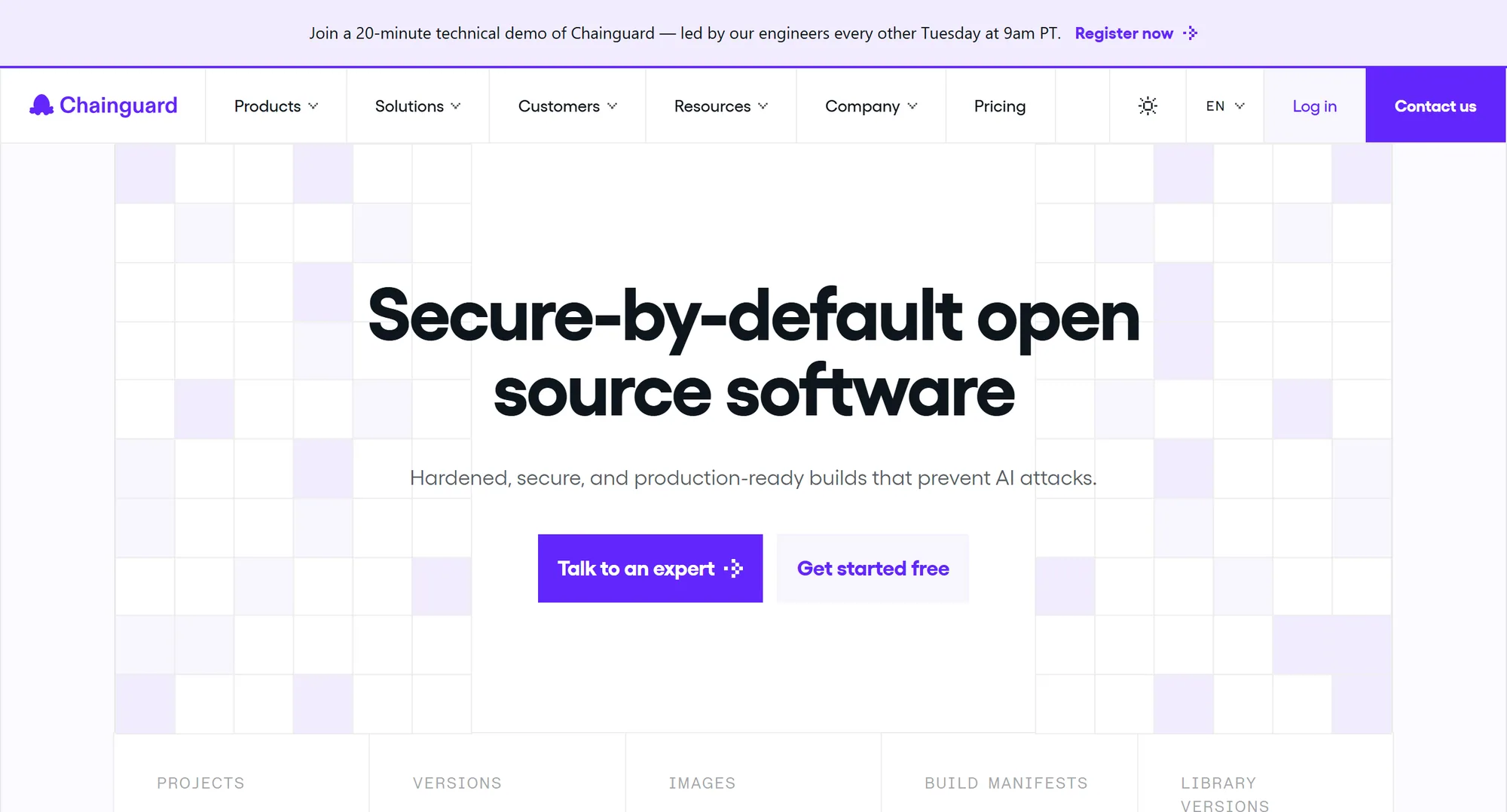
Chainguard builds open-source software from source and ships it hardened: container images it calls zero-CVE, Java, Python and JavaScript libraries rebuilt from verified source, VM images and hardened GitHub Actions, each with a signed SBOM and SLSA provenance. For customers with an order it commits to remediating critical CVEs within 7 days and other severities within 14 days of a qualifying patch. It is a strong way to start from clean inputs.
Teams look at other options when their situation changes:
- Price. Beyond five free images, Chainguard's catalog starts at $19K for a team of 10. Free hardened catalogs now exist too.
- Scope. Chainguard's SBOMs and provenance describe Chainguard's artifacts. Your own build, and everything else it pulls in, still needs its own record.
- Control over the build. Clean inputs do not limit what a build can reach while it runs, or show what a script downloaded.
- Migration. Moving to any hardened catalog means changing base images and sometimes the way you build them.
What to look for
- Whether you want to secure the inputs, the build, or both.
- Distributions and architectures you need, and how drop-in the images are.
- A CVE fix commitment, and whether it needs a paid tier.
- Compliance variants such as FIPS and STIG, if you sell to government.
- SBOMs and provenance, and whether they describe the vendor's artifacts or your build.
- Control over what a build can reach while it runs.
The options
Options 2 to 9 give you hardened, minimal or rebuilt images. CRACI secures the build that uses them, and Socket secures the packages it installs.
1. CRACI (our product)
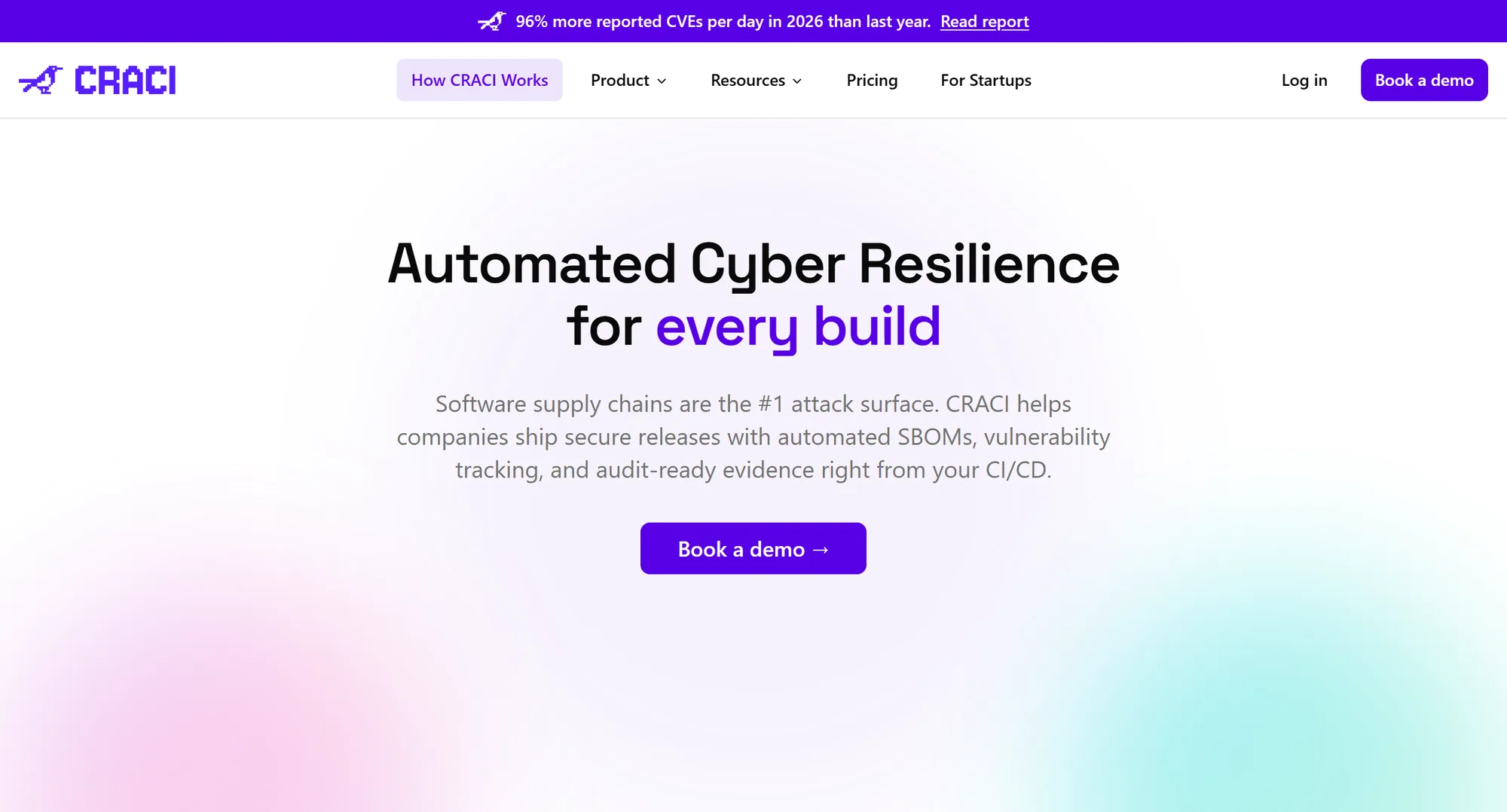
CRACI secures the software supply chain at the build rather than at its inputs. It is a runner for GitHub Actions: while each job runs, a package-aware proxy records what it fetched, including base images, packages and packages restored from CI caches, and produces a CycloneDX or SPDX SBOM with a completeness state per job and per cache. An egress policy is validated before the job starts and fails closed, so a build reaches only the sources you allow. CRACI keeps re-evaluating the SBOMs of what shipped, and its inventory view shows exactly which software versions are deployed to which products, globally.
Best for: teams that need a record and control of every build, whichever base images they use.
Consider if: you want supply chain security for the software you build. CRACI does not produce hardened images or libraries, and it supports GitHub Actions on Linux today, with GitLab CI, Jenkins, Windows and macOS on the roadmap.
2. Docker Hardened Images
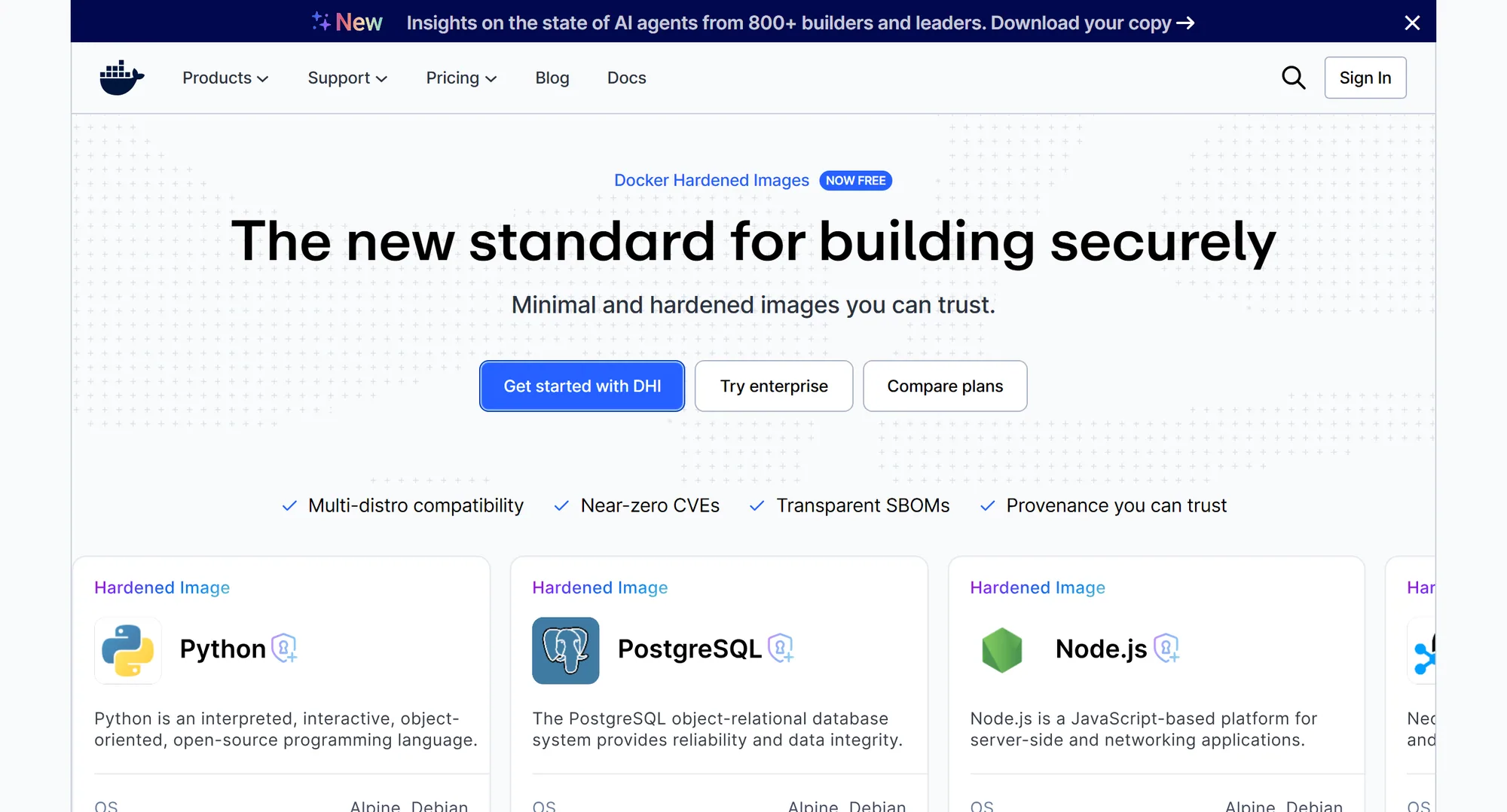
Docker describes its hardened images as near-zero CVE, minimal and continuously rebuilt from source, on Alpine or Debian. Every image comes with signed SBOMs, SLSA Level 3 provenance and OpenVEX exploitability data. As of September 2026, the DHI Community catalog is free and open source under Apache 2.0; DHI Select, from $5,000 per repository, adds an SLA to fix critical CVEs within 7 days and FIPS and STIG variants, and DHI Enterprise adds unlimited customization.
Best for: a free hardened catalog on familiar Alpine and Debian bases.
Consider if: you want an SLA only for the images that need one.
3. Echo
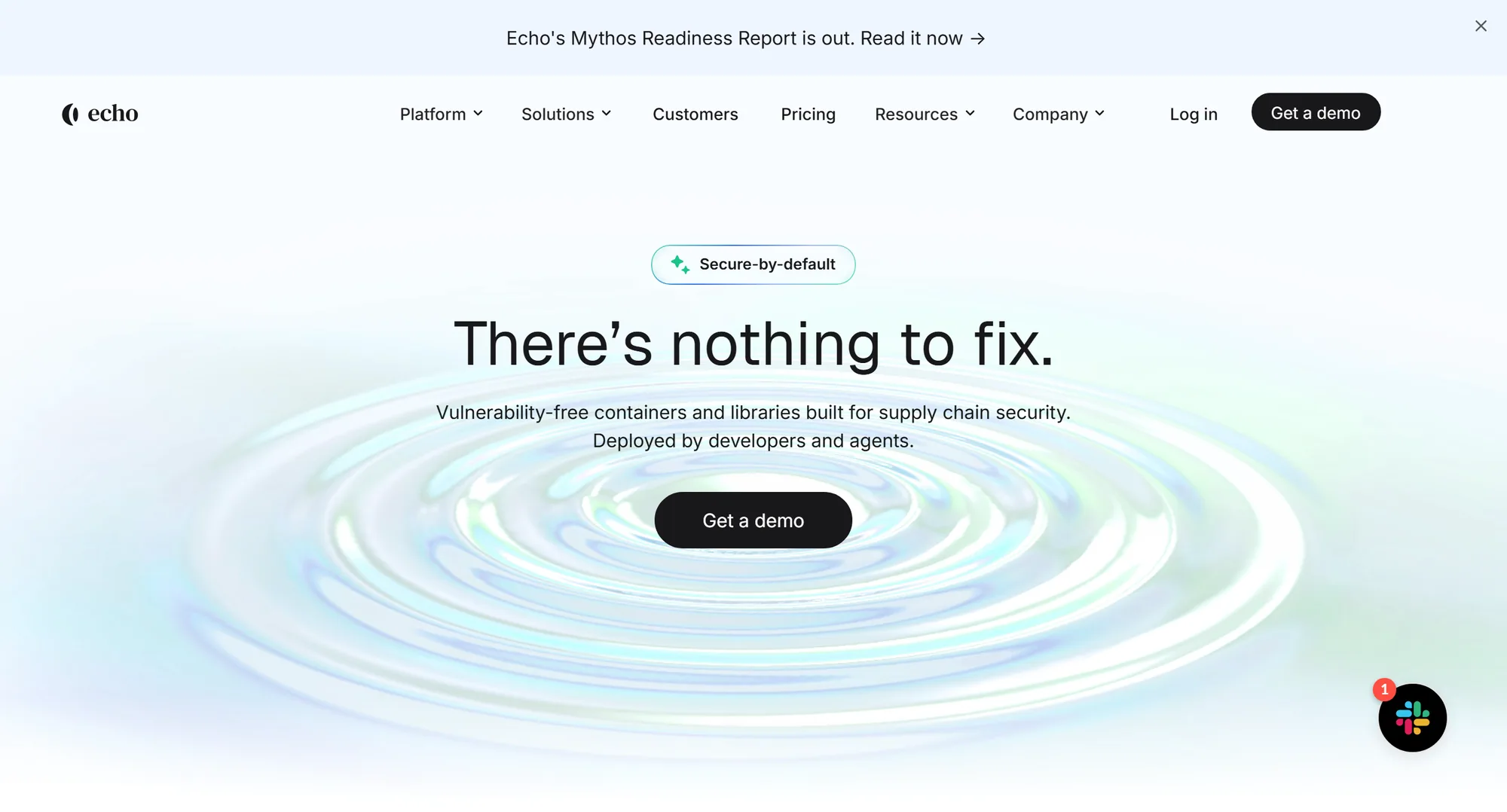
Echo offers vulnerability-free containers, libraries, VMs and OS packages, with FIPS-validated and STIG-hardened variants, and says it eliminates 99% or more of vulnerabilities at the source. Pricing is by demo. Minimus, another hardened image vendor, is winding down and has passed its technology to Echo; its registry closes on 22 October 2026.
Best for: teams that want hardened images, libraries and VMs from one vendor.
Consider if: you are a Minimus customer looking for its successor.
4. Aikido
Aikido's hardened images are drop-in replacements for existing base images that backport security fixes instead of forcing distribution upgrades, including after upstream end of life. It lists more than 2,000 images across Debian, Ubuntu and Alpine on amd64 and arm64, with SBOM, VEX and SLSA provenance included with every pull. You can start for free.
Best for: fixing CVEs in the images you already use, without changing distributions.
Consider if: you also want Aikido's wider AppSec platform.
5. RapidFort
RapidFort offers more than 35,000 curated near-zero CVE images built on Ubuntu, RHEL, Debian and Alpine, as drop-in replacements for standard base images, and says they remove up to 99.9% of CVEs. The full catalog adds CIS and DISA STIG hardened variants, FIPS 140-2 and 140-3 images, and SBOM export in SPDX and CycloneDX. Its platform tier profiles containers at runtime to see which components actually run, and removes unused packages for up to 90% less attack surface. Five curated images are free; the full catalog is priced by quote.
Best for: teams that want hardened images on the distributions they already use.
Consider if: runtime profiling and attack surface reduction matter as much as the images.
6. Bitnami Secure Images
Bitnami, now part of Broadcom, sells hardened images of open-source applications on a minimal Photon OS base: more than 350 container images and 140 Helm charts. Each image comes with an SBOM, VEX documents, CVE scan results and SLSA 3 attestation signatures, and the catalog supports FIPS, STIG and FedRAMP. Developers can use a portion of the images free for non-production use, in the latest tag only; the full catalog is sold through sales or the Arrow marketplace.
Best for: teams that already deploy Bitnami applications and Helm charts.
Consider if: you need production images, which require a paid subscription.
7. Google distroless
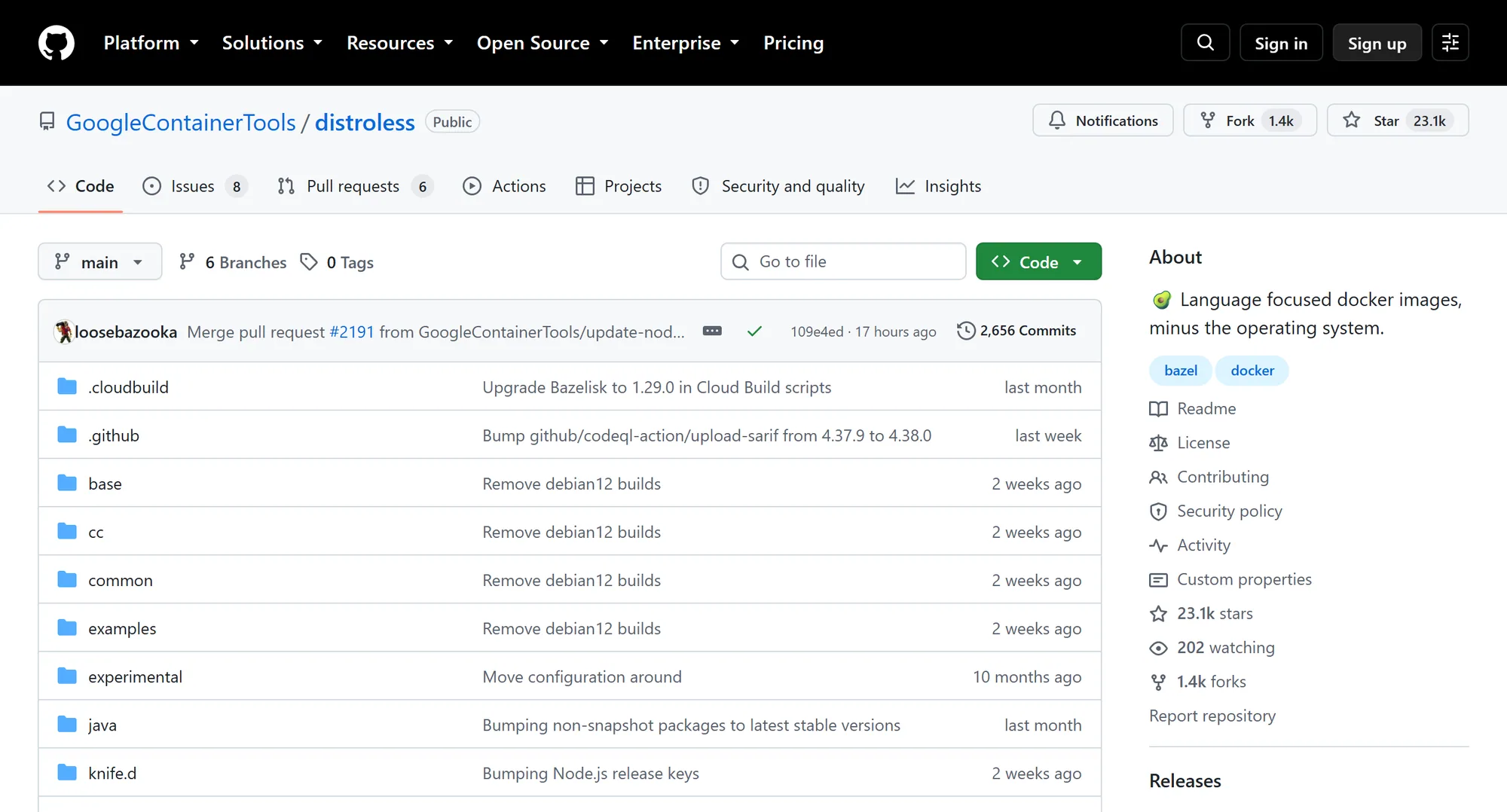
Distroless images "contain only your application and its runtime dependencies", with no package manager or shell. They are based on Debian 13, free under Apache 2.0, and signed with cosign. There is no CVE fix commitment; fixes arrive as Debian publishes them.
Best for: a smaller attack surface at no cost.
Consider if: you can live without a shell in production images.
8. Iron Bank
Iron Bank is the US Department of Defense's source for hardened containers, part of Platform One. Vendors, open source communities and government teams submit images, which are rebuilt without internet access, scanned against Iron Bank's acceptance criteria and monitored every 12 hours. It costs nothing to contributors or users, but pulls from Registry1 need a Platform One account, and vendors and contributors are responsible for fixing the findings on their images.
Best for: software headed for DoD systems that need accredited base images.
Consider if: you accept that each image's upkeep depends on its contributor.
9. Cloud Native Buildpacks and Paketo
Cloud Native Buildpacks, a CNCF graduated project, turn application source code into OCI images without a Dockerfile. Rebase updates the base image without rebuilding the app, builds produce SBOMs in CycloneDX, SPDX and Syft JSON, and re-running a build reproduces the same image digest. Paketo Buildpacks, a community project under the Cloud Foundry Foundation, provide ready-made buildpacks for Java, Go, .NET Core, Node.js, PHP, Python and Ruby.
Best for: teams that would rather not maintain Dockerfiles, and want to patch OS layers by rebase.
Consider if: you can do without a vendor's CVE fix commitment; this is a way to build images, not a catalog.
10. Socket
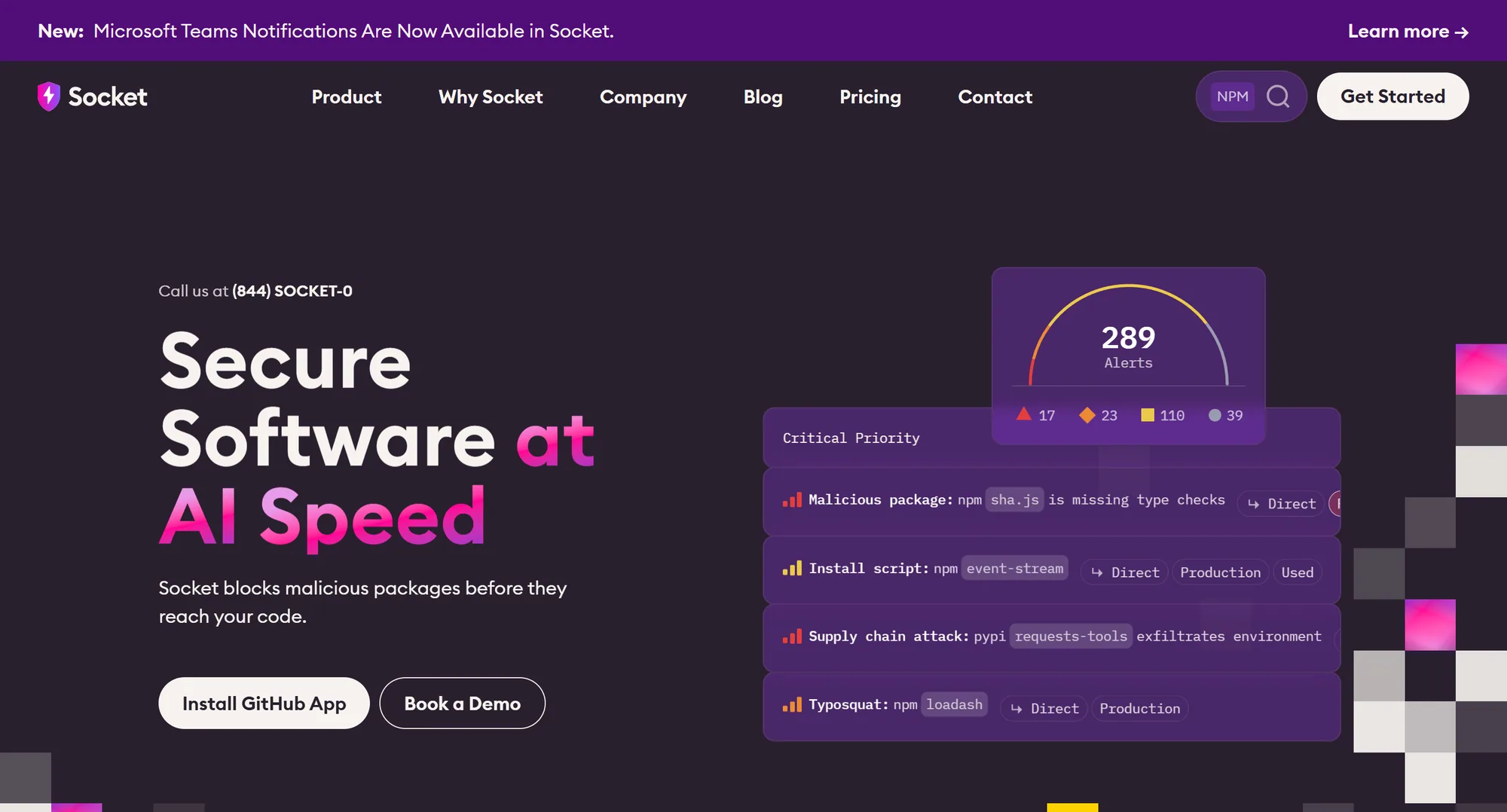
Socket secures a different input: open-source packages. It analyzes how packages behave, flags risky additions in pull requests, and Socket Firewall blocks malicious packages at install time, with a free version for npm, yarn, pnpm, pip, uv and cargo.
Best for: stopping bad packages before they land, including ones with no advisory yet.
Side by side
| Capability | CRACI | Chainguard | Docker Hardened Images | Echo | Aikido | Distroless | Socket |
|---|---|---|---|---|---|---|---|
| What it secures | The build: what it fetched and what it can reach | Images, libraries, VMs and Actions | Container images | Images, libraries and VMs | Container images | Minimal base images | Open-source packages |
| Hardened or minimal images | Minimal | ||||||
| Record of what your build fetched | Per job, with a completeness state | SBOMs of its own artifacts | SBOMs of its own images | Not stated | SBOMs of its own images | Reads manifests and lock files | |
| Signed provenance | No signed provenance | Its own artifacts | SLSA Level 3, its images | Not stated | SLSA provenance, its images | Images signed with cosign | Not stated |
| Build egress policy | Default deny or allow, fails closed | Not stated | Not stated | Not stated | Firewall filters installs | ||
| CVE fix commitment | Monitors your SBOMs; fixes are yours | Critical 7 days, others 14 | Critical 7 days, paid tiers | Not stated | Not stated | Not stated | Not stated |
| Free to start | Pay per build minute, no monthly fee | Up to five images | Community, Apache 2.0 | Not stated | Apache 2.0 | Free plan |
- Included
- Partly
- Not included
"Not stated" means we could not confirm it in the vendor's public pages. RapidFort, Bitnami Secure Images, Iron Bank and Buildpacks are described above.
What Chainguard and the alternatives cost
| Capability | Free option | Paid |
|---|---|---|
| Chainguard | Five images | Catalog from $19K for a team of 10; per-image pricing by quote |
| Docker Hardened Images | DHI Community catalog, Apache 2.0 | DHI Select from $5,000 per repository |
| RapidFort | Five curated images | Full catalog by quote |
| Bitnami Secure Images | Some images, latest tag, non-production use | By quote |
| Echo | Not stated | By demo |
| Aikido | Free to start | Not stated for images |
| Google distroless | Free, Apache 2.0 | None |
| Iron Bank | Free, funded by the DoD; account required | None |
| Cloud Native Buildpacks | Open source | None |
| CRACI | No free tier | Pay per build minute, no monthly fee |
Most paid hardened catalogs are priced by quote, so compare what a CVE fix commitment, FIPS or STIG variants and customization cost on each. Free catalogs usually come without a fix commitment.
Chainguard vs Docker Hardened Images
These are the two options teams compare most directly. Both ship minimal images with signed SBOMs and SLSA provenance. The differences are in how they are built and what the free tier includes:
- Base. Docker Hardened Images are based on Alpine or Debian, which most teams already know. Chainguard builds its images from source.
- Free tier. The DHI Community catalog is free under Apache 2.0. Chainguard offers five images free.
- CVE fix commitment. Docker commits to fixing critical CVEs within 7 days on DHI Select, from $5,000 per repository. Chainguard commits to 7 days for critical and 14 for other severities for customers with an order.
- Beyond images. Chainguard also rebuilds language libraries and offers VM images and hardened GitHub Actions.
When to stay with Chainguard
- You need hardened images and libraries in several languages, with a CVE commitment, from one vendor.
- You rely on Chainguard Libraries through Artifactory, Nexus or Cloudsmith.
- You can combine: hardened inputs and a recorded, controlled build cover different parts of the chain.
Read more about build-time SBOM generation and the software supply chain security tools compared.
Chainguard alternatives FAQ
Short answers to the questions teams ask when they compare
Who competes with Chainguard?
For hardened container images: Docker Hardened Images, RapidFort, Bitnami Secure Images from Broadcom, Echo, Aikido, and free options such as Google distroless and the DoD's Iron Bank. Cloud Native Buildpacks are an open-source way to build images without Dockerfiles. Socket secures open-source packages instead, and CRACI secures and records the build that uses all of these inputs.
What is the difference between Docker and Chainguard?
Docker Hardened Images are based on Alpine or Debian, and the Community catalog is free under Apache 2.0; a 7-day critical CVE fix commitment comes with the paid DHI Select tier, from $5,000 per repository. Chainguard builds its images from source, commits to fixing critical CVEs within 7 days and others within 14 for customers with an order, and also offers libraries, VMs and GitHub Actions.
How much does Chainguard cost?
Chainguard offers five images free. As of September 2026, catalog pricing starts at $19K for a team of 10, with access to the full catalog and a CVE SLA, and per-image pricing is by quote.
Is there a free alternative to Chainguard?
Yes. The Docker Hardened Images Community catalog and Google distroless are free under Apache 2.0, Iron Bank is free with a Platform One account, and RapidFort and Aikido let you start for free. Free options usually come without a CVE fix commitment.
Does CRACI replace Chainguard?
No. CRACI does not produce hardened images or libraries. It secures the build instead: it records what each GitHub Actions job fetched, including base images, and enforces an egress policy that fails closed. Hardened inputs and a recorded, controlled build cover different parts of the supply chain.
Record one build and compare
Run one GitHub Actions job on CRACI and see what it fetched and what it could reach.
Book a demo