Alternatives
Kusari alternatives
Kusari joins SBOMs, VEX and scanner output into one supply chain graph and acts on it. If you need the SBOM recorded from the build, hardened inputs, package gating, or a free self-hosted graph, these are the options worth comparing.
Updated
We build CRACI, so weigh that in; we describe every option from its own documentation and say when another tool fits better.
Why teams look beyond Kusari
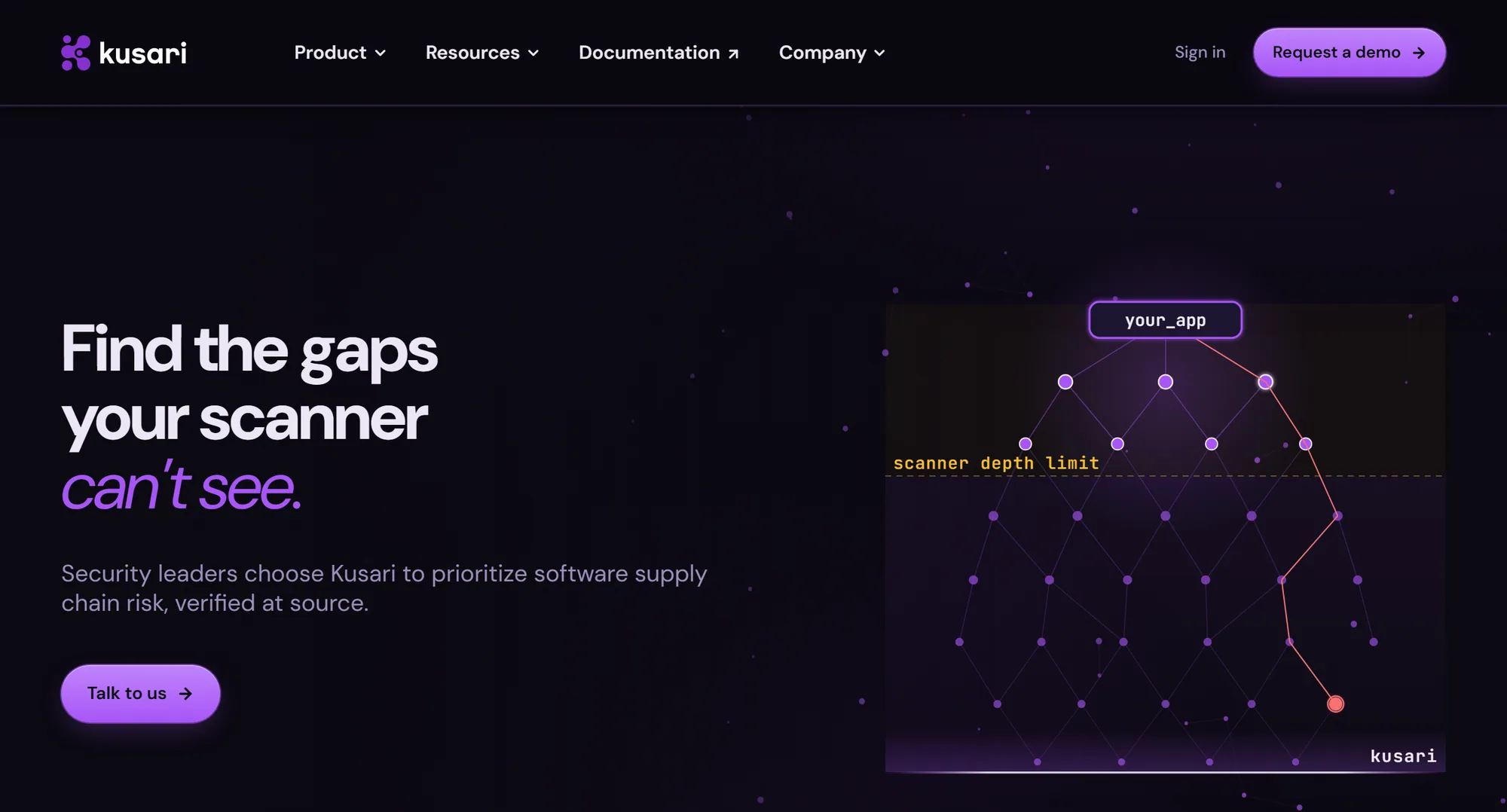
Kusari says it helps you "know what's really in your software." Its platform builds a continuously updated graph from your source, SBOMs, VEX documents and scanner output, including results from Snyk, Black Duck, Dependabot and GitHub Advanced Security. It ranks what is exploitable with reachability, shows the blast radius of a new vulnerability, and generates and validates AutoFix pull requests. Kusari Inspector reviews pull requests on GitHub and GitLab for transitive vulnerabilities, secrets, typosquatted packages, licenses and end-of-life dependencies. Its founders co-created GUAC, the OpenSSF project the graph grew from.
Teams still compare alternatives, usually for one of these reasons:
- Where the SBOM comes from. A graph reflects the SBOMs it is given. Kusari's docs describe generating them with waybill, its open-source SBOM toolkit, or bringing your own tool, and a generator reads lockfiles, manifests, caches and images rather than watching the build.
- Fix the inputs instead. Some teams would rather start from hardened images or remediated packages than rank findings in the ones they have.
- Stop bad packages at the door. Others want malicious packages blocked at install or at the repository, not only flagged in a pull request.
- Pricing and hosting. Kusari publishes Inspector prices but not platform prices, and some teams want a free, self-hosted graph.
What to look for
- How SBOMs are produced, and whether the tool tells you when one is incomplete.
- Whether you want to analyze what you have, harden the inputs, or record and control the build.
- SBOM and VEX intake from suppliers and other tools.
- Reachability and malicious package detection, if alert volume or package attacks are the main problem.
- Signed provenance, and whether it describes your artifacts or the vendor's.
- CI coverage, hosting options and how pricing scales.
The options
1. CRACI (our product)
CRACI is a GitHub Actions runner that produces the SBOM while the build runs. A package-aware proxy records what each job fetches from package sources, including packages restored from CI caches and hidden dependencies that no lockfile lists, such as code downloaded by npm install hooks. Each SBOM states its completeness per job and per cache. CRACI re-evaluates monitored SBOMs continuously, aggregates findings across builds and repositories, and lets security teams triage them with VEX and route each one to the team that owns the fix. You can add vendor SBOMs, so bought-in components are monitored next to your own builds, and its inventory view shows exactly which software versions are deployed to which products, globally.
Because CRACI runs the job, it also enforces an egress policy that is validated before the job starts and fails closed. A graph helps you find what is affected after the fact; an egress policy limits what a build can reach in the first place.
Best for: teams on GitHub Actions that want the CI, the SBOM and the vulnerability tracking for the software they build in one product. Consider if: you can give up Kusari's graph across many scanners, signed provenance, reachability analysis, AutoFix pull requests and Inspector's pull request reviews for malicious packages, secrets and code weaknesses; CRACI does none of that today. It supports GitHub Actions only, with GitLab CI and Jenkins on the roadmap. CRACI vs Kusari
2. Chainguard
Chainguard secures the inputs. It builds open-source software from source and ships it hardened: container images it calls zero-CVE, Java, Python and JavaScript libraries rebuilt from verified source, VM images and hardened GitHub Actions, each with a signed SBOM and SLSA provenance. For customers with an order it commits to remediating critical CVEs within 7 days and other severities within 14 days of a qualifying patch.
Best for: teams that want fewer known CVEs in what they build on. Consider if: its SBOMs and provenance describe Chainguard's artifacts, not your build. Five images are free, and the catalog starts at $19K for a team of 10 (as of September 2026). CRACI and Chainguard
3. Lineaje
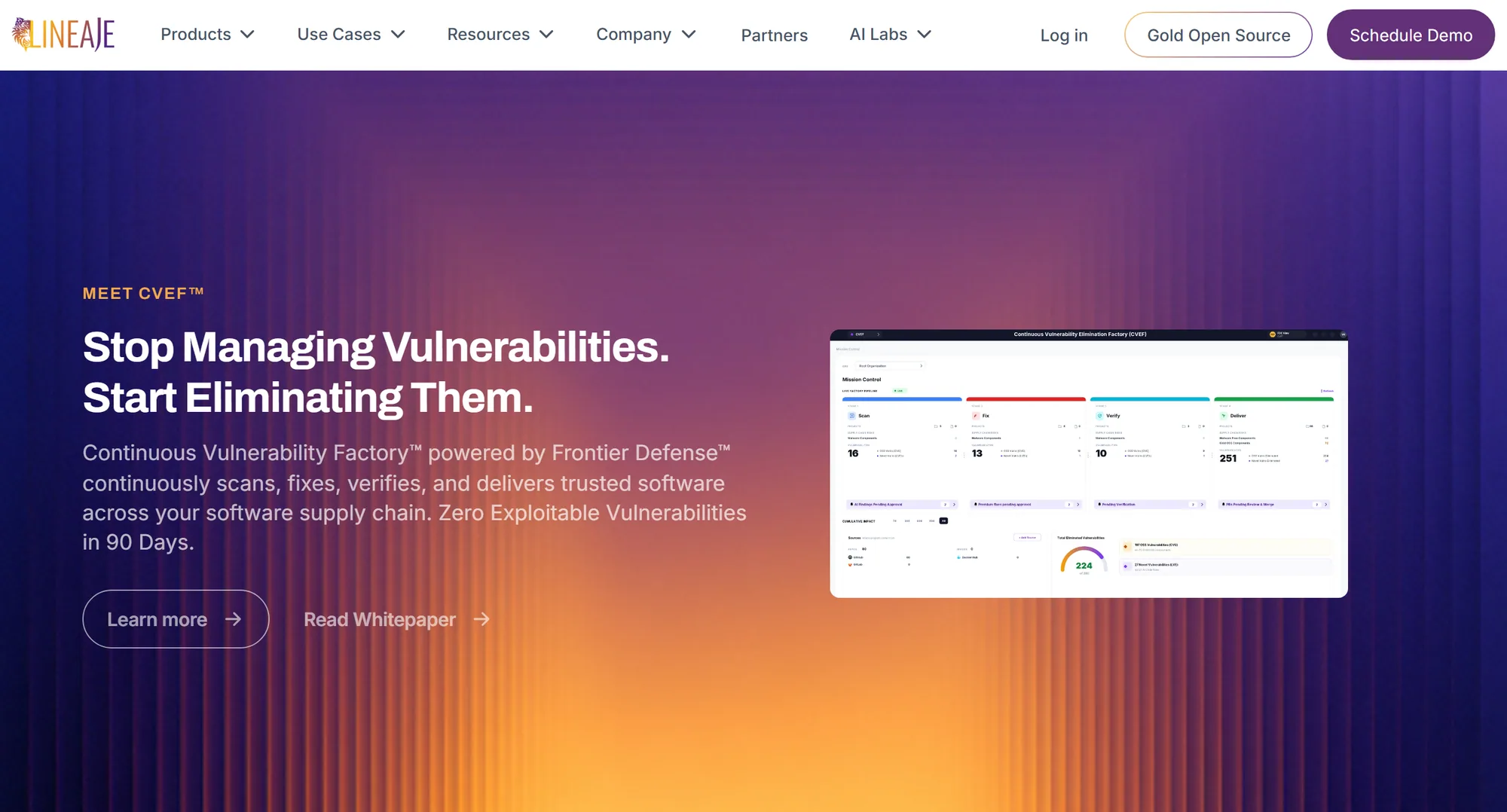
Lineaje is a software supply chain platform. SCA360 scans source and packaged code, enumerates dependency chains and detects reachable vulnerabilities. Lineaje flags malicious and tampered packages and packages of dubious origin, auto-fixes compatible updates of direct dependencies after approval, and offers remediated packages and containers through Gold Open Source. SBOM360 Hub, now also listed as xBOM Manager, links SBOMs to product SKUs, keeps VEX and CSAF documents mapped to them and shares them with customers.
Best for: analyzing and cleaning up a large existing portfolio, including code you did not write. Consider if: you also need a record of what your own build fetched; Lineaje analyzes what exists. It does not publish prices (as of September 2026). CRACI vs Lineaje
4. Anchore Enterprise
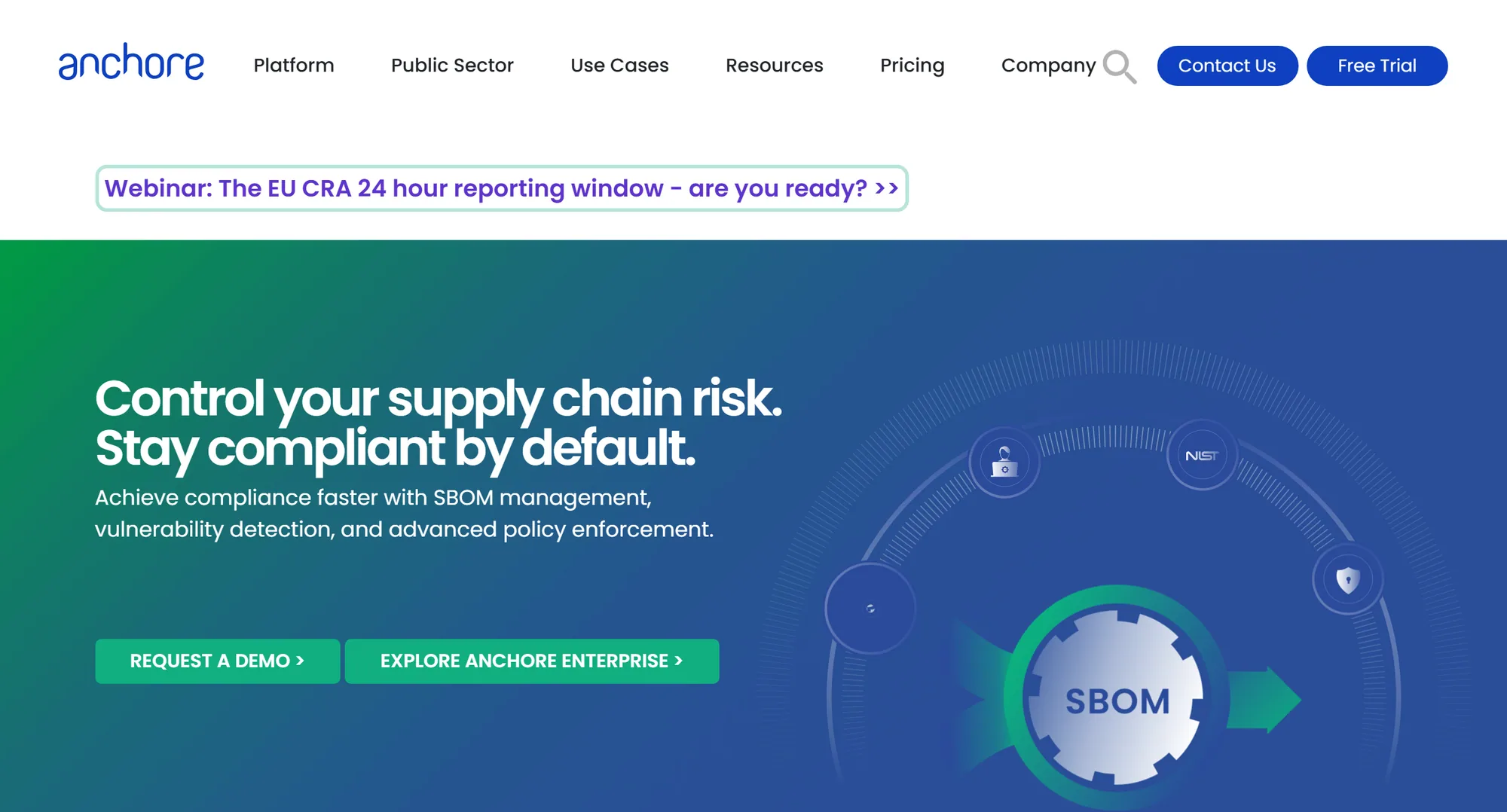
Anchore Enterprise builds on the open-source Syft and Grype. It creates SBOMs for containers, source and filesystems, imports SBOMs made elsewhere, rescans stored SBOMs continuously, and enforces policy packs such as FedRAMP and NIST. It can be self-hosted, including air-gapped.
Best for: container-heavy and government environments. Consider if: you want SBOM management with policy rather than a graph across scanners. Pricing is by quote (as of September 2026). CRACI vs Anchore
5. Endor Labs
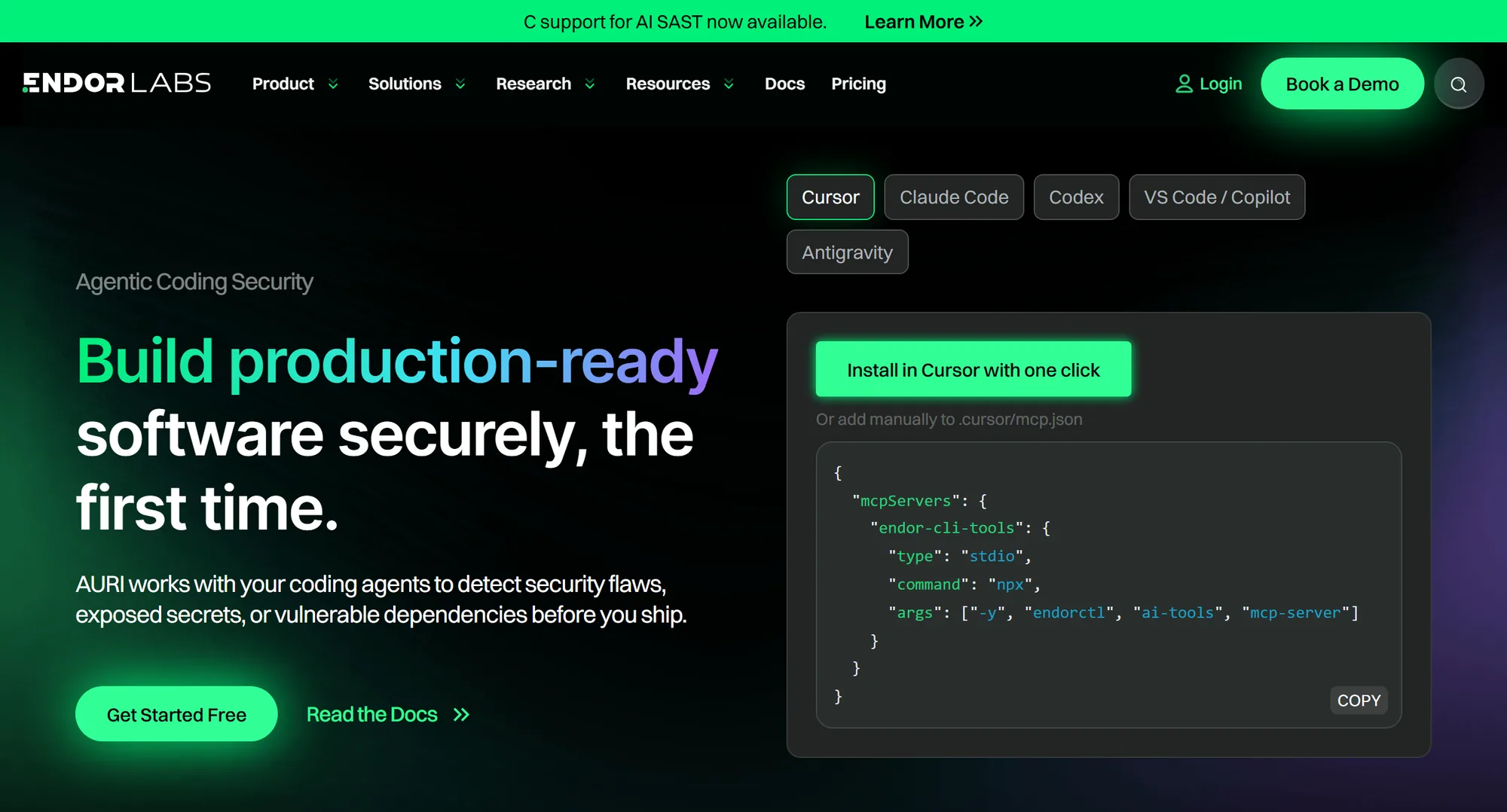
Endor Labs is built around reachability: function-level analysis of direct and transitive dependencies decides which known vulnerabilities your code can call. Endor Patches backport security fixes to versions you already run, SBOM Hub generates and imports CycloneDX and SPDX SBOMs with reachability-based VEX, and a Package Firewall sits between your artifact repository and public registries. It can also sign artifacts.
Best for: teams whose main problem is too many dependency alerts. Consider if: per-developer pricing suits you; Endor Labs has a free Developer tier, and Core and Pro are priced through sales (as of September 2026). CRACI vs Endor Labs
6. Socket
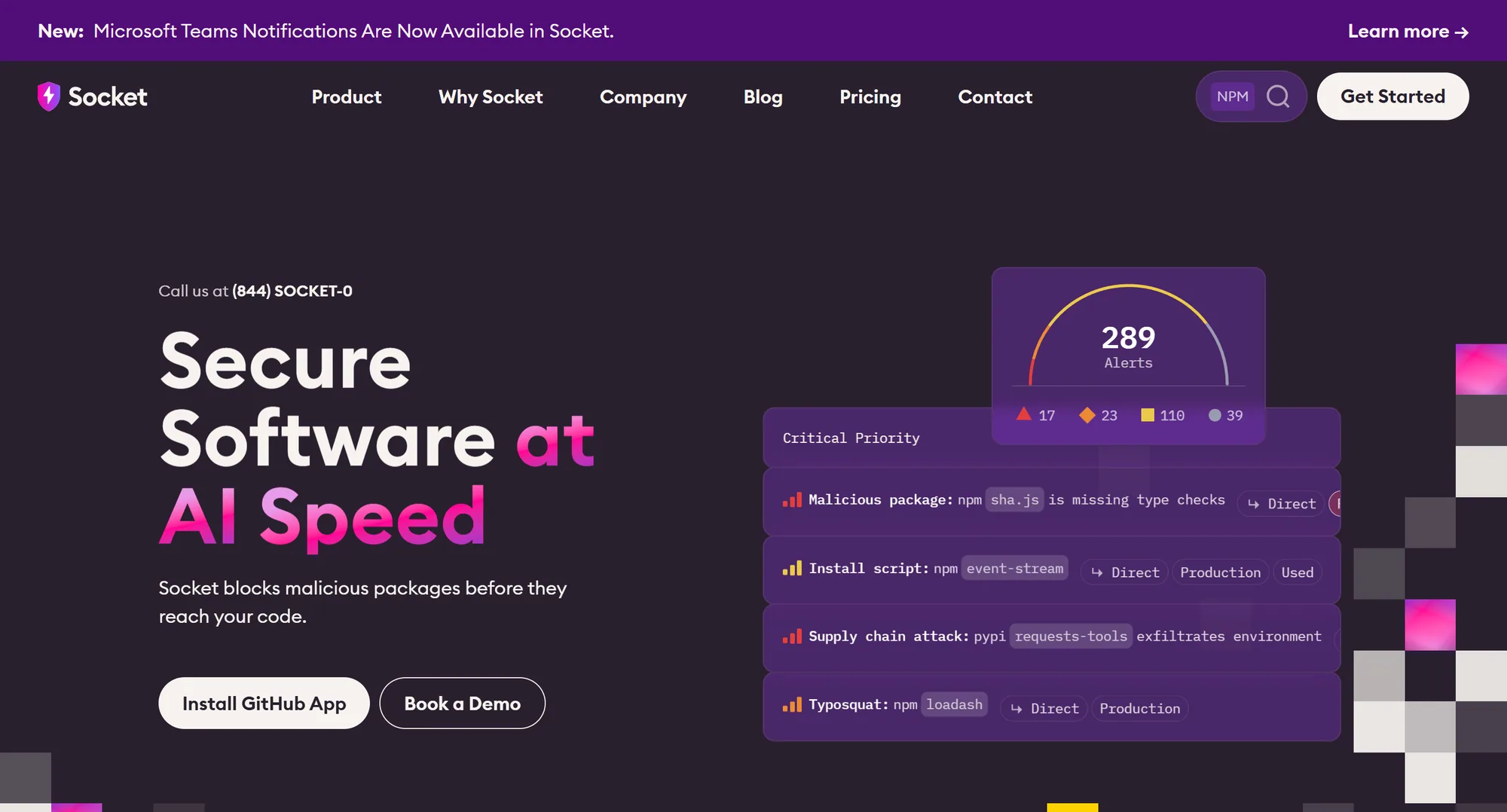
Socket analyzes how open-source packages behave, flags risky additions in pull requests, and blocks malicious packages at install time with Socket Firewall, which has a free version for npm, yarn, pnpm, pip, uv and cargo. Paid plans add reachability analysis, and SBOM import and export start on Business.
Best for: stopping bad packages before they land, including ones with no advisory yet. Consider if: package attacks are your main worry. There is a free plan, Team is $25 per developer per month with a minimum of five, and Business is $50 with a minimum of 20 (as of September 2026). CRACI vs Socket
7. Sonatype
Sonatype SBOM Manager imports and monitors SBOMs with a VEX workflow. Around it, Sonatype Lifecycle adds SCA with Advanced Binary Fingerprinting, and Repository Firewall stops components that fail your policies before they enter your repositories.
Best for: organizations that want SBOM management next to policy at the package repository. Consider if: you run Nexus or another repository manager. New customers buy Sonatype Guide; Firewall Pro starts at $4,800 per year (as of September 2026). CRACI vs Sonatype
8. GUAC (open source)
GUAC (Graph for Understanding Artifact Composition) is an OpenSSF incubating project under Apache 2.0, and the community project Kusari's graph grew from. It aggregates supply chain metadata into a graph database: CycloneDX and SPDX SBOMs, in-toto and SLSA attestations, OpenVEX and CSAF documents, OpenSSF Scorecard results, and OSV and deps.dev data. Contributors include Kusari, Google, Red Hat, Purdue University and Citi.
Best for: teams that want Kusari's graph idea, self-hosted and free. Consider if: you are ready to run it and feed it; GUAC aggregates metadata that other tools produce and does not run builds or add Kusari's reachability, AutoFix and pull request reviews.
9. Dependency-Track (open source)
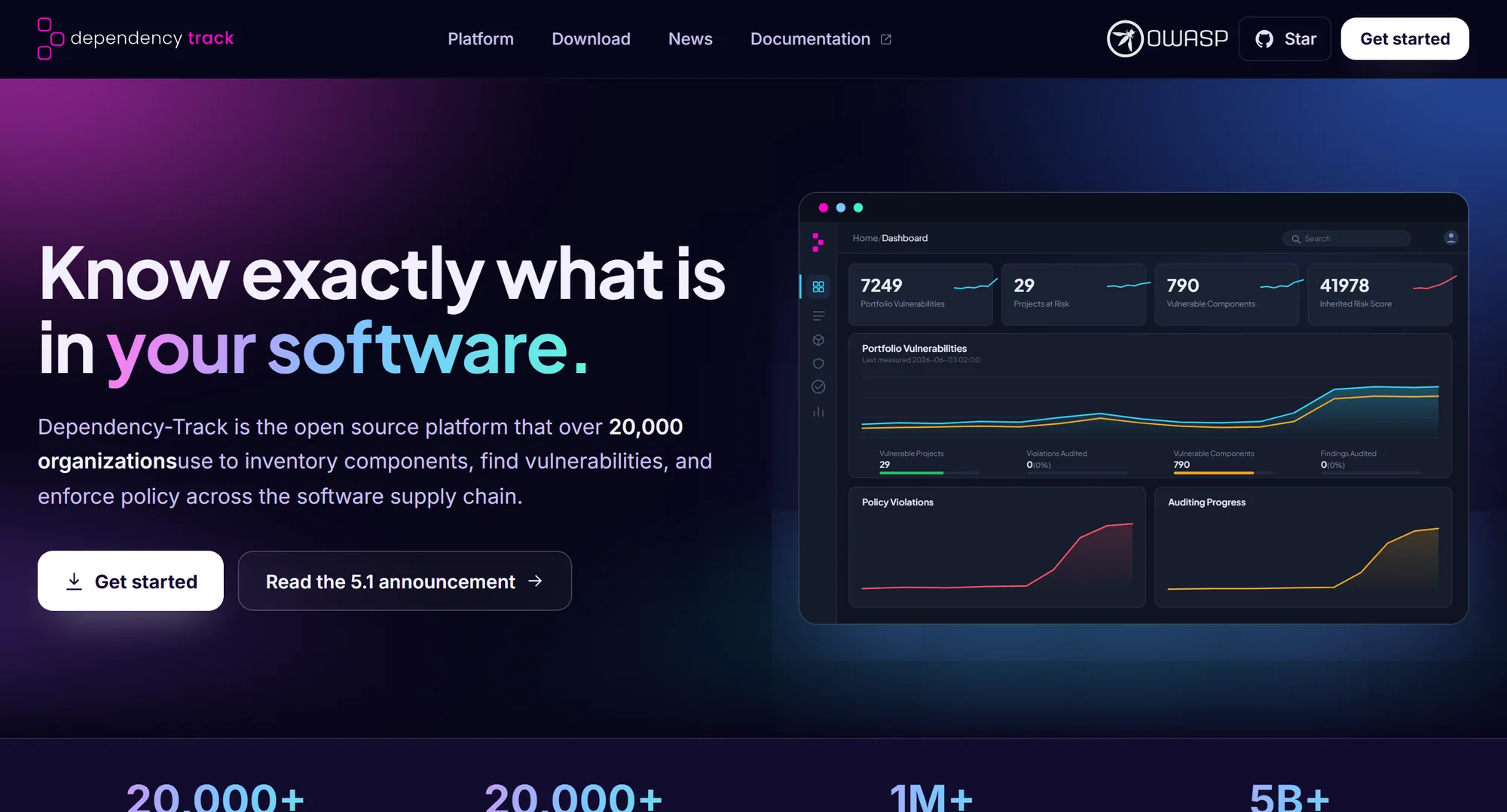
OWASP Dependency-Track is a free, Apache 2.0 platform that tracks components across your portfolio, pulls vulnerability data from sources including the NVD and GitHub Advisories, and applies security, license and operational policies. It consumes and produces CycloneDX VEX.
Best for: teams that want a self-hosted SBOM system of record without a license fee. Consider if: you are ready to operate it and feed it; it analyzes SBOMs you upload and does not generate them. CRACI for Dependency-Track users
Side by side
| Capability | CRACI | Kusari | Chainguard | Lineaje | Anchore | Endor Labs | Socket | Sonatype | Dependency-Track |
|---|---|---|---|---|---|---|---|---|---|
| Runs your builds | |||||||||
| SBOM from observed build traffic | Its own artifacts | ||||||||
| Imports SBOMs from other sources | Vendor SBOMs can be added | Not stated | Business plan | ||||||
| VEX | Not stated | Not stated | |||||||
| Egress policy at the runner | |||||||||
| Signed provenance | No signed provenance | Its own artifacts | Component integrity | Not stated | |||||
| Reachability analysis | Not stated | Not stated | |||||||
| Package behavior or malware analysis | Inspector | Not stated | Some tiers | Firewall | |||||
| Hardened or remediated components | Not stated | Gold Open Source | Not stated | Endor Patches | Not stated | Not stated | |||
| CI beyond GitHub Actions | GitLab CI and Jenkins | Not a CI tool | Not stated | ||||||
| Pricing (September 2026) | Pay per build minute, no monthly fee | Inspector free for solo and OSS; teams from $25/dev/mo | Five images free; catalog from $19K for 10 | Not stated | Quote | Free tier; paid via sales | Free; Team $25/dev/mo | Sonatype Guide; Firewall Pro from $4,800/yr | Free, open source |
- Included
- Partly
- Not included
- On the roadmap
"Anchore" means Anchore Enterprise, and "Sonatype" means SBOM Manager with Lifecycle and Repository Firewall. GUAC is described above and left out of the table. "Not stated" means the capability is not described in the vendor's documentation, not that it is missing.
When to stay with Kusari
- You already have SBOMs and several scanners, and want them joined in one graph with blast radius.
- You want reachability to cut the queue, and AutoFix pull requests validated before they reach you.
- You want every pull request reviewed for malicious packages, secrets, licenses and insecure workflows.
- You build on several CI systems; Kusari's uploader covers GitHub Actions, GitLab, Jenkins, CircleCI and more.
For more on recording SBOMs at the source, see build-time SBOM generation, software supply chain security tools compared and pricing.
Kusari alternatives FAQ
Short answers to the questions teams ask when they compare
What are the best Kusari alternatives?
It depends on what you use Kusari for. For secure inputs, look at Chainguard's hardened images and libraries or Lineaje's Gold Open Source. For supply chain analysis and SBOM management, look at Lineaje or Anchore Enterprise. For reachability-led SCA, look at Endor Labs. For stopping malicious packages, look at Socket or Sonatype Repository Firewall. For free, self-hosted tools, look at GUAC and OWASP Dependency-Track. If you want the SBOM produced from your own builds and monitored in the same product, CRACI records it while each GitHub Actions job runs.
What is the difference between Kusari and GUAC?
GUAC (Graph for Understanding Artifact Composition) is an Apache 2.0 OpenSSF incubating project that aggregates supply chain metadata, such as SBOMs, attestations, VEX and Scorecard results, into a graph database. Kusari's co-founders co-created GUAC with Google, and Kusari uses and curates it in its commercial platform, which adds reachability, blast radius, AutoFix pull requests and Inspector reviews. GUAC is the community project you run yourself; Kusari is the product.
Is there an open-source alternative to Kusari?
Yes. GUAC gives you the supply chain graph Kusari builds on, and OWASP Dependency-Track is a free platform that tracks components across your portfolio, applies security and license policy and handles CycloneDX VEX. Both analyze SBOMs and metadata you feed them; neither generates SBOMs from your builds, and you host and operate them yourself.
How much does Kusari cost?
As of September 2026, Kusari Inspector is free for solo developers and open-source projects, covering the repositories you own plus projects under the OpenSSF or the CNCF. Inspector for teams starts at $25 per developer per month. The pages we checked do not publish a price for the Kusari platform.
Does CRACI replace Kusari?
For software you build on GitHub Actions, yes. CRACI runs the build, records the SBOM with a stated completeness, keeps re-evaluating monitored SBOMs, and lets security teams triage findings and route them to the team that owns the fix. You give up Kusari's graph across many scanners and SBOM sources, signed provenance, reachability analysis, AutoFix pull requests and Inspector's pull request reviews for malicious packages, secrets and code weaknesses. CRACI supports GitHub Actions only today, with GitLab CI and Jenkins on the roadmap.
Start the SBOM at the build
Run one GitHub Actions workflow on CRACI and compare its SBOM with the one your current generator produces.
Book a demo