Alternatives
Cycode alternatives
The main Cycode alternatives are CRACI, which replaces the GitHub Actions runner and records what each build actually fetched, Apiiro, OX Security and Legit Security for ASPM, Kusari for a supply chain graph, Checkmarx One, Snyk and Aikido for scanning, and StepSecurity for a build runtime agent like Cimon.
Updated
We build CRACI, so weigh that in; we describe every option from its own documentation and say when another tool fits better.
The best Cycode alternatives at a glance
| Capability | Best for | Pricing (September 2026) |
|---|---|---|
| CRACI | The GitHub Actions runner itself, recording and controlling each build | Pay per build minute, no monthly fee |
| Apiiro | Architecture context across many source control systems | Not stated |
| OX Security | CI/CD posture policies and a signed Pipeline Bill of Materials | Per contributing developer; no list prices |
| Legit Security | One governance layer over many repositories and CI systems | Not stated |
| Kusari | One graph across many SBOM sources and scanners | Inspector is free to install |
| Checkmarx One | One vendor for SAST, SCA, secrets, DAST, IaC and more | Quote |
| Snyk | Developer-facing scanning from the IDE to the pull request | Free tier; Team from $25 per month |
| Aikido | Small teams that want one tool for most scanning | Free plan; paid from $350 per month |
| StepSecurity | A runner agent like Cimon, on runners you keep | Enterprise $16 per contributing developer per month |
What Cycode does
Cycode calls itself an agentic development security platform and grew out of application security posture management (ASPM). It sells code security (SAST, SCA with reachability, container and IaC scanning), software supply chain security (CI/CD security, build runtime protection, code leak detection, SBOM and secrets), and posture management with more than 100 connectors. Its build runtime piece, Cimon, is an eBPF agent that runs inside your CI jobs. Cycode does not list prices; its pricing page says pricing is based on active developers and AI usage (as of September 2026).
Teams look at alternatives for a few reasons:
- A different ASPM. Other platforms weigh architecture context, pipeline posture or governance differently.
- Scanning without a platform. Some teams want strong scanners and no posture layer.
- Build protection only. Teams that came for Cimon may only need runtime control of their builds.
- Evidence from the build. Cycode's inventory comes largely from analyzing code and connected tools. Some teams need a record taken while each release was built.
What to look for
- Breadth or depth: one platform across your tools, or a deeper view of one point such as the build.
- Whether you need native SAST and secrets scanning, or will connect scanners you already own.
- For build protection: an agent on runners you keep, or a runner that does it natively.
- Where the SBOM comes from: code analysis, connected sources, or the build itself.
- Which source control and CI systems you need covered today.
- Whether the vendor publishes prices, and what it counts.
The options
CRACI (our product)
What it is. A GitHub Actions-compatible CI runner. You change runs-on to
craci, and while jobs run, a package-aware proxy records every external dependency they fetch,
including packages restored from CI caches. Each SBOM states its completeness per job and per cache. An egress
policy, typed by ecosystem and validated before the job starts, fails closed, and CRACI keeps re-evaluating the SBOMs of what shipped.
Where it overlaps with Cycode. CRACI covers much of what Cimon does, from the runner itself: build observation, egress control and an SBOM. It does not sign provenance. On a CRACI runner you do not add an agent.
Consider if. You build on GitHub Actions and want the runner, egress policy and dependency record in one place. CRACI has no SAST, secrets, IaC or container scanning, no posture checks or ASPM connectors, no process or file monitoring, and no audit mode yet (it is on the roadmap). It supports GitHub Actions only today, with GitLab CI and Jenkins on the roadmap. CRACI vs Cycode
Apiiro
What it is. An ASPM platform. Deep Code Analysis maps your architecture from code to runtime, and the Risk Graph correlates findings from Apiiro's own scanners and third-party tools. Its supply chain module inventories repositories and pipelines, including shadow pipelines, and flags weak branch protection and abnormal commits. It connects through APIs and needs no CI changes.
Best for. Large AppSec programs that want architecture context across many systems.
Consider if. You want risk ranked by what your code does and where it runs. Its inventory comes from analyzing code, not from observing builds. CRACI vs Apiiro
OX Security
What it is. An ASPM platform with its own scanners, aggregation of third-party findings from tools such as Checkmarx, Snyk and Black Duck, and CI/CD posture policies that flag unpinned actions, excessive workflow permissions and risky webhooks. Its Pipeline Bill of Materials (PBOM) is a signed record per build of pipeline definitions, runner identity, build arguments and artifact signatures.
Best for. Posture policies and pull request gating across several CI systems.
Consider if. You run GitHub Actions, GitLab, Jenkins, Azure Pipelines or CircleCI. OX prices per contributing developer and publishes no list prices (as of September 2026). CRACI vs OX Security
Legit Security
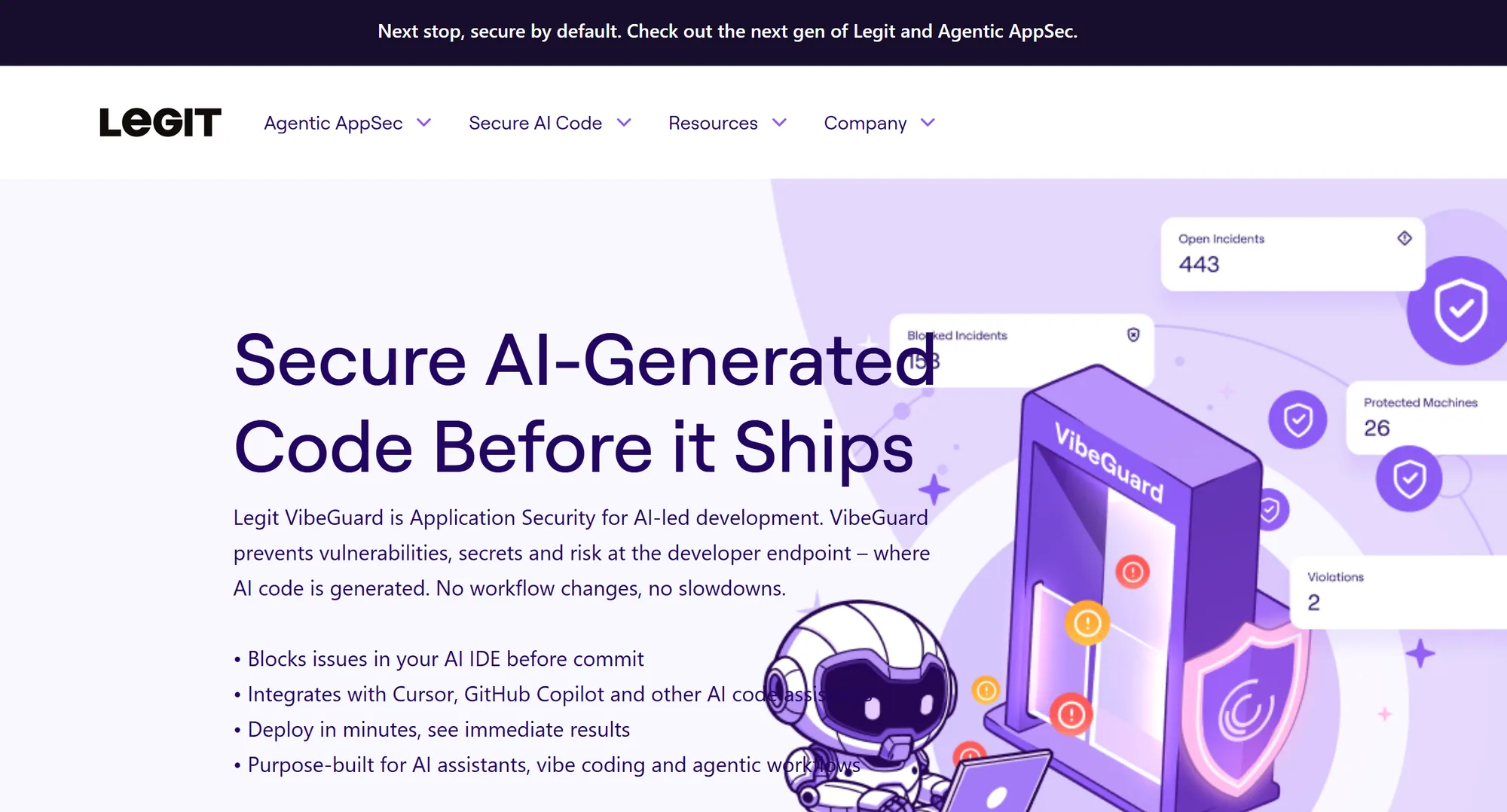
What it is. A platform that maps your whole development lifecycle: an inventory of SDLC systems, pipelines and the security controls on them, with hundreds of policies across source control, CI and registries. It orchestrates scanners such as Snyk, Checkmarx and GitHub Advanced Security, adds native SAST and SCA, finds secrets in build logs, Slack and Confluence as well as code, and creates SBOMs and signed attestations.
Best for. A security team that inherited many repositories and several CI systems.
Consider if. Governance across tools matters more than depth on any one. It reads configuration and scanner output through APIs. CRACI vs Legit Security
Kusari
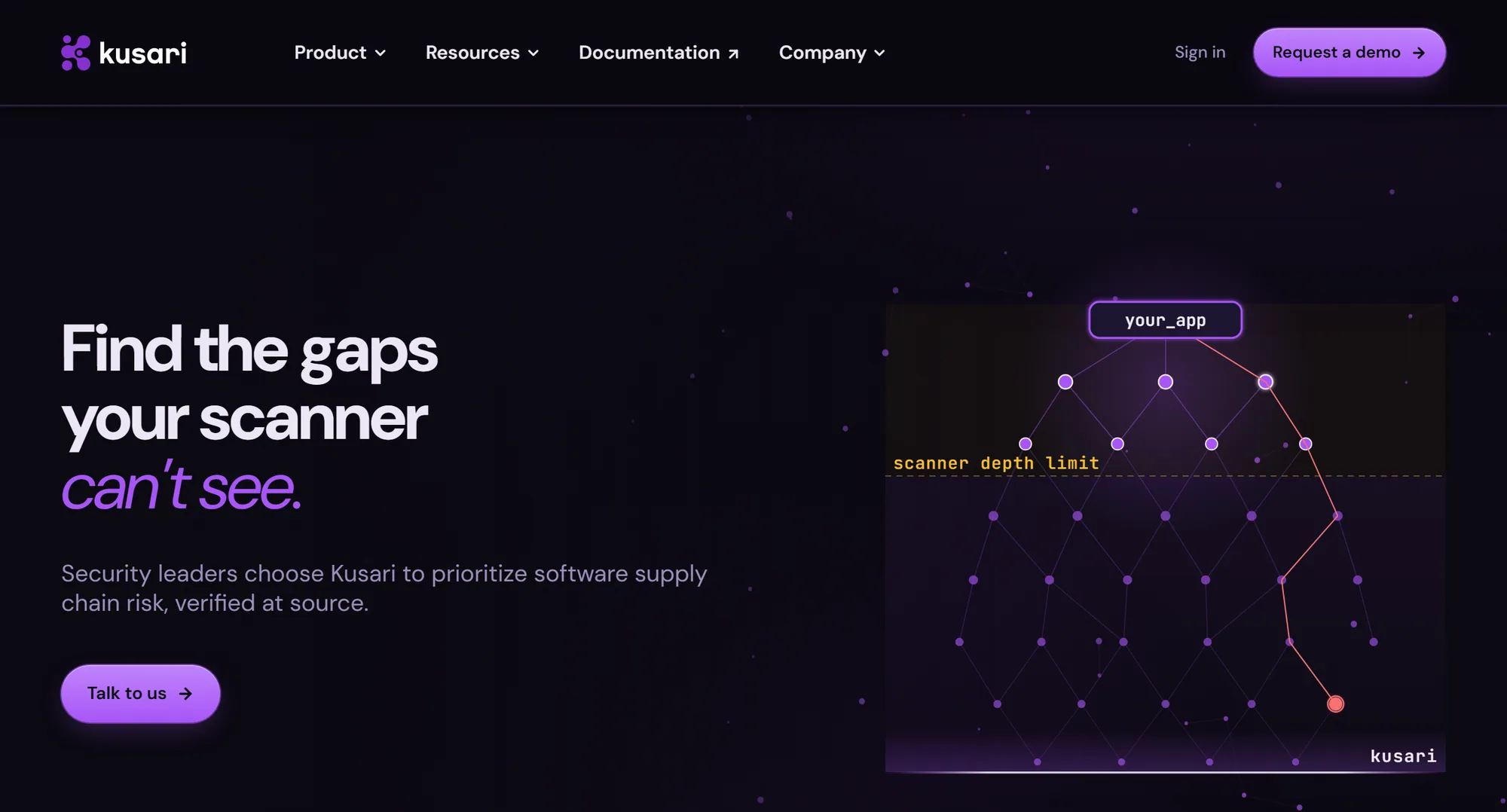
What it is. From the team that co-created GUAC, the OpenSSF graph for supply chain metadata. Kusari builds a knowledge graph from your SBOMs, VEX documents and scanner output, shows the blast radius of a new vulnerability, analyzes reachability and opens AutoFix pull requests. Kusari Inspector reviews pull requests for malicious packages, secrets and insecure workflows.
Best for. One graph across many SBOM sources and scanners.
Consider if. You already have SBOMs and scanners and want them joined up. Kusari says Inspector is free to install. CRACI vs Kusari
Checkmarx One
What it is. A broad AppSec platform: SAST, SCA, secrets, IaC, API security, DAST, containers and malicious package protection, with a posture management layer on top. Its SCA uses exploitable path analysis, and policies can break builds.
Best for. Organizations that want one vendor for application security testing.
Consider if. Scanning depth matters more to you than connectors. Pricing is by quote. CRACI vs Checkmarx One
Snyk
What it is. A developer security platform that runs in the IDE, the CLI, against repositories and in CI. Snyk Open Source prioritizes findings with reachability, exploit maturity, EPSS and CVSS and opens upgrade pull requests. Snyk Code, Snyk Container and Snyk Infrastructure as Code cover first-party code, images and IaC.
Best for. Teams that want security feedback where developers work.
Consider if. You want published prices: Team from $25 per month, Enterprise by quote (as of September 2026). CRACI vs Snyk
Aikido
What it is. A broad AppSec suite. Every plan lists SCA, SAST, secrets, IaC, cloud posture, container scanning, DAST, license scanning and SBOM generation. Its SCA uses function-level reachability, and AutoFix opens pull requests.
Best for. Smaller teams that want one tool and one dashboard for most scanning needs.
Consider if. You want Cycode's scanning breadth at a smaller scale. There is a free Developer plan, and paid plans start at $350 per month (as of September 2026). CRACI vs Aikido
StepSecurity
What it is. Harden-Runner is an agent on the GitHub Actions runners you already use, including GitHub-hosted ones. It ties every outbound connection, process and file write to the workflow step that caused it, can audit first to build a baseline per job, and then blocks egress outside an allowlist. It also covers GitLab CI and Azure DevOps.
Best for. Teams that came to Cycode for Cimon and want to keep their runners.
Consider if. You need runtime control on runners you keep. The Community tier is free for public repositories and Enterprise is $16 per contributing developer per month (as of September 2026). Its allowlist is a list of endpoints, and it records destinations rather than a package-level SBOM. CRACI vs StepSecurity
Side by side
ASPM platforms and build security tools, compared with Cycode. Checkmarx One, Snyk and Aikido are scanners, so they are described above and left out of this table. "Not stated" means the vendor pages we cite do not say either way. Prices are as of September 2026.
| Capability | CRACI | Cycode | Apiiro | OX Security | Legit | Kusari | StepSecurity |
|---|---|---|---|---|---|---|---|
| Runs your builds | Cimon agent in your CI | Agent on your runners | |||||
| Package SBOM recorded during the build | Cimon | ||||||
| Blocks build network egress | Cimon | ||||||
| Audit mode before blocking | |||||||
| Process and file monitoring in CI | |||||||
| Signed provenance or build record | No signed provenance | PBOM | Not stated | ||||
| SAST and secrets scanning | PR review | Not stated | |||||
| CI/CD posture checks | Workflow checks | ||||||
| Reachability analysis | Not stated | Not stated | |||||
| CI systems beyond GitHub Actions | GitLab CI and Jenkins | ||||||
| Pricing | Pay per build minute, no monthly fee | Not listed; Cimon free and open source | Not stated | No list prices | Not stated | Inspector free to install | Enterprise $16 per contributing developer/mo |
- Included
- Partly
- Not included
- On the roadmap
When to stay with Cycode
- You want one ASPM platform for code scanning, secrets, CI/CD posture and prioritization.
- You connect many scanners and want their findings in one place.
- You run Azure Pipelines, Jenkins, GitLab CI or Buildkite and want build runtime protection there.
- You want to keep your current runners and add an agent to them.
If a record of each build is on your list, book a demo, or read about egress policy for GitHub Actions and build-time SBOM generation.
Cycode alternatives FAQ
Short answers to the questions teams ask when they compare
What are the best Cycode alternatives?
For another ASPM platform, look at Apiiro, OX Security or Legit Security. Kusari builds one graph from your SBOMs and scanners. For scanning without a posture layer, look at Checkmarx One, Snyk or Aikido. For a build runtime agent like Cycode's Cimon, look at StepSecurity Harden-Runner. CRACI replaces the GitHub Actions runner itself and records what each build fetched.
Which is better, Cycode or Snyk?
They lead with different things. Cycode is an ASPM platform: SAST, SCA, secrets, container and IaC scanning, CI/CD security, more than 100 connectors for other tools, and Cimon for build runtime protection. Snyk is developer-first: it runs in the IDE, the CLI and CI, and prioritizes dependency findings with reachability, exploit maturity, EPSS and CVSS. Snyk publishes prices, with Team from $25 per month; Cycode does not list prices. Choose Cycode for posture across many tools, Snyk for developer workflow.
What is Cycode Cimon?
Cimon is Cycode's build runtime agent. It uses eBPF to monitor process execution, network egress and file access inside a CI job, learns a pipeline's normal behavior in detect mode and then enforces it, produces a runtime-observed SBOM and signs SLSA provenance. It runs in GitHub Actions, Azure Pipelines, Jenkins, GitLab CI, Buildkite and Harness, and Cycode says it is free and open source.
What is an alternative to Cimon?
StepSecurity Harden-Runner is the closest: an agent on GitHub Actions runners you already use that can audit first and then block egress outside an allowlist. CRACI takes the other route and replaces the runner, so build observation, egress policy and an SBOM come with every job. On a CRACI runner you do not need a separate agent.
How much does Cycode cost?
Cycode does not list prices. As of September 2026, its pricing page says pricing is based on active developers and AI usage. Cimon is free and open source. Among the alternatives, Snyk, Aikido and StepSecurity publish prices, while Apiiro, OX Security and Legit Security do not.
Does CRACI replace Cycode?
In part. CRACI covers Cimon's build observation and egress control: it is the GitHub Actions runner, so it records what each build fetched and enforces an egress policy for every job. It does not sign provenance. It does no SAST, secrets, IaC or container scanning, has no posture checks or ASPM connectors, and supports GitHub Actions only today. Teams that need those keep a scanner or posture tool for them.
Run one real build and compare
Point one GitHub Actions workflow at CRACI and compare its SBOM and network trace with what you have today.
Book a demo