Alternatives
Renovate alternatives
The main Renovate alternatives are CRACI to see which shipped builds a new advisory affects; Dependabot for update pull requests built into GitHub; Mend Renovate Enterprise to keep Renovate with support; Snyk, Mend.io, Endor Labs and Aikido for prioritized fixes; and GitHub Code Security to stay inside GitHub.
Updated
We build CRACI, so weigh that in; we describe every option from its own documentation and say when another tool fits better.
Why teams look for alternatives
Renovate earns its place: it supports over 90 package managers, runs on GitHub, GitLab, Bitbucket, Azure DevOps,
Gitea and Forgejo, and opens pull requests that keep dependencies and lock files current. Shareable presets,
packageRules, schedules and automerge control the noise, and a Dependency Dashboard issue shows what
is pending. It is open source under AGPL-3.0 and maintained by Mend.
The reasons to look further are about scope and fit, not about Renovate doing its job badly:
-
The configuration has become a codebase. Renovate's strength is that every behavior can be
configured. Over years, presets and
packageRulesturn into logic that someone has to own, test and explain to new team members. - You would rather not run it. Self-hosting means operating the CLI or Docker image, its tokens and its schedule. Dependabot is built into GitHub, and the Mend apps take the hosting off your hands.
- Every update still costs a review. A pull request per update, per repository, has to pass CI and get approved. Teams that want to review less look for prioritization, or for merge confidence data on which updates are safe.
- A new version is not the same as a vulnerability. Renovate opens most pull requests because a newer version exists. For security fixes it relies on GitHub's vulnerability alerts, or on OSV, which its docs say covers direct dependencies only.
- You need to know what your builds used, not only what the repository declares. Renovate looks for references to dependencies in your files; a build also restores packages from caches and downloads tools and images that no file lists.
What to look for
- What starts a pull request: a new version or a vulnerability.
- How much configuration it takes, and who maintains it.
- Whether you host it or it is built into your code platform.
- How findings are prioritized, and how you control the number of pull requests to review.
- Which package managers and code hosting platforms it supports.
- Whether it sees dependencies outside your package files.
Renovate vs Dependabot
Dependabot is the alternative most teams compare first, because it does the same job: open pull requests that keep dependencies current. The differences are in platforms and control.
| Capability | Renovate | Dependabot |
|---|---|---|
| Hosting platforms | Azure DevOps, Bitbucket, Forgejo, Gitea, GitHub, GitLab and more | Built into GitHub; self-hosted dependabot-core also targets other hosts |
| How you run it | Free Mend Renovate Community app, or self-host | Built into GitHub, no install |
| Dependency Dashboard issue | ||
| Grouped updates | ||
| Scheduling | Configurable schedules | Daily to yearly, or cron |
| Security update source | GitHub vulnerability alerts, or OSV for direct dependencies | GitHub Advisory Database |
| Malware alerts | Not stated | Eight ecosystems |
| License | AGPL-3.0 | MIT (dependabot-core) |
- Included
- Not included
The options
CRACI (our product)
CRACI is a GitHub Actions-compatible runner. You change runs-on to craci, and a
package-aware proxy records what each job fetches, including packages restored from CI caches. CRACI monitors those
build SBOMs for new vulnerabilities, aggregates findings across builds and repositories, and lets security teams
triage them and route each one to the team that owns the fix. It does not open pull requests. CRACI's inventory
view shows exactly which software versions are deployed to which products, globally.
Best for: teams on GitHub Actions that need to know which shipped builds a new advisory affects, so they know which update pull requests to merge first.
Consider if: you want build-time evidence and monitoring next to your update bot. CRACI is not an update bot, so keep Renovate or Dependabot for update pull requests. It only covers builds that run on CRACI, on GitHub Actions today, with GitLab CI and Jenkins on the roadmap.
Dependabot
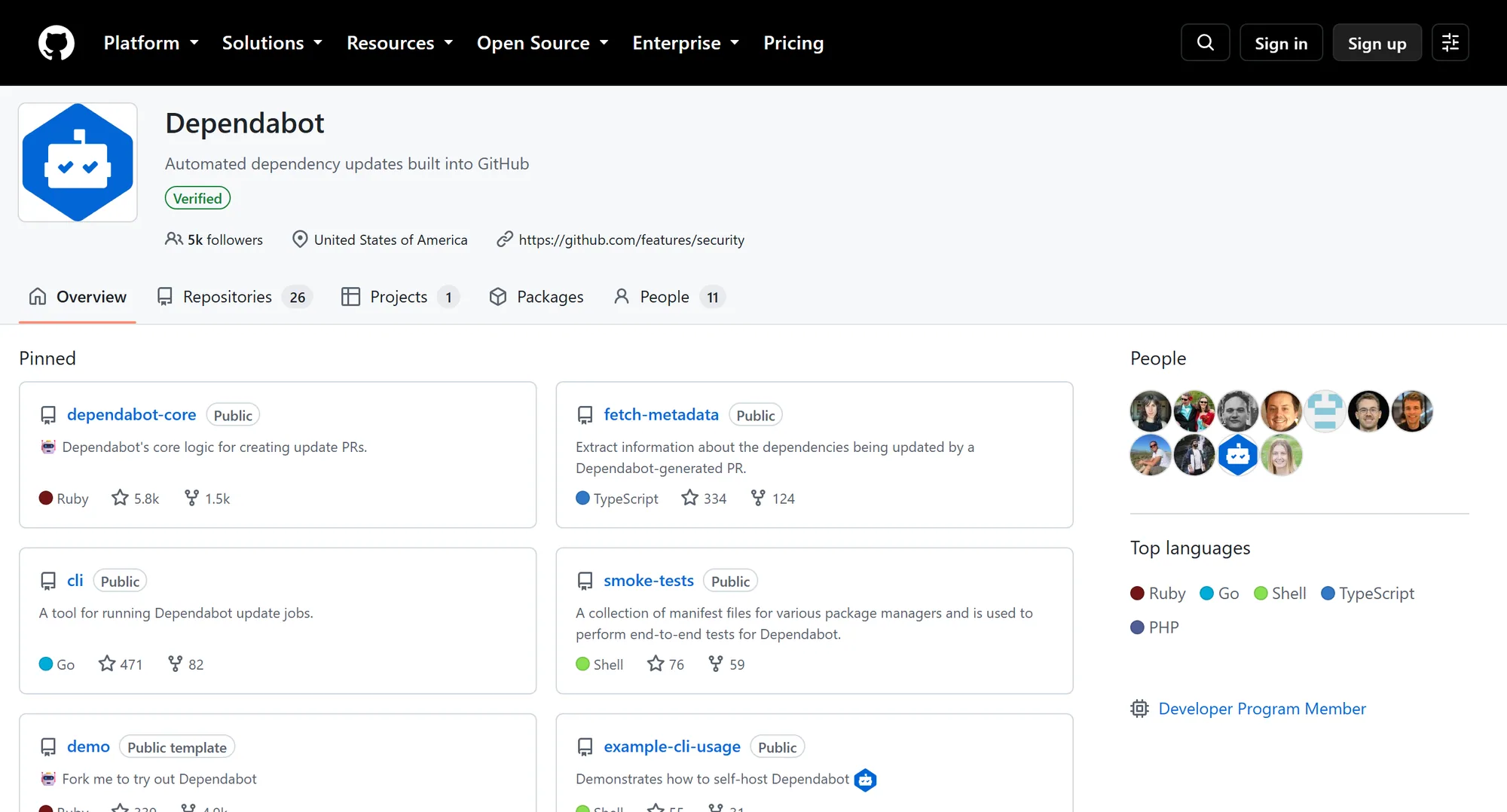
Dependabot is built into GitHub. Alerts tell you when a dependency matches a known vulnerability in an advisory reviewed by GitHub, and malware alerts flag packages known to be malicious. Security updates open pull requests that upgrade vulnerable dependencies, and version updates keep dependencies current even when nothing is vulnerable, grouped and scheduled as you choose. It runs on GitHub's dependency graph, which parses the manifests and lockfiles in your repository, and alerts are included in every GitHub plan.
Best for: GitHub teams that want update pull requests with nothing to host or configure.
Consider if: your code is on GitHub and you can live with less control than Renovate's presets and
packageRules.
Mend.io and Mend Renovate Enterprise

If Renovate itself is fine and the problem is running it at scale, Mend, which maintains Renovate, sells Mend Renovate Enterprise, in the cloud or self-hosted. Its comparison of editions lists merge confidence workflows, scaling for large organizations and support as Enterprise features; the CLI and the Community edition stay free. Mend AppSec adds Mend SCA, which traces the call graph through direct and transitive dependencies to decide whether a vulnerable function is reachable, enforces license policies, flags malicious packages and produces SBOMs, plus Mend SAST.
Best for: teams that want to keep Renovate and add support, merge confidence and prioritization.
Consider if: your pipelines also run on Azure DevOps, Bitbucket or CircleCI.
Snyk
Snyk is a developer security platform with software composition analysis at its core. It builds the dependency tree
from manifests and lockfiles, prioritizes findings with reachability, exploit maturity, EPSS and CVSS, opens
one-click and automatic upgrade pull requests, and monitors projects for new vulnerabilities. It runs in the IDE,
CLI, SCM integrations and CI, and adds Snyk Code, Snyk Container and Snyk IaC. SBOM export with
snyk sbom is on Enterprise plans only.
Best for: developer-first scanning from the editor to the pull request.
Consider if: you want upgrade pull requests driven by vulnerabilities, not by new versions.
Endor Labs
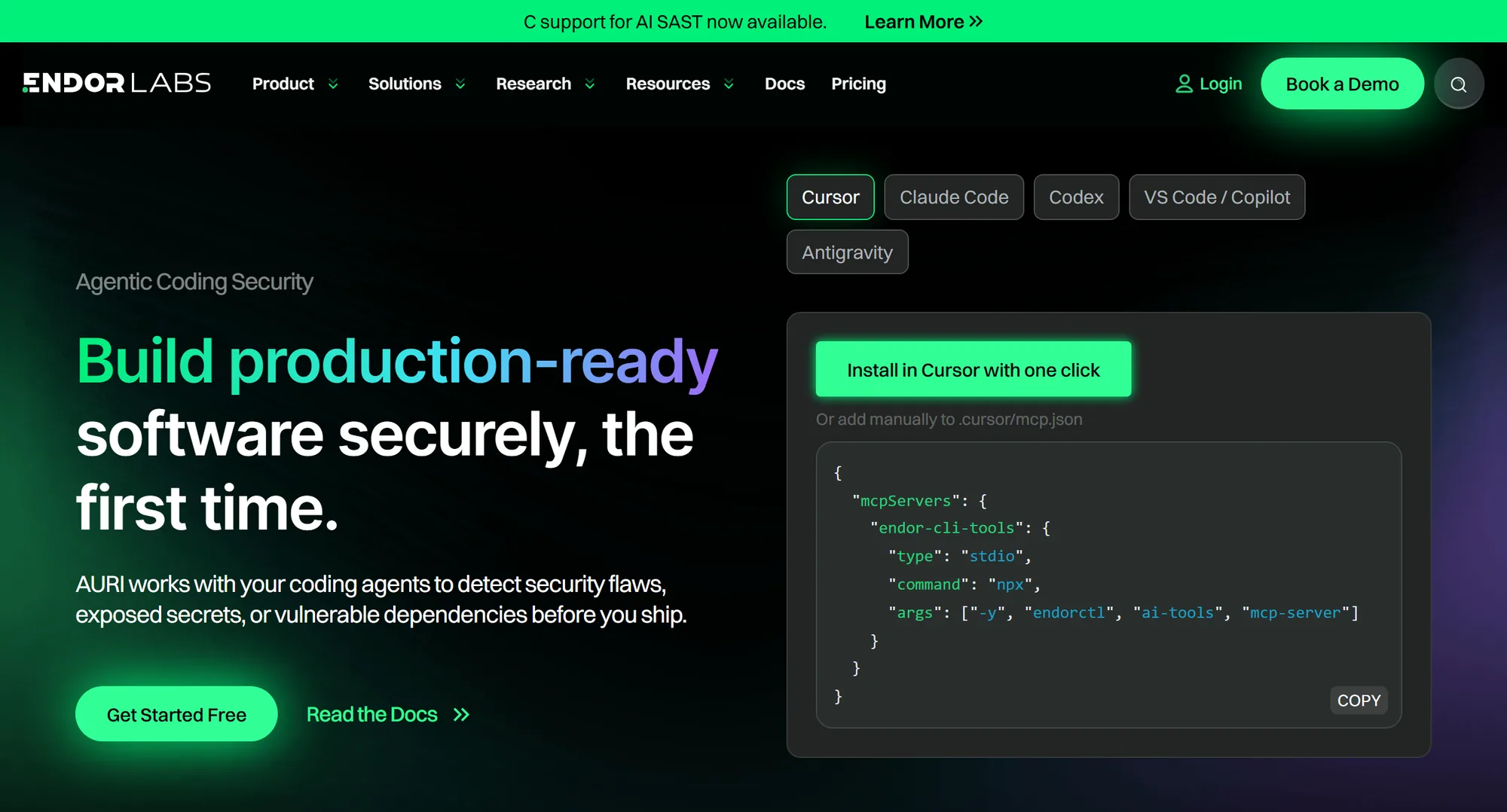
Endor Labs is built around function-level reachability: static program analysis traces whether your code can call a vulnerable function in a direct or transitive dependency, which Endor Labs says cuts SCA findings by 92%. Upgrade impact analysis, automated pull requests and Endor Patches, which backport fixes to the version you run, handle remediation. A Package Firewall sits in front of your registries.
Best for: teams whose update pull requests outnumber the ones that matter.
Consider if: upgrades are hard and you want to know which ones are safe before you merge.
Aikido
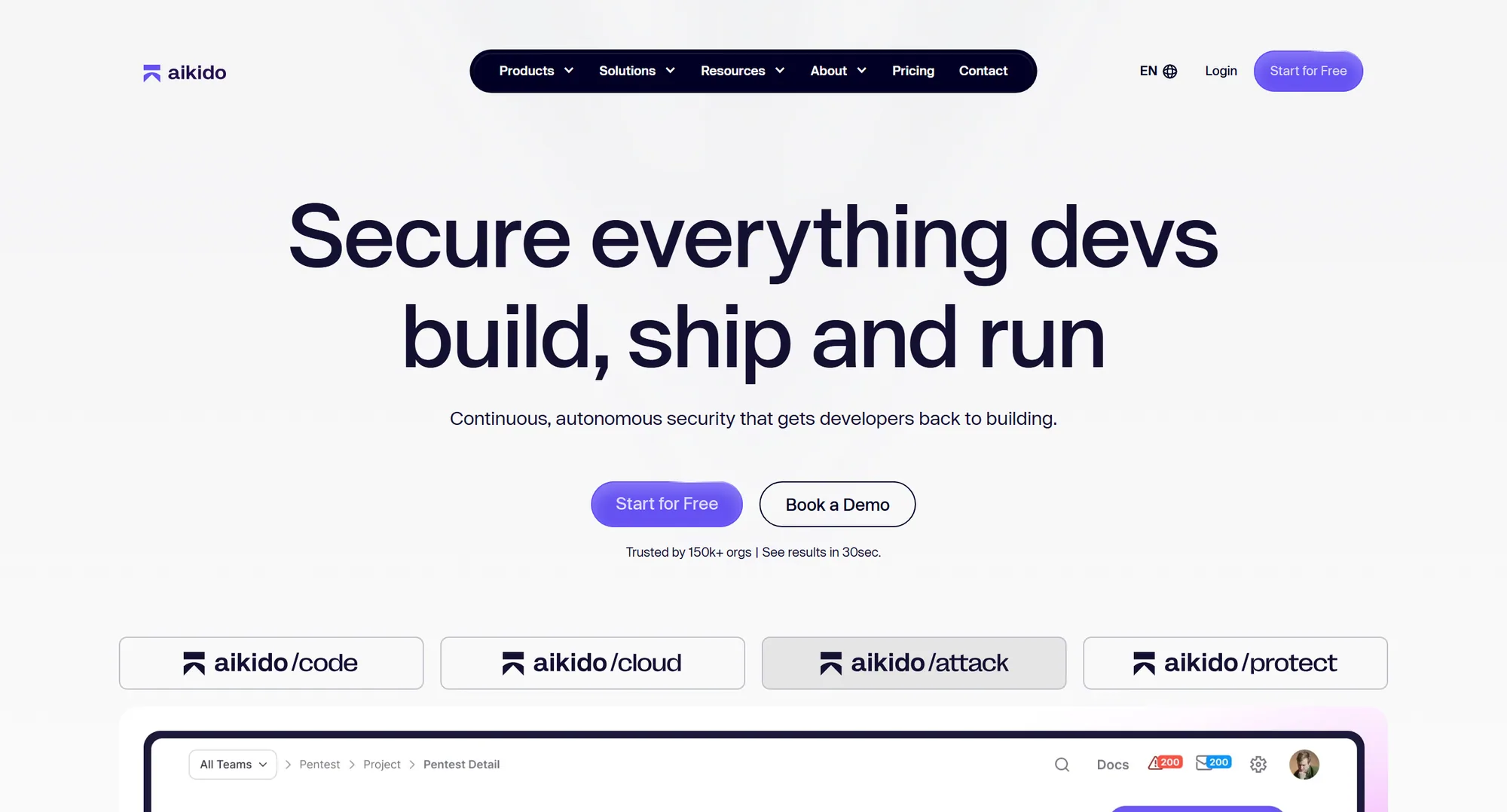
Aikido bundles SCA, SAST, secrets, IaC, cloud posture, container scanning and DAST behind one dashboard. Its SCA uses function-level reachability, AutoFix opens pull requests with patched versions, and it can block pull requests with critical findings. Safe Chain, a free tool, blocks npm and PyPI packages with known malware before they install, locally and in CI.
Best for: small teams that want broad coverage from one product.
Consider if: you are consolidating tools and also use GitLab, Jenkins or Bitbucket.
GitHub Code Security
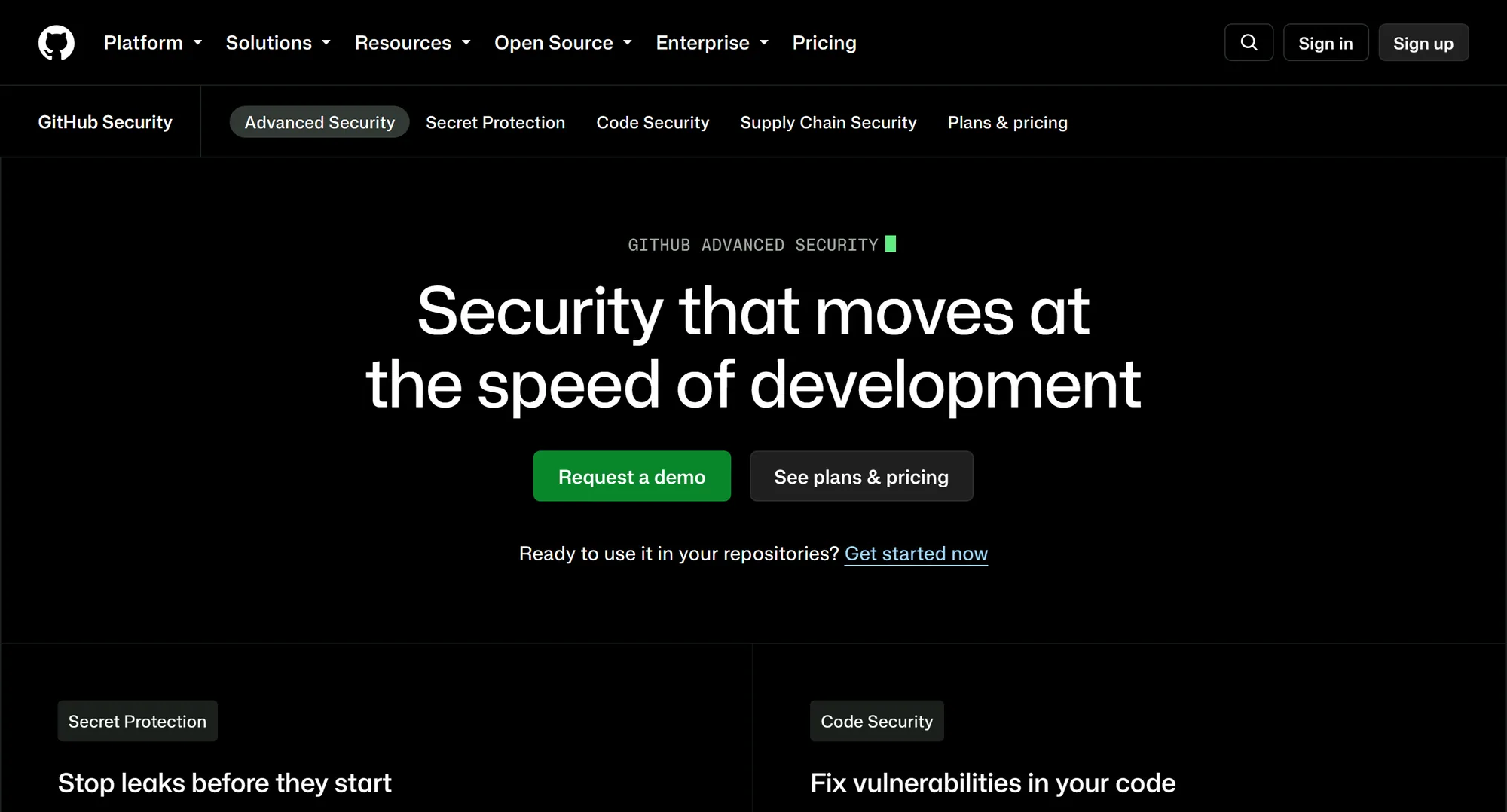
If you are on GitHub and want to drop a separate bot, the paid Code Security product builds on Dependabot. It adds dependency review, which shows what a pull request changes before merge, premium Dependabot features, and code scanning with CodeQL and Copilot Autofix. Automatic dependency submission can add build-resolved data for Maven, Gradle and Python to the dependency graph. It requires a Team or Enterprise plan.
Best for: GitHub teams that want more without adding a vendor.
Consider if: you also need SAST and secret scanning in pull requests.
CRACI and GitHub Advanced Security
Side by side
| Capability | CRACI | Renovate | Dependabot | Snyk | Mend.io | Endor Labs | Aikido | GitHub Code Security |
|---|---|---|---|---|---|---|---|---|
| Where dependency data comes from | What the build fetched | Package files | Manifests and lockfiles | Manifests and lockfiles | Project scan after the build | Source code analysis | Manifests and lockfiles | Dependency graph |
| Routine version updates | Not stated | Mend Renovate | Not stated | Not stated | Through Dependabot | |||
| Monitors what shipped builds used | Build SBOMs re-evaluated | Monitored project snapshots | Not stated | Imported SBOMs (SBOM Hub) | Not stated | |||
| Reachability prioritization | Not stated | Not stated | Not stated | |||||
| Malicious package alerts or blocking | Known releases with a CVE; a policy gate can block them | Not stated | Alerts only | Not stated | Detects them | Package Firewall | Safe Chain | Through Dependabot |
| SAST for your own code | CodeQL | |||||||
| SBOM export | Per build | SPDX graph export | Enterprise only | SPDX graph export | ||||
| Controls what builds can fetch | Egress policy | Package Firewall | Safe Chain, npm and PyPI | |||||
| Works outside GitHub | GitLab CI and Jenkins | Self-hosted dependabot-core | IDE, CLI, CI | |||||
| Works without changing runners | ||||||||
| Price (November 2026) | $0.002 per vCPU-minute ($0.004 for 2 vCPU), metered per second; no monthly fee and no per-SBOM charge | Open source; free Community app | Alerts in all GitHub plans | Free; Team from $25 per month | Up to $1,000 per developer per year | Free Developer tier; paid via sales | Free plan; paid from $350 per month | $30 per active committer per month |
- Included
- Partly
- Not included
- On the roadmap
"Not stated" means we could not confirm it in the vendor's public pages. Prices are as of November 2026; check each vendor before you buy.
When to stay with Renovate
- You use more than one code hosting platform, or more package managers than Dependabot supports.
- Your configuration encodes rules your team relies on, and someone owns it.
- You want a free, open-source update bot you can run yourself.
- You want build evidence too. Keep Renovate and add a tool alongside it; nothing here requires removing it.
More on the build side: vulnerability tracking and build-time SBOM generation. Comparing the two bots for a GitHub repository? See Dependabot alternatives. To see which of your shipped builds an advisory reaches, book a demo.
Renovate alternatives FAQ
Short answers to the questions teams ask when they compare
What is the best alternative to Renovate?
For the same job on GitHub with nothing to install, Dependabot. To keep Renovate with support and merge confidence workflows, Mend Renovate Enterprise. For prioritized vulnerability fixing, Snyk, Mend.io, Endor Labs or Aikido. To stay inside GitHub with more depth, GitHub Code Security. To know which shipped builds a new advisory affects, CRACI records what each GitHub Actions build fetched and keeps monitoring it, next to your update bot.
Renovate vs Dependabot: which should I use?
Dependabot is built into GitHub and needs nothing installed, and it now sends malware alerts. Renovate is more configurable: shareable presets, packageRules, automerge, a Dependency Dashboard issue, and support for Azure DevOps, Bitbucket, Forgejo, Gitea, GitLab and more. Dependabot suits GitHub teams with simple needs; Renovate suits teams on several platforms or with many repositories to tune.
Is Renovate free?
Yes. Renovate is open source under AGPL-3.0, and Mend offers the free Mend Renovate Community edition, in the cloud or self-hosted. Mend Renovate Enterprise is a paid edition that adds merge confidence workflows, scaling for large organizations and support.
Does Renovate fix vulnerable transitive dependencies?
It depends on the source. With vulnerabilityAlerts, Renovate acts on GitHub's vulnerability alerts, which require the dependency graph and Dependabot alerts. With osvVulnerabilityAlerts, it checks the OSV database, and its docs say those alerts cover direct dependencies only.
Can I use Renovate and another tool together?
Yes, and most teams do. Renovate keeps dependencies current, an SCA tool adds prioritization and SAST, and CRACI records what each GitHub Actions build actually fetched, so you can see which shipped builds a new advisory affects. Nothing on this page requires removing Renovate.
Does CRACI replace Renovate?
No. CRACI is not an update bot and does not open pull requests. It is a GitHub Actions-compatible runner that records the packages each build pulled in, including packages restored from CI caches, monitors those build SBOMs for new vulnerabilities, and lets security teams triage findings and route them to the team that owns the fix. Keep Renovate or Dependabot for update pull requests.
See what your builds actually fetched
Book a demo to compare CRACI's record of a GitHub Actions build with the dependencies Renovate finds in your repository.
Book a demo